


Creativity Is Not a Special Gift That Only Certain People Possess
Do you doodle while you’re waiting on the phone or making lists? That’s good news because scribbling, coloring with crayons, or drawing random designs, it turns out, can boost your overall health and keep you sharper mentally.
What might have seemed a luxury to many of us in our working years, at retirement can become a vital piece of healthy and joyful living. Increasing data shows that as we move past middle age, adults are more frequently embracing creativity to enhance their days. Especially interesting is the fact that while contributing to overall well-being, evidence is mounting to support a link between creative activities and memory retention.
Are Only Right Brained People Creative?
Conventional thinking relegates activities to specific parts of the brain. Thus, it was historically believed that logical thinking was the domain of the left brain and creative thinking belonged to the right hemisphere. But neuroscientists have discovered that all parts of the brain come online when we are engaged in a creative activity and the more varied the activities, the more neural connections are created. Brains, it turns out, are flexible and respond well to creative stimuli.
Studies at the University of Texas School of Brain and Behavioral Sciences found that engaging in creative activities strengthens neural pathways to the hippocampus, which we know is involved in memory, learning, and emotion. The largest job of the hippocampus is to hold short-term memories and then shift them into the long-term memory areas of the brain for storage.
As stronger pathways are laid down, memories become easier to retrieve. Also, because the hippocampus aids in emotional processing, the feelings of anxiety and loneliness often experienced by older adults are relieved by participation in creative activities.
We Are All Creative
Contrary to popular belief, creativity is not a special gift that only certain people possess. By nature, we are creators, in fact, every minute of every day we are creating, though perhaps not consciously. Each thought, decision, and action we take creates our next moment which, when repeated, creates a habit that then creates our days.
So why not choose to live more imaginatively? Creativity is a skill that anyone can develop, and practicing offers so many benefits for an improved quality of life. By engaging in a creative practice, one is choosing to grow and exercise neural pathways thereby keeping the brain and memory more limber and healthy.
Music, theater, and dance also show great promise in aiding cognitive and emotional health. The ‘Community of Voices’ program in San Francisco involved nearly 400 culturally diverse adults aged 60 and older. Participants engaged in weekly choir sessions, led by a professional choral director for a year.
The results were clear: the opportunity to creatively express, learn a new skill, and through the activity, make new friends, resulted in the participants reporting feeling greater happiness and contentment in their lives.
Effects of Creative Activities
Painting, cooking, gardening, and crafts, when regularly practiced, all improve cognitive function and memory retention. Moreover, participating in the arts can boost self-esteem, reduce stress, and improve sleep. Creative expression gives older adults a fresh experience of themselves and the world by stretching old beliefs about what we are capable of, and the opportunity and challenge to problem-solve in new ways.
So, jump out of the rut of routine and shake things up! Do something different or undertake an old routine in a new way. Blast your favorite upbeat music and get up and dance as though no one is watching. Better yet, dance while singing your heart out. Pick up a brush and enjoy the buttery feel of paint sliding across the page without the constraint of having to make something.
Let yourself relax into the sensory experience of joy and wonder at what emerges from your hand without any judgment of ‘good’ or ‘bad’. This can be a wonderful experience of relaxing into intuition and allowing it to guide your efforts.
Immerse yourself in a hobby because creativity contributes to mental acuity and cognitive vitality as we age. And because creative activities are so pleasurable when approached as play, feel good endorphins are released and that contributes to all over happiness and satisfaction with life.
Too Many Benefits to Count
Taking classes has the added benefit of introducing one to new people and fostering friendships. There are even art, gardening, and beer making groups, to name a few, that travel together to study and improve their knowledge. Practicing crafts with family and friends is another wonderful way to bond and have fun. I’ve found special interest communities such as art, writing and gardening, to be especially welcoming and supportive to newbies.
All in all, creativity isn’t just about artistic expression; it’s a powerful tool for maintaining mental and physiological health as we age. Just 20 minutes of any art practice or even humming can contribute to overall wellbeing. Art making also has the potential to reveal unexplored aspects of ourselves. It’s a pathway to our interior. So, whether it’s singing, painting, dancing, or writing, embracing creativity can contribute to a fulfilling, vibrant, and healthier life in our later years!
Let’s Have a Conversation:
What type of creativity do you regularly engage in? Is there an art practice you’ve always wanted to pursue, or one you used to engage in but felt you no longer had time for? If you could include any creative activity in your life today what would that be, and why? What’s stopping you?
Tags Creativity

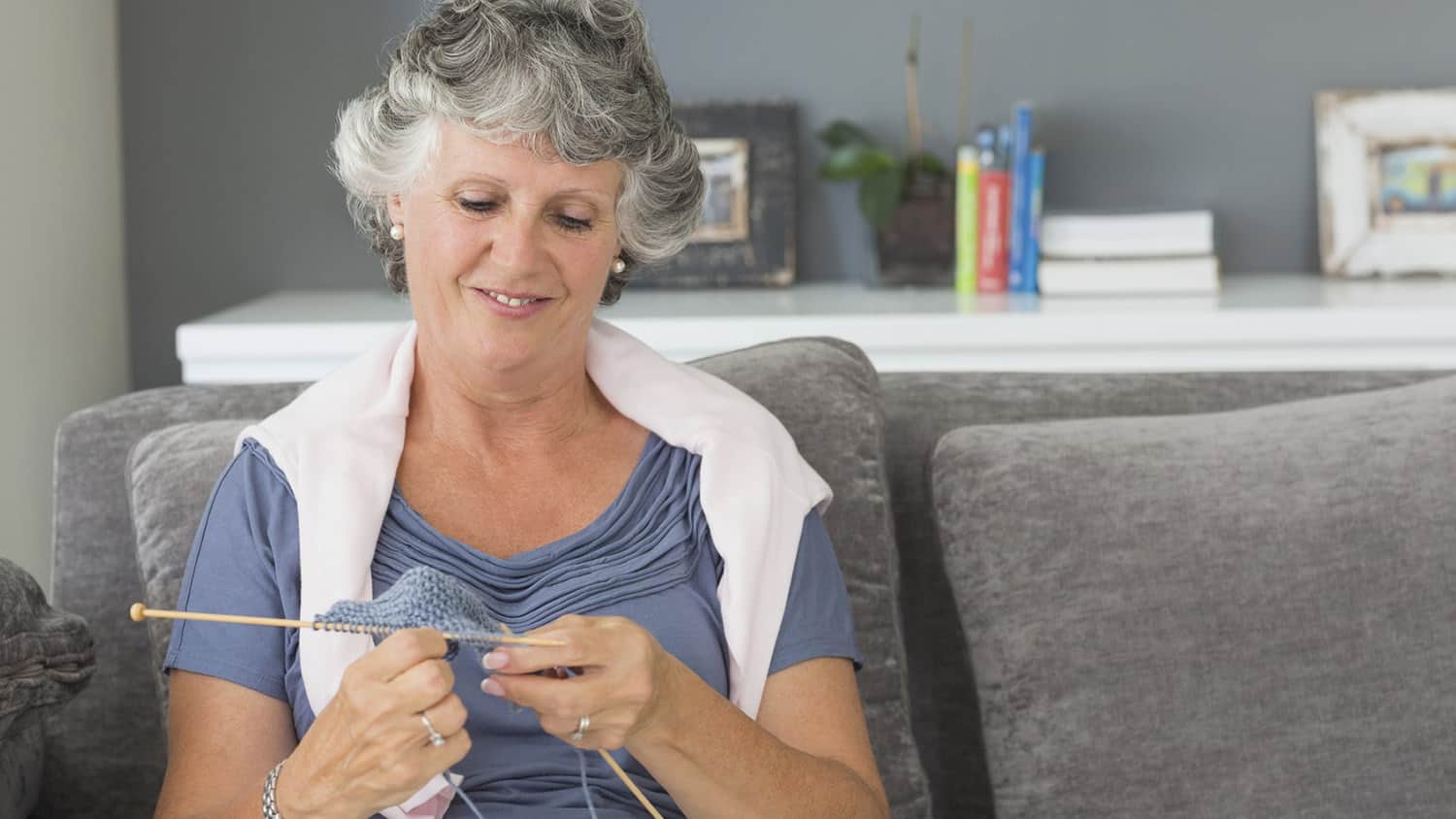

I have always been into crafting and crocheting, but since I have retired, I have discovered you tube. Since then, I have learned so many different techniques and crocheted many projects that I otherwise would never even would have known existed. I have since been inspired to start a group called, “The Yarnies,” which is self explanatory. We are multi generational and we meet once a month to share our skills and makes and just have a conversation. So much fun!
I call it YouTube University because it teaches all of us so much :) It’s a terrific place to learn- and free! What a great idea to start a group with like minded women.
I have always loved flowers. Now, trying to draw and paint them, I get frustrated because I am not Monet! How do you break through the fear of failure when your “craft” is not as good as you want it to be?
Nancy, I know it’s frustrating when beginning painting and drawing because our expectations don’t align with our skills. But anyone can learn to draw, really! Like learning anything else (even to drive or cook) it takes practice. It might be helpful to take a beginning class, or get a book from the library that takes you through drawing different objects step-by-step. Maybe set a time, even 20-30 minutes each day, to draw simple things around the house. It’s consistency that will show results. You’ll be surprised at how far you can improve in only a few months.
I have sewed lifelong and made just about everything. A number of years ago I went back to watercolors. My work was getting much better. I’ve always enjoyed creative writing, too. In the past ten years I am stuck in all three of these creative outlets. No idea why.
Stuck as in not improving, or stuck as in no time to explore other creative pursuits? If you’re creatively stuck, I find it sometimes helps to mix things up. For example, if you watercolor in the same style, or always with the same subjects, perhaps working in a different size, or with different colors than you normally choose, or with an entirely different subject that’s out of your comfort zone would help. I’ve taken paintings that I felt were ‘failed’ and cut them up, and added them to a collage. Just changing the medium from painting to collage helped loosen me up. If you work realistically then maybe going a bit more abstract would give you a fresh perspective. I’d love to hear how it goes for you.
When I painted a scene with an old cabin (tin roof included) I couldn’t get the landscape right. After a while, I cut the cabin out and superimposed it on another piece of paper. It is still waiting for a landscape.
Often my process begins with painting a house by the sea. Then I writing a mystery about the area.
I’l give your ideas a try. Thank you.
I hope the ideas work for you. Great idea to cut up a piece that’s not working and try it somewhere else.
This article is spot on! When we create things with our hands it benefits our brain, our wellbeing, and our health. Too much screen time, on the other hand, drains us because it’s a passive activity. With the benefits of technology also comes the dumbing down of our minds. For example, we Google an answer instead of waiting and using our brains to remember. Or we call someone using our phone contacts, rather than remembering their phone number like we used to. Doing creative things offsets this and, for me, it’s about finding the right balance.
You’re so right! Glad you’ve found the benefits of creativity. It’s a gift we give ourselves that keeps on giving.
The “crafty” person that i am, or try to be, I had to take a hiatus because I began working in January, full time, and it took a toll on me. I am heavily involved with parish activities and after doing a full day, I was exhausted. And my crafts, especially, my piano, crashed. I have been making strides to have my work-hobby life balance more in check and as soon as I finish this and brunch to begin clearing out my expansive craft collection and to get back to my piano playing this afternoon!
Karen, I congratulate you on trying to establish a better work-hobby balance. It’s tough, I know, with so many things pulling on our attention. But you might find that 15-20 minutes at the piano, or involved in crafts, actually brings both relaxation, and a renewed burst of energy. I hope this holds true for you. Good luck clearing out the craft collection! It’s an ongoing task for me. Barbara