


3 Ways to Boost Your Metabolism After 60
If you have gained a bit of weight (or more) over the past few years and you feel like it is an inevitable part of aging, let me tell you this is untrue. If, no matter what diet you have tried, the stubborn pounds just won’t leave you, you might need to boost your metabolism.
Old myths die hard. There is a ton of misinformation out there about weight loss and how to maintain a healthy weight.
I speak to so many women who are tired of extra pounds in their midsection, have low energy, and even lower confidence. They believe it’s just an inevitable part of aging. It’s frustrating to keep trying diets that leave you feeling exhausted, hungry, and are impossible to stick with long term. The idea of eating only grilled chicken and steamed broccoli does not make you want to start a new plan.
The truth is that the latest research shows that your metabolism does not actually change very much as you age. That’s good news because it means that we have control over our metabolism and the power to change our shapes, lose weight, maintain a healthy weight, and feel more energetic, healthier, and confident. Especially important for women over 60, here are a few ways to boost your metabolism – and they actually work.
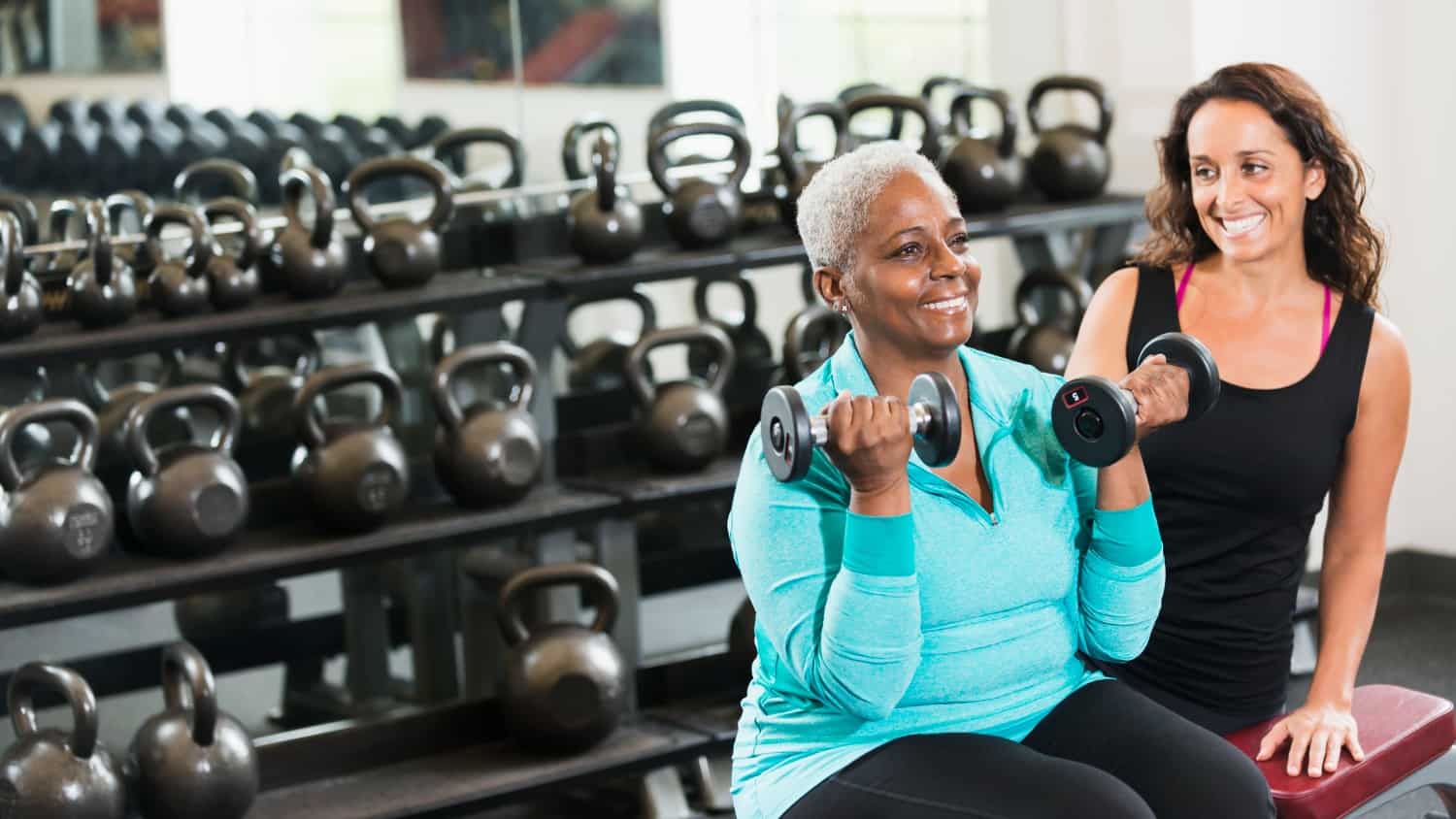
Strength and Resistance Training
When you are ready to lose weight, the first thing you might think is, “I have to eat less and exercise more. I should probably hop on the treadmill or start walking.” Most women have this thought process ingrained within them from years of misinformation that eating less and exercising more, specifically with cardio is the only way to lose weight.
You do not have to do long, arduous, cardio sessions to lose weight. In fact, those long sessions may be making your body hold onto fat, lose muscle, and leave you feeling no energy at all.
When you work out to build muscle (through strength and resistance training), your body has more lean muscle and less fat. When your body has more lean muscle, your metabolism works more efficiently, meaning your body will burn more calories even while at rest after your workouts.
Once we have passed 35, strength training becomes a MUST-do instead of a should-do (or something you are thinking about starting). Strength training helps to build lean muscle, reduce fat, protect your joints, build bone density, boost your brain health, mental health, sleep, and confidence.
Start with the key muscle groups such as your glutes, mid back, and hips for 8-15 reps of each exercise and 2-4 sets two to three times a week. Your strength training sessions should be with a weight that feels challenging for you by the end of the set. If you are doing the right movements for your body, you can get a great workout in just 20 minutes.
If you are new to strength training, there are safe exercises that are body friendly and so many options and modifications to keep you strong. In our virtual fitness programs, our team of top notch personal trainers give our members exercises that work for their body each workout. Give this quick exercise snack workout a try:
Read more: 6 Strength Training Tips for Women Over 55: How to Start and Stay Consistent.
Food That Fuels Your Body
Remember the old myth: eat less and exercise more? Calorie restricting and counting calories alone will only lead to you feeling exhausted and hungry. It will be a struggle to continue with this plan because you are so tired it brings on more cravings. Your body is losing muscle and not fat if you are focusing on calorie restriction alone.
Protein is your body’s best friend, especially as a woman in mid-life. Be sure to get at least a third of your plate with protein at each meal or up to .75-1g of protein per pound of body weight. Getting enough protein will help you to feel more full, reduce cravings, and help to build muscle in your body, which ultimately will help you to stick with your healthy lifestyle and feel your best.
High protein foods include fish, chicken, beef, lentils, quinoa, eggs, hummus, low sugar greek yogurt, and nuts.
Reduce added sugars and fuel your body with lots of fruits and vegetables, protein, and complex carbohydrates. Check your labels because added sugars are hidden everywhere even in “healthy” foods.
Four grams is about a teaspoon. When you read your food labels on the back, which I suggest you do when picking out food in the store, imagine how many teaspoons of sugar are in that item and consider if it is worth it. Are you looking for a crash shortly after eating followed by more cravings or are you looking to feel full and satisfied?
Read more: How a Healthy Mediterranean Diet Might Reduce Inflammation and Pain.
Sleep and Stress
Have you ever noticed that on days where you didn’t get enough sleep the night before or on stressful days you have more cravings? A lack of sleep boosts your hunger hormone (ghrelin) and decreases the hormone that helps you feel full (leptin). Your blood sugar levels also increase with a lack of sleep, increasing your risk for developing type 2 diabetes.
Try a calming nighttime routine to ensure you get 7-9 hours of sleep each night. Put away electronics and turn off the TV, keep to the same bedtime and wake time, do some deep breathing or meditation.
Try 3 cycles of 4-7-8 breathing. Breathe in for 4, hold it for 7, and breathe out slowly for 8. Keep evening snacks to light snacks such as fruit like cherries, grapes, or strawberries. Gentle stretching can be another way to ease your body into a good night’s sleep. Try these gentle stretches:
When you focus on the right exercise that builds muscle instead of taking it away, the right food that fuels your body, and good routines for sleep and stress management, you will find that your metabolism will improve, helping you to feel more energetic, stronger, and healthier.
Read more: Sleep Tight: 10 Tips to Improve Your Health Through Solid Sleep
FAQ: Boosting Your Metabolism After 60
Does metabolism really slow down with age?
Surprisingly, recent research shows that your metabolism doesn’t change as drastically with age as we once believed. That means it’s possible to support a healthy metabolism at any age through the right habits.
Is cardio the best way to lose weight after 60?
Not necessarily. While walking and light cardio have their place, long cardio sessions can sometimes lead to muscle loss and fatigue. Strength and resistance training are more effective for building lean muscle, which helps burn more calories – even at rest.
Why is strength training so important after 60?
After age 35, we naturally begin to lose muscle mass. Strength training helps reverse that trend. It supports metabolism, improves bone density, joint health, brain function, and overall confidence. Just two to three sessions per week can make a difference.
How much protein do women over 60 need?
A good guideline is to eat around 0.75 to 1 gram of protein per pound of body weight per day. Fill at least a third of your plate with protein at each meal.
Why is sleep important for metabolism?
Poor sleep can increase hunger hormones, reduce the ones that signal fullness, and raise blood sugar levels. All of this can make weight loss harder and increase the risk of chronic conditions like type 2 diabetes.
How does stress affect metabolism?
Chronic stress can lead to emotional eating and hormonal imbalances that make it harder to lose weight. Managing stress through breathing exercises, gentle movement, and a good sleep routine can help support your goals.
Read more: Exhausted by Dieting but Still Want to Eat Better? What Women Over 60 Need to Know.
Editor’s Note: Article updated by Sixty and Me.
Let’s Have a Conversation:
What are you doing to boost your metabolism at this stage of your life? Have you started strength training? What kind of exercises do you do? How do you destress at the end of the day?



I had no choice but to begin strength training as I am showing signs of bone loss and I’m not having it! Not if I can help it. So I’ve added that to my routine at least 4 times per week. I keep weights downstairs and upstairs and grab them every chance I get. In addition I do a 30 min total body program (just type in 50+ weight training when you’re in YouTube). So right now, routinely I’m on the treadmill for 30 mins or more in the mornings around 6:30 and around 3:30 is my weight training routine. I have dance routines that I do in between and oh! I have a mini tramp in the living room so when I’m in there watching TV I can take advantage of that. I took it easy on these things at first, now I’m building on what I can do. I felt more energy after two weeks and feel things tightening up.