


Why Intuitive Eating Feels So Confusing, and What to Do Instead
If you’ve ever stood in your kitchen, staring into the fridge like there was an answer in there (maybe hidden behind the milk?) that could solve everything, and thought, “I just want to eat like a normal person,” you’re not alone.
When “No Rules” Feels Too Scary
You’ve spent decades either white-knuckling your way through the latest diet or swan-diving into a Costco-sized bag of kettle corn with a glass of red wine and a side of guilt.
Welcome to the chaos that is midlife eating.
We were raised on diet culture, baptized in fat-free dressing and Snackwells, and told that hunger was the enemy. Then suddenly, one day, someone says, “Just listen to your body.” And you think: “Ma’am… I haven’t heard from her in years. She doesn’t even know how to text.”
Intuitive eating sounds amazing in theory. No rules? Eat what you want? Yes, please. But in practice, it’s like walking into a grocery store in a foreign country with no list, no plan, and zero sense of what you’re even hungry for, then leaving with a package of gummy worms, sardines, a pineapple, bottle of wine, no plan, and a backpack of confusion.
That’s why this post matters.
Because for women like us, women who’ve spent decades measuring, tracking, cutting, and shaming, it’s not about eating “intuitively.” It’s about learning to trust yourself again, without swinging back into chaos.
And I’m here to show you how.
What Diets Don’t Want You to Know
Here’s the dirty little secret no one tells you: Diets were never designed to free you. They were designed to keep you coming back.
Each one promises control, confidence, and a smaller waistline in six weeks or less. And sure, maybe it sort of worked for a while, until it didn’t. And then it was your fault. You must’ve “cheated,” lost focus, lacked discipline.
Not once did it occur to you that maybe the plan was broken. Because diet culture doesn’t just mess with your plate. It rewires your brain.
It teaches you to ignore the “silly” signals from your body, like hunger, fatigue, or the desire for pleasure, and instead obey an external set of rules made by someone who’s never met you – who knows nothing about you.
And so, for years, I followed them all: 1200-calorie days. No carbs after 4 p.m. Weigh-ins that determined my mood. I once threw away half a banana because “fruit has too much sugar.” I was constantly hungry, constantly “failing,” and constantly blaming myself.
Perfection. Guilt. Rebellion. Repeat.
So, if intuitive eating feels like a foreign language, it’s because you were trained not to listen.
But that doesn’t mean you can’t learn how.
A Better Way: The Middle Road Between Chaos and Control
Let’s be honest: “Eat whatever you want, whenever you want” sounds like a Pinterest quote from someone who’s never accidentally eaten an entire row of Oreos at 9 p.m. in a dark kitchen only to realize it when there were no more to eat.
That’s why intuitive eating without any structure can feel like tossing out your GPS and hoping muscle memory gets you to the dentist.
What I teach instead is a more realistic path: structured intuitive eating. It’s kind of like a capsule wardrobe, but for food.
You remember capsule wardrobes, right? A few versatile pieces you love that mix and match with ease, so you always have something that fits, flatters, and feels like you. No more standing in the closet overwhelmed by too many options that don’t work.
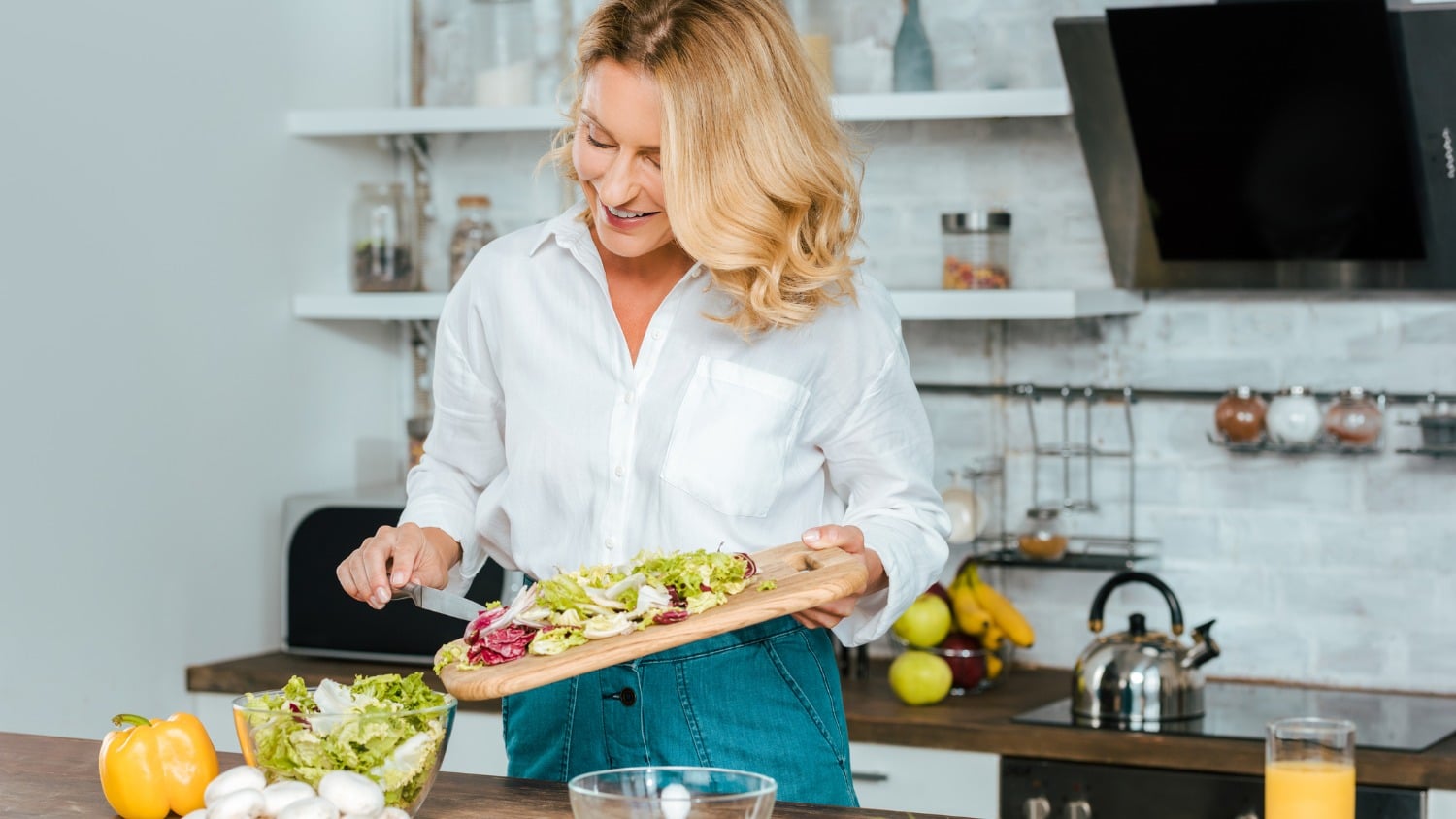
Now apply that to eating: A collection of meals and snacks that you love, that you know your body likes, that keep your energy steady, and don’t leave you bloated or guilty, and yes, that leave space for the occasional brownie, treat of cheese, or glass of wine.
No spreadsheets. No off-limits food lists. Just meals that make you feel good without overthinking every bite.
It’s Not About Willpower, It’s About Self-Trust
One of my old coaches once said, “When I go out, I take three fries from my partner’s plate. Not because I need them. Just to remind myself I can.”
And, I remember thinking, That’s cute. I’d eat the whole damn basket.
But when I tried it, it felt like magic. Not because three fries cured me. But because I didn’t spiral. I didn’t feel deprived or out of control. I felt… normal.
I suddenly had evidence in my life that I could eat three fries (or one cookie) and not eat it all.
That’s the real goal here.
Freedom from food guilt isn’t about never eating fries again, or eating all of them to prove you’re free. It’s about choosing what you want with calm, not chaos.
That’s not willpower. That’s trust.
Your Body Has Been Communicating with You All Along
You already know how to listen to your body.
You know when you need to pee. You know when you’re freezing and need a sweater. You know when your eyes are burning because it’s midnight and Netflix just asked, “Are you still watching?” (Yes. Obviously.)
So why do we act like hunger and fullness are harder to understand than quantum physics?
My client, Linda, came to me convinced that midlife is the beginning of the end because she constantly felt bloated and exhausted all the time. She chalked it up to aging. But once we started paying gentle attention, not obsessing, just noticing, she realized something wild: Every time she ate her beloved “healthy” whole grain toast, her gut blew up like a balloon. Turned out it was gluten.
No elimination diet. No food tracking. Just awareness.
And that’s what real intuitive eating is. Not eating whatever you want, and it’s not a free-for-all. It’s just a quiet return to your own signals.
The truth is, your body has always been speaking. You’ve just been taught to ignore her in favor of someone else’s rules (apps, trackers, diets, and programs).
But through it all that she’s still telling you what’s working and what isn’t for her. And it’s stronger than you think.
Real Change Isn’t Perfect; It’s Practice
Let’s get a few things straight:
- It’s not genetic, and it’s not determined at birth. It’s a skill that you can learn.
- Learning to eat without rules isn’t some magical “aha!” moment where angels sing and you suddenly crave carrots.
It’s a messier, wobblier kind of learning, like riding a bike in flip-flops.
You’ll have days where you eat past fullness. Nights when the peanut butter spoon feels weirdly emotional. And moments where you wonder if you’re doing it all wrong.
You’re not.
That’s just your brain doing what it was trained to do, scan for failure. It’s called the Reticular Activating System (RAS), and right now it’s wired to notice all the ways you think you’re doing it wrong.
But here’s the good news: With practice, that filter shifts.
You start to catch the wins. The skipped snack because you were truly satisfied. The choice to pause before eating. The late-night craving that you rode out instead of numbing.
You don’t need to be perfect. You just need to keep noticing.
Start Noticing What’s Underneath Your Eating
If everything you’ve read here has you thinking, “Okay, but now what?”
I’ve got you.
You don’t need another set of rules. You need a way to start paying attention without judgment. That’s where my free guide, “82 Reasons You Overeat That Have Nothing to Do with Food”, comes in.
It’s not a diet. It’s a flashlight.
This guide will help you spot what’s really going on – whether it’s stress, fatigue, people-pleasing, or that subtle anxiety that kicks in when the house finally gets quiet at night.
Want a sneak peek into what it looks like to start trusting your body again? I break it all down in this podcast episode about how to lean into intuitive eating (without going off the rails).
There’s nothing wrong with you. You’ve just been taught to disconnect from your body and obey someone else’s food rules.
It’s time to rewrite that story on your own terms.
Get the free guide here.
Listen to the episode here.
Or bookmark both and come back when you’re ready to take the first, gentle step.
Let’s Have a Conversation:
Have you ever listened to or trusted your own body signals when it comes to food? What have you noticed that you didn’t know about your body and food?


Great article. My big challenge is sugar in the evening. It works with limitations of for instance 20 gram candy but slowly some more candy is added. I love my candy and I don’t drink or smoke.
I say to myself that life without sugar will.be boring. Not so easy.
Best Annette
Annette, you’re definitely not alone!! sugar at night is one of the most common challenges I hear about. And I get it… I love something sweet after dinner too, so I’d never tell someone they have to give them up completely.
What I’ve found, both for myself and with my clients, is that each of us has an individual threshold – that sweet spot where you can enjoy some sugar regularly without tipping into that “slippery slope” of bigger cravings. The key is learning your number, and then staying under it so you don’t end up in that cycle of wanting more and then having to go through the discomfort of undoing it.
If you want to explore this more, I just released a podcast episode all about nighttime eating, why it happens, and how to find that balance for yourself. You can listen (or read the transcript) here: Why You Eat at Night.
You don’t have to choose between boring and out of control. There’s a middle ground that still includes candy. 😉
Thank you so much. Really appreciate your reply. I will look into it. Best Annette
That subtle reaction to a quiet house in the evening is always the time when I start reaching for the gummy bears and the sweet biscuits.
Why is this?
It should be the time when I can unwind and relax but when it comes to eating, the opposite happens?
Hey Toni, I totally get that. That moment when the house is finally quiet – seems like it should feel like peace… but for so many of us, it’s the signal our brains have been waiting for all day: “Now’s my chance.”
It’s not just about hunger. In midlife, nighttime eating often has way more to do with decompression, reward, or simply filling the “space” after being on for everyone else all day. Your body may be saying, “I’m tired,” but your brain has learned, “This is when we get the treats.”
It’s a completely human response – and it’s also why unwinding can sometimes trigger the opposite of what we want.
If you want to dig into this more, I just released a podcast episode on exactly this topic, including what’s happening in your brain at night and how to break the cycle without feeling deprived. You can listen (or read the transcript) here: Why You Eat at Night.
You’re definitely not alone in this one.
Oh, yes. Another tool or tip from my therapist which worked for me so why not give it a try. To help curb sugar cravings she suggested using a tongue scraper after brushing teeth morning and night and in between if you find it helpful. It could be an “anti trigger” tool or maybe not but it has really helped me and in any case keeping your tongue clean is a very good idea for overall health. You can get a very inexpensive tongue scraper (metal) on Amazon for very cheap.
Patricia, I love this! Such a simple, clever idea! and you’re right, sometimes it’s those small “anti-trigger” habits that make all the difference.
I’ve had clients who swear by brushing their teeth right after dinner to signal to their brain, “Kitchen’s closed.” A tongue scraper is like the deluxe version of that, plus the bonus of fresh breath and better oral health.
Even if it’s not a magic fix for everyone, it’s a low-cost experiment worth trying. And the beauty is, it’s not about willpower, it’s about breaking the cue that sends us straight to the sugar stash.
Thanks for sharing this one! I bet a few people reading will be adding “tongue scraper” to their Amazon cart today. 😉
This sounds like the basics to “Mindful Eating” that is part of having a Mindfulness practice. It can be even simpler than you suggest I believe.
Patricia, yes!! there’s definitely overlap with mindful eating, and I love that you’ve connected the two.
Where mindful eating is usually about slowing down, noticing flavors and textures, and being fully present in the eating experience, what I’m talking about here goes a step further into self-trust.
It’s not just how we eat in the moment, but also how we decide what, when, and how much, without relying on external rules.
So yes, mindful eating can be a wonderful tool in the toolbox, but structured intuitive eating is more about rebuilding that internal compass after years of diet culture told us to ignore it.
Kind of like mindful eating is one ingredient… but not the whole recipe.
I think some of us have a gene, similar to the alcoholic gene, that sets us off when we have sugar. If I can go without anything sweet for about ten days, I lose the desire for sweets, but if I have one bite, my appetite for them returns in a big way. So, I think telling people they can have a little bit of what their body desires in not wise.
Thanks for sharing your perspective, Teddee. You’re absolutely right that some people feel like they get “set off” by sugar, and if avoiding sweets altogether works for you, then that’s a completely valid choice.
What I’m offering here isn’t a one-size-fits-all prescription. Intuitive eating isn’t about forcing people to eat a little of everything, it’s about helping women figure out what actually works for them, without shame, guilt, or fear driving the bus.
And sometimes that means realizing, “You know what? A bite of sugar isn’t worth it for me.” That’s still intuitive eating – because it’s based in self-awareness, not external rules.
But for others? That “one bite = spiral” story is part of what keeps them stuck in the all-or-nothing cycle. I’ve worked with thousands of women who believed they couldn’t trust themselves around certain foods – until they learned how to listen to their bodies in a different way.
So while I appreciate that your experience is real and valid, it’s also not universal.
That’s why I teach a flexible, personalized approach—because we all have different thresholds, patterns, and nervous systems.
And that doesn’t mean there’s something wrong with you. It just means there’s more than one way to be free.