


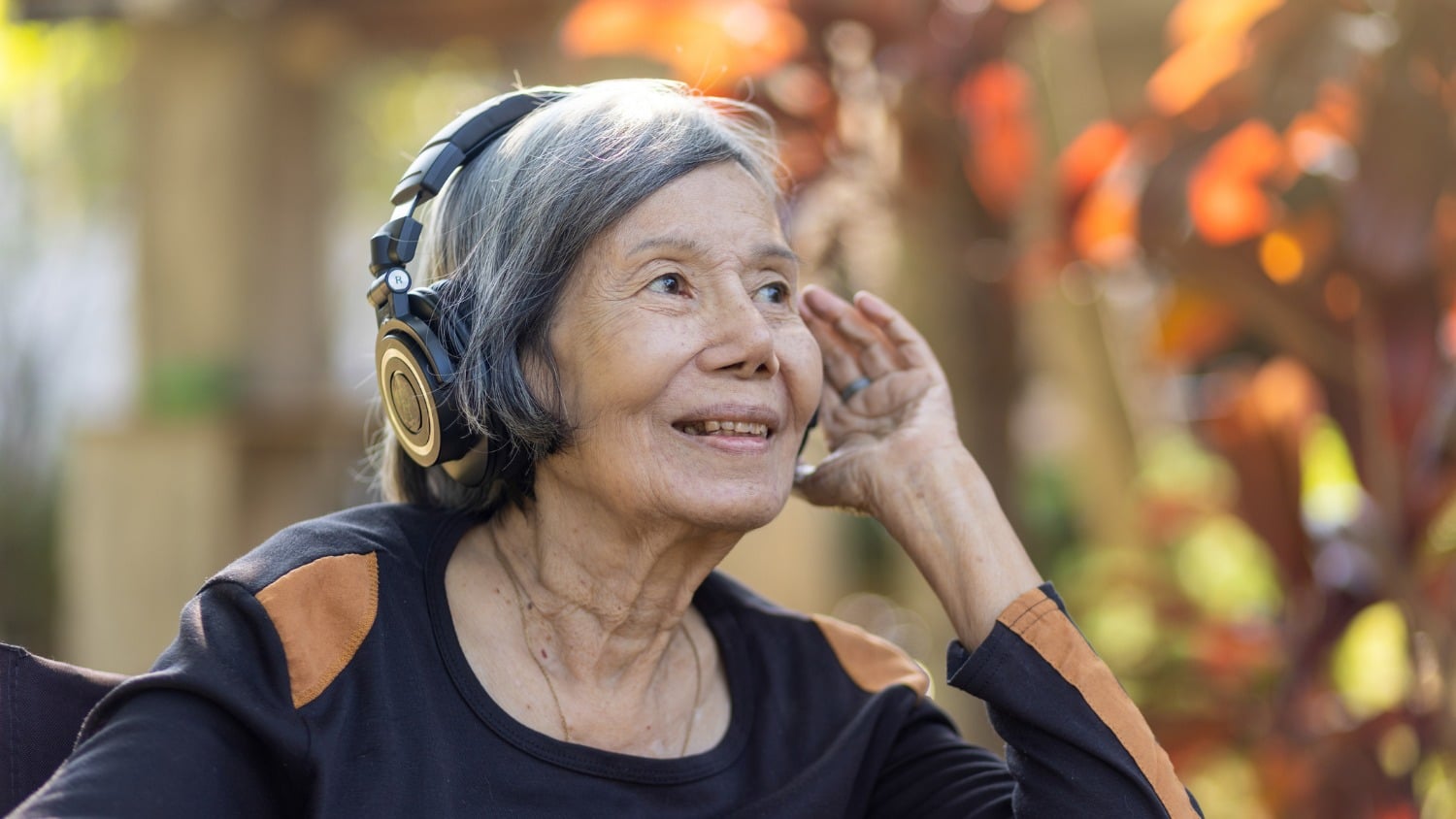
Your Brain Wants You to Turn Up the Music – Here’s How to Make It a Daily Habit
Science has spoken: music isn’t just good for the soul. It may be one of the most powerful tools we have to protect our aging brains.
A new study found that older adults who consistently listened to music reduced their risk of developing dementia by nearly 40 percent. The study, from researchers at Monash University in Australia, used data from more than 10,800 relatively healthy men and women aged 70 and older who were followed for about a decade. Those who played instruments had a 35% reduced risk, and doing both offered an even greater protective effect against cognitive decline.
This isn’t background noise. This is a prescription, a social prescription.
So how do we make music a meaningful, regular part of our lives – and the lives of those we care for?
Start with the Music That Already Lives in You
The most powerful music is music tied to memory. Your brain lights up differently when it hears a song from your past. Neurologically, familiar music activates multiple regions of the brain simultaneously – memory, emotion, motor function, and language.
What to do: Create a personal playlist of songs from your 15-to-25-year-old self. That era is where your “reminiscence bump” lives – the period your brain encoded music most deeply. For many of us, that’s the ’50s, ’60s, ’70s, or ’80s. Start there. Play it at breakfast. Play it on walks. Play it at the gym. Make it the soundtrack of your morning routine.
For caregivers, sit with your loved one and build this playlist together. Ask: What song was playing at your wedding? What did you dance to in high school? What was on the radio when you got your first job? That conversation alone is cognitively stimulating – a two-for-one. And if you want a structured way to do it, Sage Stream offers a free Life Song Template (upon request) – a guided tool that helps you and your loved one identify the songs tied to key moments and milestones across their life. It’s a beautiful exercise on its own, and it can open up stories you’ve never heard.
If you want to go further, Sage Stream’s Memoir in Song program takes those gathered memories and turns them into something extraordinary – personalized concerts. It’s your loved one’s life story in music. As one licensed psychologist put it, it’s a way to preserve someone’s voice, tone, and feeling – not just facts – while they’re still here to be known.
Move from Passive Listening to Active Participation
Listening is wonderful. But playing an instrument adds its own independent protective benefit – and singing works too. You don’t need talent. You need engagement. As my wife likes to say – “Everyone can sing.”
What to Do
Join a community choir, a drum circle, or a ukulele group. Many YMCAs, community centers, and senior centers offer beginner-friendly options. Apps like Simply Piano or Yousician make learning an instrument accessible at any age. If mobility is a concern, hand percussion – a tambourine, bongos, even rhythmic clapping – still gets the brain firing in powerful ways.
And sing along. In the car. In the kitchen. To a live performance on your screen. Singing engages breath control, memory, rhythm, and emotional processing all at once. It’s a full-brain workout disguised as joy.
You can also try the Free Piano Beginner’s Course right here on Sixty and Me.
Make It Social
Isolation accelerates cognitive decline. Music that brings people together doubles the benefit. When you experience music with others – reacting, moving, talking about it – you add social and emotional engagement on top of the neurological.
What to Do
Schedule a weekly “listening party” with a friend or neighbor. Start a neighborhood sing-along. Invite grandchildren to share music they love and reciprocate. Intergenerational musical exchange is a gift in both directions.
This is where Sage Stream becomes genuinely exciting. Designed specifically for older adults, caregivers, and senior living communities, this platform offers live-streamed, interactive concerts featuring world-class artists – performers who’ve toured with Diana Ross, Cher, and Stevie Wonder – in an intimate, engaging format. Artists take requests, give shout-outs to viewers, and create real-time connection. That’s active, participatory music engagement – exactly what the research calls for.
For a family caregiver looking for two hours of meaningful engagement for a loved one without leaving home, a Sage Stream concert is a genuine respite tool. For someone living independently in a 55+ community, it’s a social event you can attend from your favorite chair.
Use Music Strategically Throughout the Day
Music can do more than entertain; it can regulate mood, ease sundowning in dementia patients, reduce anxiety before medical appointments, and improve sleep. Being intentional about when you use it amplifies the benefit.
What to Do
Play upbeat, familiar music during morning routines to boost mood and energy. Use slower, instrumental music in the evenings to wind down. If you’re caring for someone with memory loss, experiment with music from their young adult years during moments of agitation or confusion – it often reaches people when words cannot.
Sage Stream’s archive of past performances lets you access the right music for the right moment, and their catalog spans jazz, Great American Songbook, folk, classical, and rock and much more – so you’ll find what resonates for your loved one.
Build the Habit Before You Think You Need It
The most important takeaway from the Monash study is this: the protective effect comes from consistent engagement over time. This isn’t a last-minute intervention. It’s a lifestyle.
Start now. Build music into the structure of your week the way you build in exercise or social connection. Schedule it, protect it, and treat it as the brain-health practice it genuinely is.
Whether you’re 60 or 85, whether you’re living independently or caring for someone you love, the message from science is clear: music isn’t a luxury. It’s medicine. And it’s the best-tasting medicine there is.
Let’s Have a Conversation:
What role does music play in your life? Have you found it has a positive effect on memory?
Tags Brain Health

Is this minded for people with dementhia and their love ones or for everyone? Best Annette
Everypne
I listen to jazz in my house and when I get in my car, I listen to kickass AC/DC Black Sabbath and any heavy metal. Love music it keeps me sane and in a great mood at all times.
Keep on listening Jeanne!