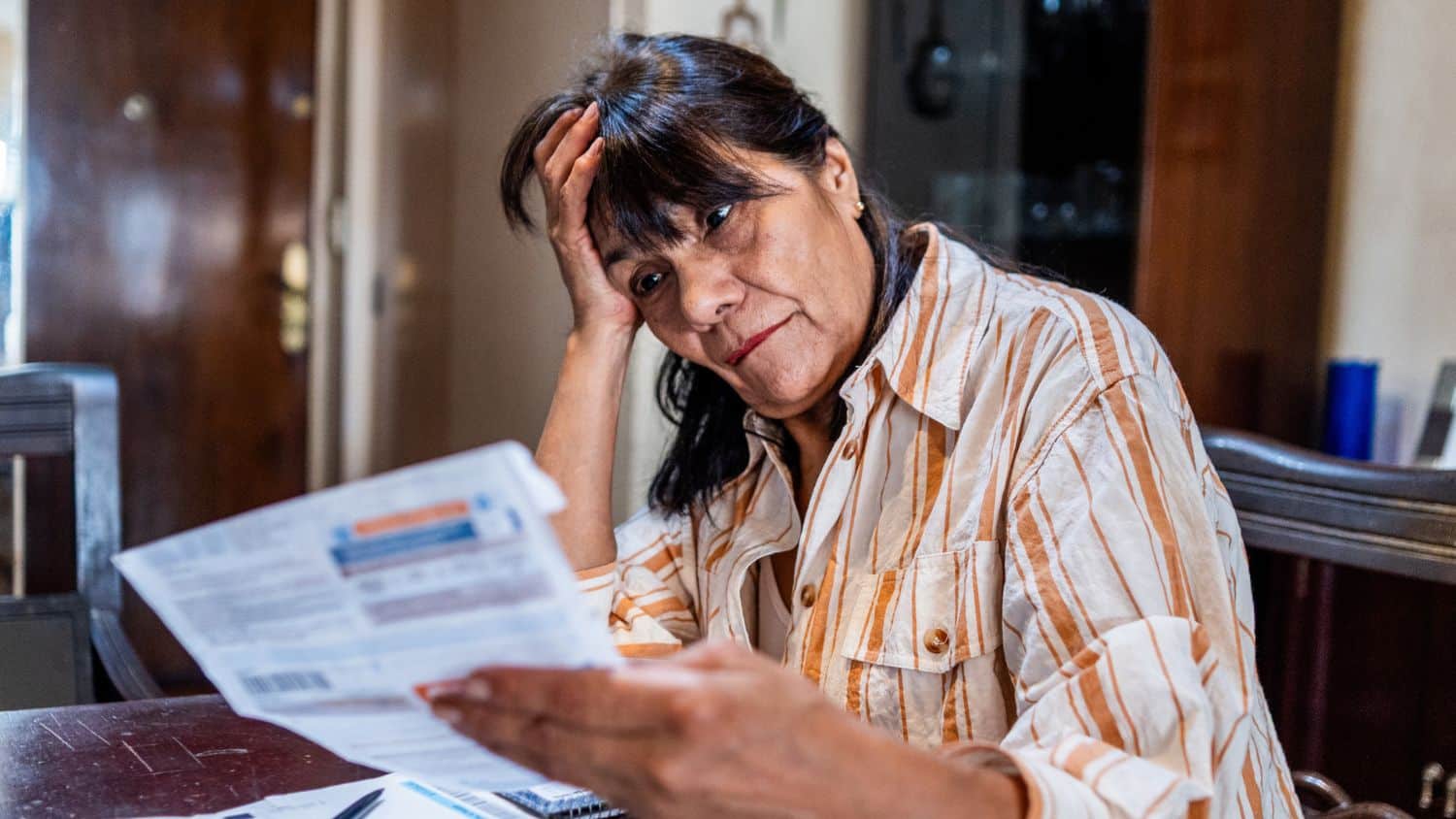
Money Is One of the Loneliest Parts of Life… But It Doesn’t Have to Be
Have you ever found yourself lying awake at night, running through numbers in your head, wondering if you’re doing this “right”?
Maybe it’s a bill you’ve been putting off opening.
A decision you’re not sure how to make.
Or a quiet worry you haven’t shared with anyone.
For many women, money isn’t just stressful, it’s deeply lonely.
Not because we don’t have people in our lives. But because money is one of the few areas where we feel like we’re supposed to have it all figured out… and where we’re least likely to admit that we don’t.
And it’s not just a feeling.
Research suggests that about one in three adults experiences loneliness, and older adults are particularly vulnerable. But what’s rarely talked about is how often money sits right at the center of that loneliness, quietly shaping our decisions, our relationships, and the way we see ourselves.
The Kind of Loneliness No One Sees
I once worked with a woman, let’s call her Diane, who seemed, by all outward appearances, completely fine.
She had a close group of friends, regular dinners with her family, and a comfortable home. She stayed active, volunteered, and described herself as “lucky.”
But when we started talking about money, everything shifted.
Her voice softened. She hesitated. Then she said, “I’ve never told anyone this before…”
What followed wasn’t just a financial story, it was an emotional one. She was worried she wouldn’t have enough for the future. She didn’t fully understand some of the decisions she needed to make. And underneath it all was a quiet, persistent belief that she was the only one who didn’t have it figured out.
Diane wasn’t alone in her life.
But she was completely alone in her financial life.
Why Money So Often Leads to Isolation
There are many areas of life where we can admit uncertainty: health, relationships, even parenting. But money is different.
Money carries an unspoken expectation:
You should know what you’re doing by now.
And when we feel like we don’t, we tend to go quiet.
For many women, that silence is shaped by years, sometimes decades, of messaging. Some were never invited into financial decisions in the first place. Others were taught, directly or indirectly, that money was something to be handled privately, or by someone else.
Over time, that lack of conversation becomes a lack of confidence, not because the ability isn’t there, but because the opportunity to build it never was.
And then there’s comparison.
We see friends traveling, downsizing beautifully, or speaking confidently about their finances. What we don’t see are their questions, their trade-offs, or their worries. Without that context, it’s easy to assume everyone else has it figured out, and that we’re the exception.
So we stay quiet.
Alone, Even When You’re Not
It’s worth pausing here to name something important.
There’s a difference between being isolated and feeling lonely. You can be surrounded by people, family, friends, community, and still feel completely alone if there’s no space to share what’s really on your mind.
For many women, money is exactly that space. It’s the thing you don’t bring up at dinner. The question you don’t ask your friends. The worry you carry quietly, even in a full room.
And over time, that quiet becomes its own kind of weight.
What Carrying It Alone Does
When money becomes something we manage in silence, it starts to shape our behavior in subtle but powerful ways.
We might put off opening statements, not because we’re irresponsible, but because we don’t want to face what we might feel. We delay decisions, not because we’re incapable, but because we don’t feel confident enough to move forward.
We second-guess ourselves. We stay stuck.
Not because we’re doing anything wrong, but because we’re doing it alone.
A Different Way to Think About It
Here’s the shift I want to offer:
The problem isn’t that you’re “bad with money.”
The problem isn’t that you’re behind.
The problem is that you’ve been trying to navigate something complex, emotional, and deeply personal without support, without language, and without a place to talk about it honestly.
And that would make anyone feel stuck.
A Small Way to Begin
The good news is that you don’t have to overhaul your entire financial life to start feeling less alone. Often, the shift begins with something much smaller: letting one thought be seen.
It might sound like:
- “I’ve been feeling unsure about my savings.”
- “I don’t fully understand my investments.”
- “I’ve been worrying about money more than I expected.”
You don’t need a solution in that moment. You don’t need to have it perfectly articulated. You just need to let it exist outside of your own head. Because the opposite of isolation isn’t perfection, it’s connection.
Letting Yourself Be a Learner Again
For many women, part of what makes money feel so isolating is the belief that they should already know all of this.
But what if that expectation isn’t fair?
What if, instead of being “behind,” you’re simply learning something now that you weren’t taught earlier?
That shift, from judgment to curiosity, can change everything.
Instead of asking, “Why don’t I know this?” you begin to ask, “What would I like to understand next?”
And that question opens doors that shame tends to keep closed.
Where Connection Already Exists
You may not need to look very far to begin changing your experience. Chances are, there are already people in your life who could hold a piece of this with you, a friend, a sibling, someone you trust.
The difference isn’t in finding the “perfect” person. It’s in allowing an existing relationship to go one layer deeper.
Money doesn’t have to be the thing you never talk about.
And talking about money doesn’t need to be done with anyone you feel “has it all together,” or anyone who would judge you, or even shine you on with “Oh, everything will be ok!”
YOU get to decide who to share with.
What Changes When You’re Not Alone
When women begin to talk about money, even just a little, something shifts.
- The pressure eases.
- The shame softens.
- New ideas begin to emerge.
Confidence doesn’t arrive all at once, but it starts to build quietly, steadily, because you’re no longer carrying everything by yourself.
Closing Thoughts
If money has felt like a lonely part of your life, there’s nothing wrong with you.
You’re responding in a completely human way to something that has been kept private, complicated, and often unspoken for far too long.
But it doesn’t have to stay that way.
Money may be personal, but it was never meant to be isolating. And even the smallest step toward connection can begin to change how it feels.
Avoiding the pain of isolation and moving toward safety around money doesn’t have to be a whole thing… Download the free self-guide today to find out how isolation may be impacting your financial life, AND the first, gentle steps to feeling less alone.
Let’s Have a Conversation:
Who do you share your money concerns with? Do you feel alone in all the decisions you need to make? How often do you postpone taking care of money decisions because of uncertainty?