


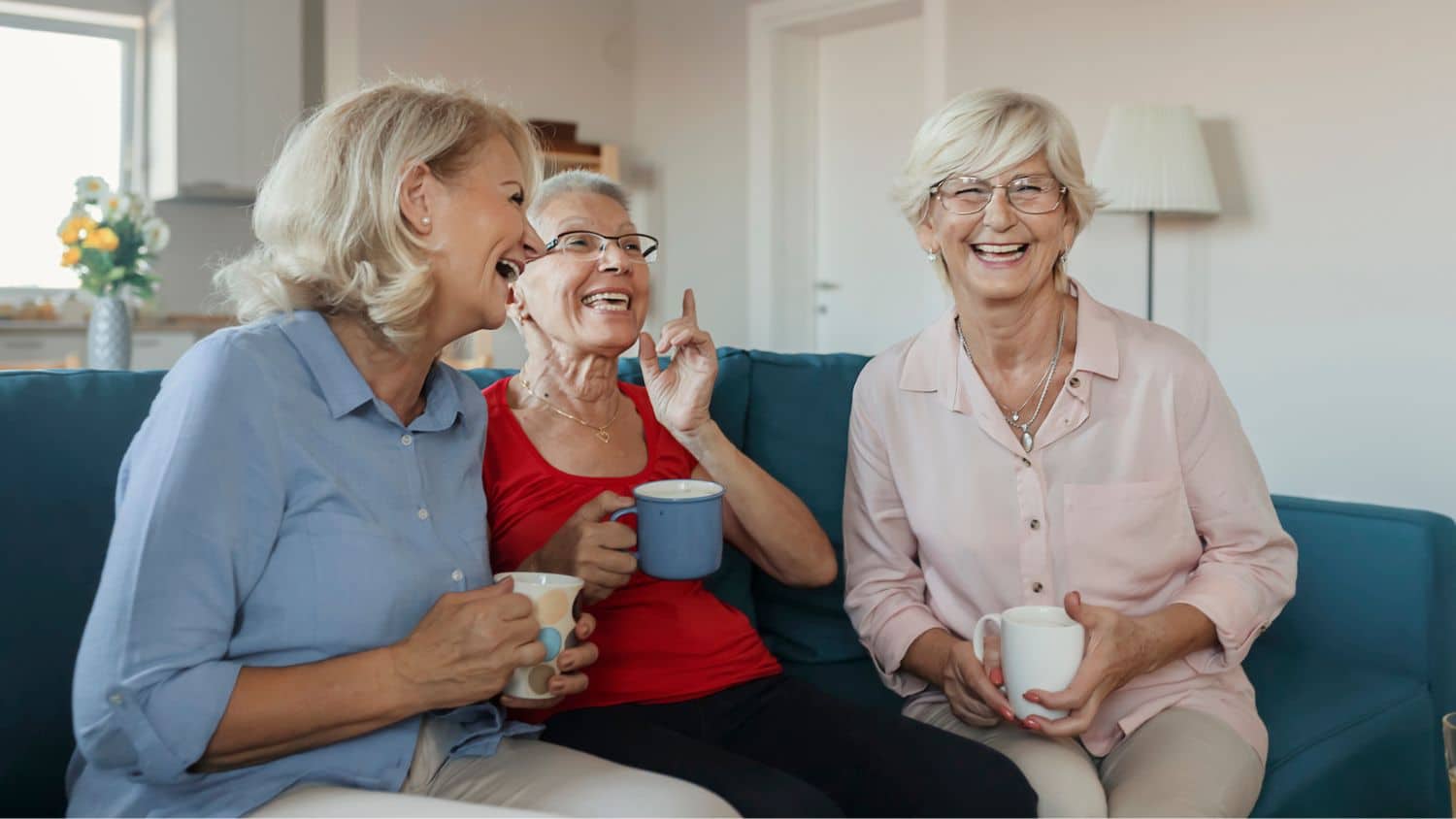
A Little Help from My Friends – A New Way of Thinking About Aging In Place, Especially If You’re Single
When we talk about aging in place, we usually think about the place. We love our homes. We want to stay where it’s familiar, and we want to be safe.
As we get older, we start thinking about other things we never thought about before. Are there stairs? Do we need an elevator now? Can the bathroom be adapted with higher toilets and grab bars? Are hallways wide enough for wheelchairs if that ever becomes a necessity? Is medical care nearby? Who will be there if I try to age in place?
A Lucky Friendship with Two Other Women
In my apartment building, a newly restored colonial building in Cuenca, Ecuador, I met two women; the three of us are in our 70s. Blake is widowed with a grown child. Emma is divorced and now living alone. And I am a perennial single woman.
Blake rents, while Emma and I own our apartments.
None of us moved into the building looking for aging-in-place partners. We simply discovered that we liked one another. I call them my “thinking friends” because our conversations are substantive and deep. We offer advice when asked, mostly let each other talk, and really listen. And because we cheer one another on in our successes and show up when life throws us a curveball, it doesn’t get much better than that in the friend department.
When we first met, we were just getting together for drinks. Then dinners were more regular. Over time, our conversations became infinitely more interesting, profound, and personal. Somewhere along the way, an unlikely friendship became something more.
Without really planning it, we began creating our own little support system. It wasn’t just companionship over dinners and drinks, but something more important: watching out for one another.
At first, we checked in every morning and every night just to feel like we weren’t alone and were safe. That didn’t last long. We weren’t alone, we were completely safe, and all of us were too busy living to have another obligatory duty twice a day.
Now we have a three-day rule. If we haven’t heard from one another in three days, we check. Easy! A quick text (or our group chat) and any concern is over; help is appreciated if needed, and everyone feels good knowing someone else cared and took action.
We’ve Come a Long Way from Our Early Beginnings
Each of us has a spare key to the others’ apartments. We’ve also hidden keys in places only we know about, just in case. On our phones, we created an emergency group that includes the three of us and several other trusted people nearby.
If something happens and one of us can’t talk, we don’t have to explain anything. We can simply hit that emergency line we created on our respective cell phones, repeatedly. Everyone knows what it means: Somebody needs help, and whoever is first alerts the others. It’s an easy set-up on any smartphone.
We wrote emergency contact sheets and hung them somewhere not necessarily visible, like behind a cabinet or kitchen door in our apartments. The laminated lists include everything from three ambulance companies and the closest and best hospitals to the 911 number and the local police. We also included our primary doctors, medical proxies, lawyers, and anyone with Power of Attorney for us.
In private areas, we’ve created a more specific, need-to-know list with contacts of people important in our lives, so our new friends know our primary old friends and family, and can contact them in an emergency.
And we’ve even talked about starting a little fund, where we each put a small amount of money into an interest-bearing account, so if we eventually need to have in-house help, we can rent one of the Airbnb apartments in our building and have a full- or part-time nurse and caregiver living in our building, taking care of all three of us.
We think others in our building may be interested in this idea, but we’re still working out the logistics. Our thinking keeps expanding.
Nothing Like an Unexpected Call to Action
Then something happened that made us all realize how much this little community has come to mean to us.
The owner of Blake’s apartment decided to sell it. Suddenly, it looked as though Blake might have to leave the building.
Emma had recently sold an investment property. She bought Blake’s apartment, assuring her we wouldn’t break up our trio and that she would always have a home with us. I, for one, was bawling when I heard this.
Emma’s act was extraordinarily generous, but it was also her way of saying what the three of us had already begun to say to one another. Let’s try to age in place, helping one another when we can and planning together for whatever needs may come – but staying friends until the end.
For three women who have spent much of our lives being independent, it’s surprisingly comforting to realize that independence doesn’t have to mean doing everything alone. None of us wants to give up control of our lives. Quite the opposite. We’re trying to keep living on our own terms, with a little help from our friends.
Questions for You:
Have you formed a friend group, a community in or around where you live, or done other things to feel protected and safe in your own cozy home and hopefully age in place? I’d love to hear your ideas.
Tags Friendships Senior Living

