
The $12,000 Senior Tax Break You’re Probably Missing in 2026
A new temporary tax deduction gives couples over 65 up to $12,000 in deductions for 2026, potentially offsetting Social Security taxes entirely for many retirees.
So my mom called me last week. Not to catch up, not to tell me about her neighbor’s new dog – she wanted to know why her tax refund was smaller than her friend Linda’s. Linda, it turns out, claimed a senior tax break 2026 deduction my mom didn’t even know existed. Six grand, just sitting there. My mom’s accountant never mentioned it.
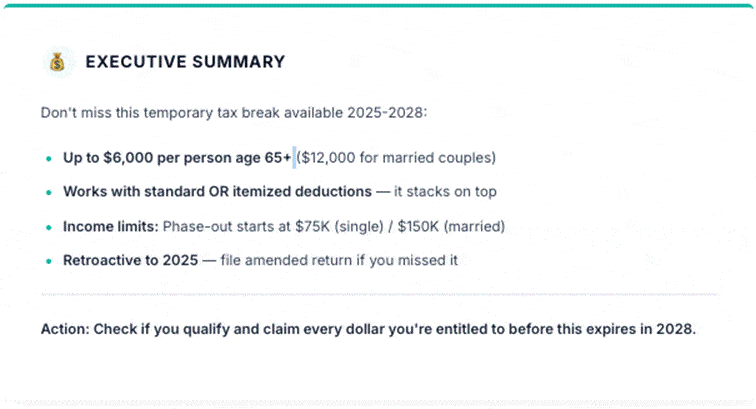
If you’re 65 or older and you filed your 2025 taxes without claiming the new 65 and older tax deduction, you probably did the same thing. You left real money on the table. Up to $6,000 if you’re single, $12,000 for married couples filing jointly. And that’s not pocket change. That’s a nice vacation. A year of property taxes for some folks. A chunk of a new roof.
Let me walk you through what this senior tax break actually is, who qualifies, and how to make sure you’re not missing out on this retirement tax planning opportunity.
What Is the New Senior Tax Break for 2026?
On July 4, 2025 – because apparently that’s when we sign tax bills now – the One Big Beautiful Bill Act became law. Wild name, I know. Buried in there alongside the no-tax-on-tips stuff was a brand-new 65 and older tax deduction.
Here’s the deal:
- $6,000 per person age 65+.
- $12,000 for married couples filing jointly where both spouses qualify.
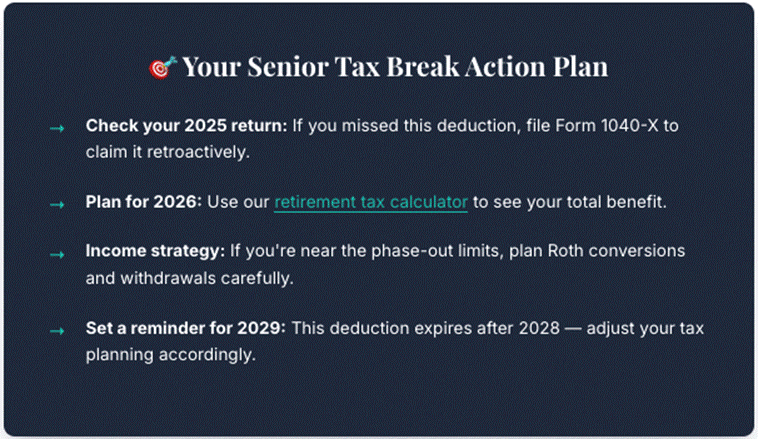
- Good for tax years 2025 through 2028 – then poof, it’s gone.
- Works whether you take the standard deduction or itemize.
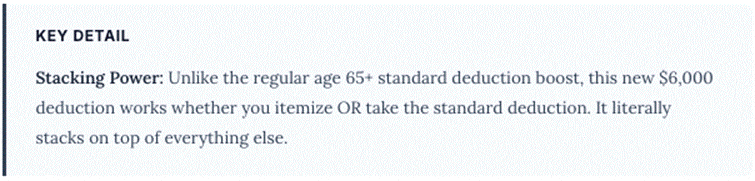
- Stacks on top of everything else you’re already getting.
That last bullet is the one people keep missing. This isn’t replacing your existing deductions. It’s a whole extra layer on top. Like getting a bonus side of guac that you didn’t have to pay for.
How Much Money We’re Actually Talking About
Because that’s what matters, right? Not theory – what does this senior tax break 2026 look like in your actual life?
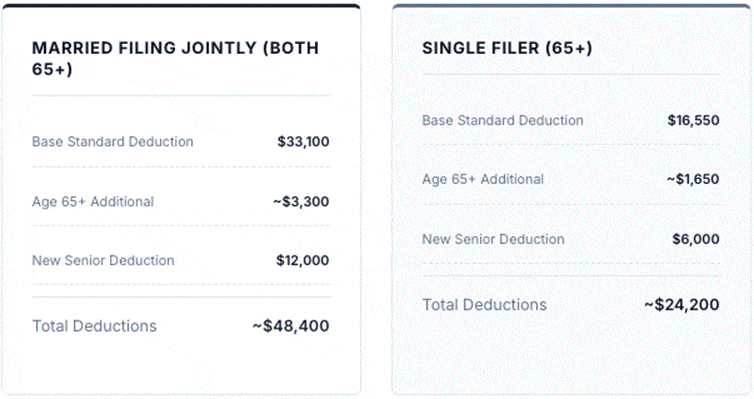
Read that again. Nearly $48,400 in deductions before you even think about itemizing. That’s massive for retirement tax planning.
For a lot of retirees living mostly on Social Security and modest retirement income, this can bring your federal tax bill pretty close to zero. This Social Security tax offset 2026 effect can be game-changing for lower-income seniors.
(Quick note: The age 65+ additional standard deduction numbers for 2026 get adjusted for inflation. Check IRS.gov for the exact figures when you file.)
Senior Tax Break 2026 Eligibility: Who Gets It and Who Doesn’t
The age part is obvious – 65 or older by December 31 of that tax year. But there’s a few other things:
You qualify for the 65 and older tax deduction if:
- You’re 65+ by year-end.
- You have a work-authorized Social Security number.
- You file as Single, Head of Household, Married Filing Jointly, or Qualifying Surviving Spouse.
You don’t qualify if:
- You file Married Filing Separately. Yeah, this one’s a total shutout. Neither spouse gets it.
- You’re under 65.
- No work-authorized SSN.
Income Limits for the Senior Tax Break
There’s an income phase-out based on your Modified Adjusted Gross Income (MAGI):
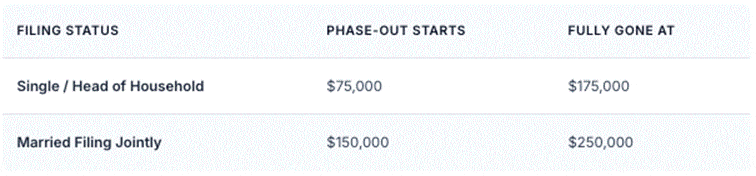
The math on the phase-out: you lose 6 cents for every dollar over the threshold. So if you’re single, 68 years old, making $100K — you’re $25,000 over the line, which knocks $1,500 off your deduction. You still get $4,500 instead of the full $6,000.
For couples making $200K jointly, you’d lose $3,000 off the full $12,000, leaving you with $9,000. Still a solid win for retirement tax planning.
This Senior Tax Break vs. “No Tax on Social Security”
I need to clear this up because I keep hearing people get it wrong at dinner parties. And at the grocery store. And basically everywhere.
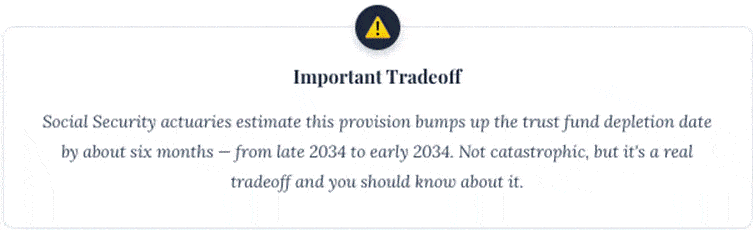
During the 2024 campaign, there was a lot of noise about killing income taxes on Social Security entirely. That would’ve cost something like $1.4 trillion over a decade. What actually passed? This $6,000 senior tax break – a much smaller thing at around $93 billion over the same period.
It doesn’t change how Social Security gets taxed. What it does is reduce your overall taxable income, which indirectly helps if you’re living mostly on Social Security. For lower-income retirees, this Social Security tax offset 2026 effect can feel pretty similar. For higher earners? Not really the same thing at all.
How to Claim Your Senior Tax Break 2026
Alright, here’s the practical retirement tax planning stuff. This is the part I’d tell my mom if she’d stop talking about Linda for five minutes.
Claim the 65 and Older Tax Deduction – Even If You Itemize
This is the part that trips people up. The regular age-based standard deduction? Only works if you don’t itemize. But this new $6,000 deduction? You get it either way. Got big mortgage interest, property taxes, medical bills, charitable giving? Itemize away. You still get this on top.
Run the Numbers Both Ways
With the enhanced standard deduction pushing close to $48,400 for qualifying married couples, itemizing might not make sense anymore – even if it did last year. Don’t just assume. Actually run both scenarios. Your tax software should do this automatically, but I wouldn’t trust it blindly (see: my mom’s situation).
Income Management Strategies for the Senior Tax Break
If you’re hovering near the $75K (single) or $150K (married) threshold, you’ve got some retirement tax planning moves:
- Pump the brakes on Roth conversions in high-income years.
- Time your capital gains to stay under the phase-out line.
- Harvest some tax losses to offset gains and keep MAGI down.
- Look into qualified charitable distributions (QCDs) from your IRA – they count toward your RMD without juicing your MAGI. That’s a two-for-one.
Don’t Miss the 2025 Retroactive Benefit
This 65 and older tax deduction is retroactive to tax year 2025. If you already filed and missed it – or your software missed it – you can file an amended return (Form 1040-X) and grab it. For most qualifying seniors, we’re talking $720 or more back in your pocket.
Plan for When the Senior Tax Break Expires
Four tax years. 2025 through 2028. Then it sunsets. If you’re thinking about Roth conversions, pulling big chunks from retirement accounts, or any major income event – factor this window into your retirement tax planning. You’ve got a limited-time shield here. Use it.
This Social Security tax offset 2026 opportunity is temporary. It phases out for higher earners. But for millions of retirees, this is one of the most straightforward tax wins in years.
What’s Your Senior Tax Break 2026 Actually Worth?
Let me make it real simple:
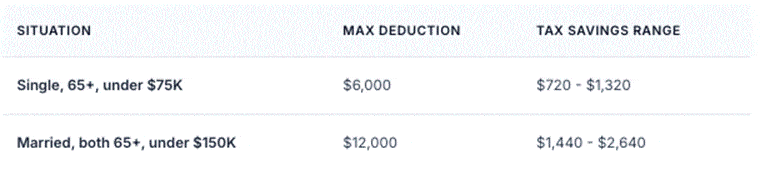
Is it going to change your life? Maybe not. Is it going to pay for a really nice trip, cover some bills, or just give you a little more breathing room? Absolutely.
For millions of retirees living on Social Security, pensions, and modest investments, this is one of the most straightforward tax wins in years.
Don’t be my mom. Don’t let Linda beat you.
Let’s Have a Conversation:
Did you make use of the Senior Tax Break for 2025? How did it help your retirement budget? Are you planning to claim the tax break through 2028?