



Chester, Chester, and Chester – A Story of a Recovering People Pleaser
Over the 30 years I taught elementary school, I almost always had a cage with something in it. Mice, hamsters, Madagascan hissing cockroaches. I also had a beautiful tank of tropical fish. I believed children needed to learn how to care for something smaller and more vulnerable than themselves. Empathy. Responsibility. Apparently, I needed to learn those things over and over again.
What I didn’t know I didn’t know was how much a part of the school culture my hamsters had become. I also didn’t realize what a pain in the you-know-what having a classroom pet could be. If I had paid closer attention, I would have noticed that the other teachers didn’t have pets. I thought they didn’t want the bother. What I really didn’t know I didn’t know was that these other teachers were smarter than me.
The Year of the Three Chesters
Ahhhhhh, the school year of 2016–2017. After an earlier hamster fiasco involving the name Grandpa Joe, I began naming all my hamsters Chester. (Read it here if you have the time: Grandpa Joe Story.) It kept things simpler. New hamster. Same name. One less proper noun to remember. Most hamsters live about two or three years. Do the math. I had at least 10 hamsters over my teaching career. Hamsters came and went from my classrooms like sharp pencils.
Along the way, I taught children how to gently handle a nervous hamster, how to clean a cage, and how to mourn when a pet died. These were valuable life lessons. For the children. My lesson seemed to be that once you became the teacher with the hamster, you were expected to remain the teacher with the hamster.
Getting Out of the Hamster Business
I started that school year with a Chester who had been with me for six years. Six! He had outlived every reasonable hamster expectation and was still going strong. His cage was not. That cage had been dropped, cracked, and duct-taped so often that I’m not sure how much original cage remained. Many kiddos got their parents to “check out” the hamster for a weekend or vacation. I could not believe parents allowed little children to carry a glass aquarium with a hamster inside. Parents thought they were teaching their children responsibility. I thought they were destroying my property.
That Thanksgiving, Chester went home with a lovely little girl named Marsha. I gave her parents one very clear instruction: If Chester died over the break, please do not buy another hamster. He was ancient. It would be no one’s fault. And I had been stuck in a cycle of hamsters for 30 years. I needed to get out.
Chester died over Thanksgiving break. Marsha’s mother bought another hamster.
She explained that it would be “traumatizing” for her daughter to bring the bad news back to the class. She did not want Marsha to carry that stigma. I had thought caring for a classroom pet might include learning that animals eventually die. Apparently, the lesson was that an uncomfortable situation could be fixed by purchasing another rodent.
So, Chester Number Two arrived in my classroom on the Monday after Thanksgiving. I had specifically asked her not to buy him. I did not want him. I had done everything short of posting a NO MORE HAMSTERS sign on the cage. Naturally, I offered her 20 dollars to pay for the hamster I didn’t want. She snatched the bill out of my hand. Merry Christmas to me!
Looking back, I’m not sure why I offered to pay for something I had specifically asked someone not to buy. At the time, it seemed easier than making her uncomfortable. I was uncomfortable, of course. But I had years of practice with that. My superpower was being a people pleaser.
A Cage Without a Hamster
Then came the two-week winter break. A boy named Kevin took Chester Two home. I was always a bit nervous when Kevin took the hamster because his house sounded like a zoo. Emus. Llamas. Caged birds. A hamster of his own. A mouse. A surplus of dogs and cats. How could Chester Two survive such an environment?
The Monday after break, Kevin proudly walked into my classroom carrying a brand-new cage. He told me he had bought it because the old one was getting so broken. This was true. The old cage had been held together by duct tape and my unwillingness to purchase another cage because I WAS GETTING OUT OF THE HAMSTER GAME. I did not offer to pay for the cage. I was being brave.
Kevin and his sister set the new cage on my counter. I looked over. No movement. There was always scurrying under the wood shavings. Always.
“I don’t think there’s a hamster in that cage,” I said.
“Oh, the hamster is in there,” Kevin assured me, but his face looked funny.
I looked again. I knew something was up. I also had a classroom full of children arriving for the first day back after a long break. There were greetings to exchange, stories to hear, and 20-some children to persuade that we were, once again, going to “do” school.
I put the hamster out of my mind for a couple of hours. I knew he wasn’t there. I really did. But Kevin said he was there, and I wanted him to be there, and I could not face the alternative. Not yet.
Eventually, it was time for our read-aloud. We always put Chester in his rolling ball while I read stories to the class. It was something I had done for years. Little Kyli went to get him.
“There’s no hamster in here!” her teeny-tiny, high-pitched voice announced.
Imagine the roar that went through the room. Marsha got up to investigate. She had become quite good at handling Chester Two, and apparently this situation required an expert. She searched the cage, then looked at me over her owl-like glasses.
“Not here,” she said disgustedly.
Now Kevin had a story. The hamster must have gotten out somewhere in the school. Liar! I wanted to scream. I did not scream it. Thos 30 years in an elementary classroom had taught me to keep certain observations to myself.
“The hamster never came back from your house,” I said as calmly as I could. “I think he’s still there. Let’s call your mom.”
I called. I emailed. Could Chester be in the car? Could he be somewhere in the house? Could somebody please look? My calls and emails got me nowhere. Chester Two was not to be found. He would not be found. That much seemed clear.
Chester Number Three
What was I to do? You already know. I went to the pet store. I bought another Chester. Hello, Chester Number Three! Nobody had even asked me to buy this one. By then, I could keep the hamster cycle going all by myself.
I told the children that Chester Two wasn’t really gone. He was traveling somewhere. He had made one of those little knapsacks with a handkerchief tied to a stick and headed off on an adventure. He would be back. He would truly be back. In my heart, I couldn’t believe he was really gone. Also, I had apparently decided that the best response to a child’s unlikely hamster story was to supply one of my own.
Chester Three was very young and hard to tame. But I had to face it. I had a brand-new cage and a brand-new hamster, and this hyper little thing made me anxious every time I looked at him. Through no fault of his own, he was living proof that I was still in the hamster business, and my people pleasing was NOT a superpower after all.
When would this insane roller coaster of hamsters end? Would I still be a lovable teacher if I didn’t have one? That sounds ridiculous when I write it now. I had taught children to read, helped them through friendship disasters, listened to their stories, and spent more than 30 years trying to give them what they needed. Surely my standing in the school did not depend on a rodent. And yet, there I was, buying another one.
How many times have I done some version of that? Known what I knew, wanted what I wanted, then set it aside because somebody else might be disappointed? I didn’t want another hamster after Chester One died. I got one. I knew Chester Two hadn’t come back from winter break. I let myself put that knowledge aside. Then I bought Chester Three to make everybody feel better. Everybody except me, apparently. I hadn’t consulted me.
What I really didn’t know I didn’t know was that my ridiculous story about Chester Two being away on an adventure would turn out to be true. On an icy Monday in January, nearly two weeks after bringing Chester Three to live with us, Chester Two came back to my classroom. He HAD been living in Kevin’s mudroom.
I like to picture him coming out at night, licking melted snow off the boots, and helping himself to food spilled by the other residents of the family zoo. Perhaps he had enjoyed the freedom. Maybe he had simply been waiting for somebody to notice him. Either way, he was back.
I had wanted to end the school year with no hamsters. Now I had two.
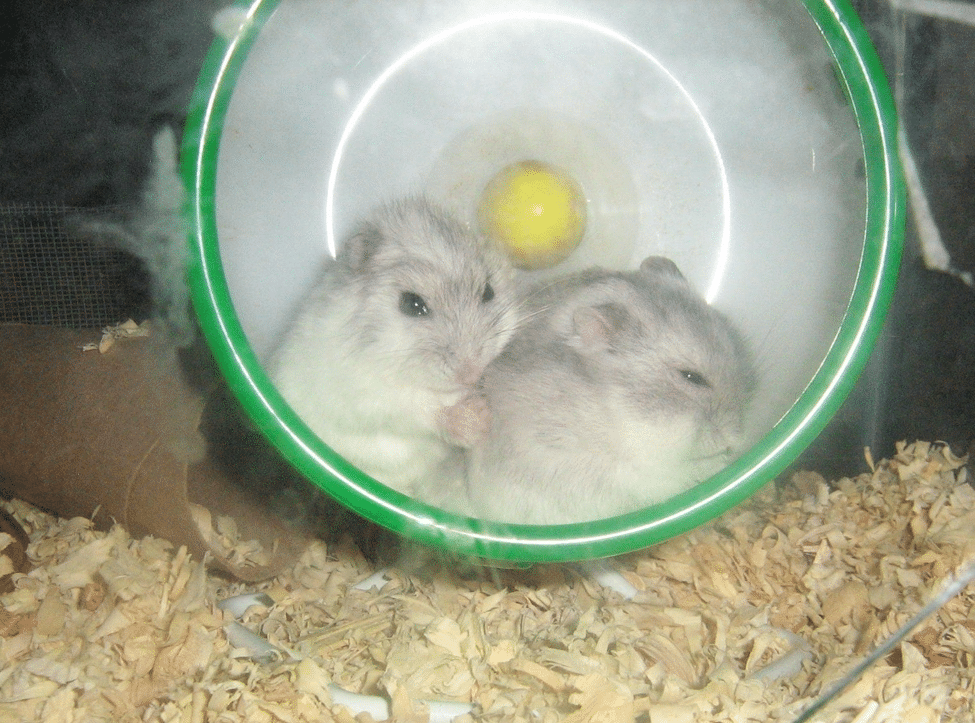
Again, here are Chester 2 and Chester 3 happily mocking me from their wheel.
Retiring from People Pleasing
Now, at 62, I’m retired from teaching. Retiring from people pleasing is taking a little longer. I still catch myself treating someone else’s disappointment as a problem I’m supposed to solve. I can say what I want clearly, politely, even repeatedly, and then feel guilty when someone realizes I meant it.
I still want to be kind. I still want to be someone people can count on. But I’d like to be someone I can count on, too. Someone who takes my own wishes seriously instead of treating them as the first thing we can eliminate to keep everybody else happy.
These days, I’m trying to give my own opinion a little more weight before I find myself driving to the pet store again.
Let’s Talk About It:
Are you a people pleaser? Tell us about a time you put everyone else’s feelings ahead of your own. How did that work out for you?
Tags Reinventing Yourself


