


The First Crown Was Fur
Long before there were crowns of gold, there was fur.
Picture a coronation morning, five hundred years ago. The palace is freezing – stone walls, no heat but braziers, breath showing in the air. The most powerful man in the country is being dressed, and the last, heaviest layer they settle onto his shoulders is not armor and not silk. It is the skin of an animal, deep and soft and shining, worth more than the house of every merchant watching. When he walks out, nobody in that crowd needs to be told who is king. The fur says it.
For most of human history, that was true everywhere on earth. Fur was warm, yes – but warmth was the least of it. The right fur was rare, it was beautiful, it took enormous skill and danger to obtain, and so it became the universal language of power. Kings, emperors, sultans, and chiefs on every continent wrapped themselves in it for the biggest moments of their lives. Here is their story.
The Pharaohs and the Leopard
Start in Egypt, three thousand years before Rome. In the temples along the Nile, the most sacred ceremonies – the rituals that were believed to wake the dead and open their mouths to breathe again in the afterlife – could only be performed by a priest wearing a leopard skin draped over one shoulder.
The leopard was not chosen by accident. It was the fastest, fiercest hunter in their world, and its spotted coat reminded the Egyptians of the starry sky. To wear it was to borrow the animal’s power and carry a piece of heaven on your back. Pharaohs had themselves carved and painted wearing the leopard skin, and when the boy king Tutankhamun was buried in his famous tomb, a ceremonial leopard skin went in with him, its rosettes picked out in gold – a king’s garment for eternity.
You can still stand in front of these images today. The British Museum in London holds statues of Egypt’s high priests wearing the leopard skin across their chests, exactly as they wore it in life.
Russia: The Country That Ran on Sable
If one fur ever ruled an empire, it was sable in Russia.
Sable is the deep brown, almost black fur of a small forest animal in Siberia, so soft that Russian merchants called it “soft gold.” They were not exaggerating. When Russia pushed east across Siberia in the 1500s and 1600s, it was not really conquering land. It was hunting sable. Native peoples across Siberia were forced to pay their taxes – a levy called the “yasak” – in sable pelts, and those pelts flowed into Moscow by the hundreds of thousands. In some years, fur brought in a tenth of everything the tsar’s treasury collected. Sable paid for armies. Sable built an empire 11 time zones wide.
The tsars dressed accordingly. In the Kremlin Armoury in Moscow – a museum you can visit today – sits the Cap of Monomakh, the crown used to crown Russian rulers for centuries. It is gold filigree and pearls and precious stones, and the whole thing is edged in sable. Tsars wore sable coats so rich that a single garment could be worth an estate, and when Russia wanted to honor a foreign ambassador or seal a great bargain, the gift was sable. To this day, the Armoury displays the fur-trimmed coronation garments of the Romanovs, including imperial mantles of white ermine so long they had to be carried by pages.
The Sultans in Their Kaftans
Travel south to Istanbul, capital of the Ottoman Empire, and you find the same story in a warmer accent.
The sultans of Turkey ruled an empire that stretched from Hungary to Arabia, and for court ceremony they wore kaftans – long, magnificent robes – lined and trimmed with sable and ermine. In a palace where hundreds of courtiers competed to display rank, fur was the ranking system. The finest black sable was reserved for the sultan himself. A kaftan lined with sable was among the most valuable gifts the sultan could bestow, and receiving one meant you had been wrapped, literally, in the ruler’s favor.
The sultans kept thousands of these robes. Today, the Topkapı Palace in Istanbul – the sultans’ own palace, now a museum – preserves one of the greatest collections of royal garments on earth, row after row of kaftans, many still carrying their fur linings after five hundred years.
The Dragon Throne and the Khan’s Thousand Sables
In China, fur marked the turning of the year and the height of rank. The emperors of the Qing dynasty, who ruled from 1644 to 1912, kept two wardrobes: silk for summer, fur for winter. Their winter court robes were edged with sable – the darker and more lustrous the sable, the higher the man. The finest dark “purple” sable from the frozen forests of Manchuria was reserved for the emperor alone, and the peoples of the far northeast paid their annual tribute to Beijing in sable skins, just as Siberians paid Moscow. At the very top of the empire, a man’s rank could be read in the fur on his collar.
And before the Qing, there were the Mongols. When Marco Polo reached the court of Kublai Khan in the 1200s, he could hardly believe the fur. He described the Great Khan’s robes lined with sable and ermine, and hunting lodges and great halls hung with the skins of tigers and sables by the thousand. The Mongol Empire was the largest land empire in history, ruled from horseback in some of the coldest country on earth – and its khans dressed for ceremony in the furs of the steppe and the northern forest, the wealth of the world they had conquered, worn on their shoulders.
The Palace Museum in Beijing, inside the Forbidden City where the emperors actually lived, keeps the imperial winter robes to this day, sable collars and all.
Ermine: The Fur That Became a Law
In Europe, one fur stood above all: ermine.
Ermine is the winter coat of the stoat, a small weasel that turns snow-white in the cold months except for the black tip of its tail. Sewn together with the black tips left in place, the pelts make a white field scattered with black spots – you have seen it in a hundred portraits of kings. White meant purity. The legend said the ermine would rather die than dirty its white coat, and medieval kings loved the message: a ruler whose honor was spotless.
Europe’s kings did not merely prefer ermine. They monopolized it. In England, Edward III’s sumptuary laws of the 1360s laid down by statute who could wear which fur, reserving ermine and the richest sables for the royal family and the highest nobility. A merchant could be rich enough to buy ermine; the law forbade him to wear it. Fur was so identified with rank that it had to be protected like a title.
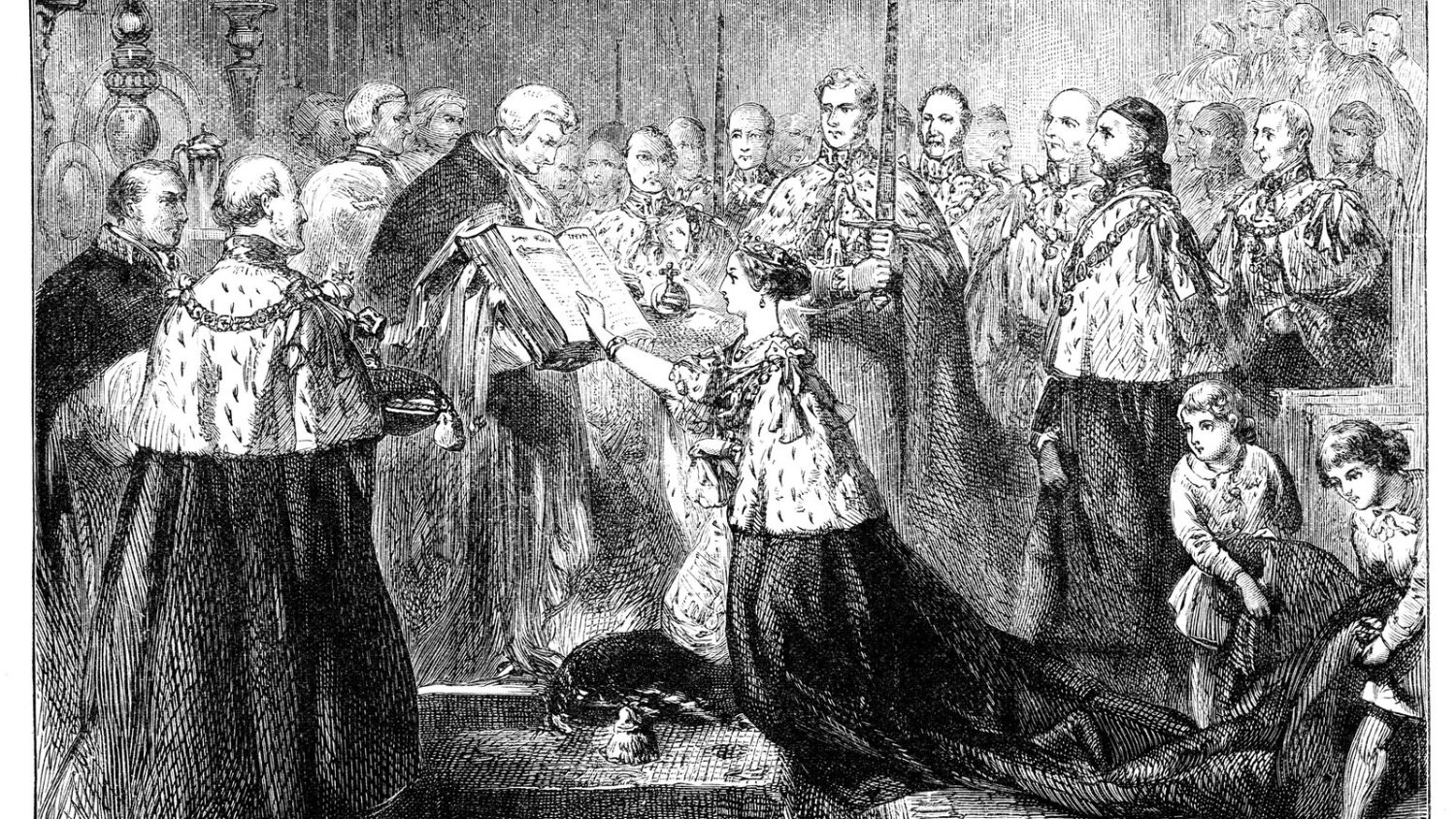
When Napoleon crowned himself Emperor of the French in Notre-Dame in 1804, in the most carefully staged ceremony of the century, he processed down the aisle in a mantle of crimson velvet lined with ermine, and Josephine’s train was ermine too. The message was deliberate: the upstart from Corsica was wrapping himself in the oldest symbol of kingship in Europe. Across the continent, the coronation robes survive. In Stockholm, the Royal Armoury displays the Swedish kings’ coronation mantles from the 1500s onward, their ermine trim still white after four and a half centuries.
Leopard for Kings, Lion for Emperors
In Africa, the royal fur was the leopard, and the rule was simple: the leopard belongs to the king.
Among the Zulu of southern Africa, leopard skin was the privilege of royalty. Shaka, the great Zulu king who forged an empire in the early 1800s, wore leopard as the sign of his authority, and no commoner could wear it without the king’s gift. The tradition is alive: at great ceremonies today, Zulu kings still appear in leopard skin, and in neighboring Eswatini the king wears leopard at the Incwala, the nation’s most sacred rite. The leopard is the king’s animal – cunning, solitary, and supreme – and its skin is a crown in another form.
Further north, in Ethiopia, emperors and great lords wore capes of lion’s mane, the ultimate trophy of courage, flowing over the shoulders of men like Emperor Haile Selassie, whose portraits in lion’s mane are known around the world. From the leopard of the Zulu to the lion of Ethiopia, the principle was the same as in Moscow or Beijing: the ruler wears the animal no one else dares to wear.
The New World: Jaguars, Buffalo, and Sea Otters
The Americas wrote the same story in their own furs.
In the Aztec Empire of Mexico, the most feared soldiers were the jaguar warriors, an elite order who went into battle wearing the skins of jaguars, heads framed by the jaguar’s jaws. The right to wear jaguar was earned by capturing enemies in battle, and jaguar pelts belonged to the emperor and his greatest warriors – the spotted skin of the Americas’ most powerful predator, reserved for the men who ruled and defended an empire. You can see the jaguar warriors’ regalia and imagery today at the National Museum of Anthropology in Mexico City, one of the great museums of the world.
On the Great Plains, the chief’s ceremonial garment was the painted buffalo robe. A fine robe was wealth, warmth, and history in one object: the best were painted with the owner’s deeds – battles, hunts, visions – so that a great chief literally wore his life story into council. When the Mandan chief Four Bears sat for the artist George Catlin in the 1830s, his robe recorded his victories for all to read. Painted robes of the Plains chiefs are preserved today at the Smithsonian’s National Museum of the American Indian in Washington, D.C.
And on the Northwest Coast, the supreme wealth fur was the sea otter. A single prime sea otter pelt, sold in China, could fetch a fortune – in the late 1700s, more than a sailor earned in years – and the great Haida and Tlingit chiefs wore robes of sea otter as the highest display of wealth and standing at potlatch ceremonies. Empires of ships crossed the Pacific chasing that one fur.
What a Skin Was Worth
Step back, and the pattern is astonishing. Sable paid Russia’s taxes and bought its armies. Sea otter launched a global trade war of ships. Ermine was guarded by law like a noble title. In China, a collar of the darkest sable told a whole court who stood nearest the throne before a word was spoken. Again and again, across deserts and tundra and jungle, people who had never heard of each other arrived at the same conclusion: the rarest skin of the fiercest or softest animal is what a ruler wears when it matters.
They were not wrong about the value. A great sable coat could be worth an estate of land. Furs were used as money, paid as tribute, given as the highest diplomatic gifts, and buried with kings to serve them in the next world. Gold is dug up and melted down; a fur must be hunted, matched pelt by pelt, and sewn by masters. Every royal robe was thousands of hours of human skill wrapped around one person’s shoulders.
Where to See Them
The good news is that these garments were treasured, so many survive:
- The Kremlin Armoury, Moscow – the sable-edged Cap of Monomakh and the tsars’ coronation robes.
- Topkapı Palace, Istanbul – the sultans’ sable-lined kaftans, hundreds of them.
- The Palace Museum, Beijing – the Qing emperors’ winter court robes with their sable collars, in the Forbidden City itself.
- The Royal Armoury, Stockholm – Swedish coronation mantles trimmed with ermine, some nearly five centuries old.
- The British Museum, London – Egypt’s priests and pharaohs in their leopard skins.
- The National Museum of the American Indian, Washington, D.C. – painted buffalo robes of the Plains chiefs.
- The National Museum of Anthropology, Mexico City – the world of the jaguar warriors.
The Robe Remains
Empires fall, and fur went out of the palace and into ordinary life – but the instinct never left us. We still dress up for the great occasions. We still believe that what you wear to the biggest moment of your life should be the finest thing you own, and that some materials carry a weight that ordinary cloth cannot.
The kings understood something simple: a crown sits on your head, but a great fur surrounds you. It moves when you move, it catches the light, it carries the strength and beauty of the living creature it came from. For five thousand years, from the priests of Egypt to the chiefs of the Plains, it was the closest thing human beings had to wearing majesty itself.
The first crown was fur. In a way, it still is.
Your Thoughts:
What do you know about the history of fur usage? Which parts of it do you find fascinating, intriguing and repelling? Have you visited any museums that display royal fur garments?



Thank you for some very interesting information. We are having a family wedding soon & the bride requested a homemade wedding cake baked by her Mother. her grooms Mother & me his Grandmother. We are all bakers, foodies & immediately began researching recipes for cakes & icing worthy of this important task. We ran across an icing recipe called Ermine icing. We made it & decided it perfect for our special cake. It was a cooked icing,luxuriously smooth very white, not too sweet, very spreadable.We were still puzzled by the name. I told them after alot of deep thought that the only connection I could think of is that Ermine was a luxurious white fur that trimmed the robes of Kings & Queens. They accepted my answer and your article, I think, proves me at least on the right track..Kings & Queens, it is perfect for our Bride & Groom.
Fingers crossed the cake comes cleanly out of the pans, & our Ermine icing goes on famously !
It was a sad day when the wearing of fur became taboo.