


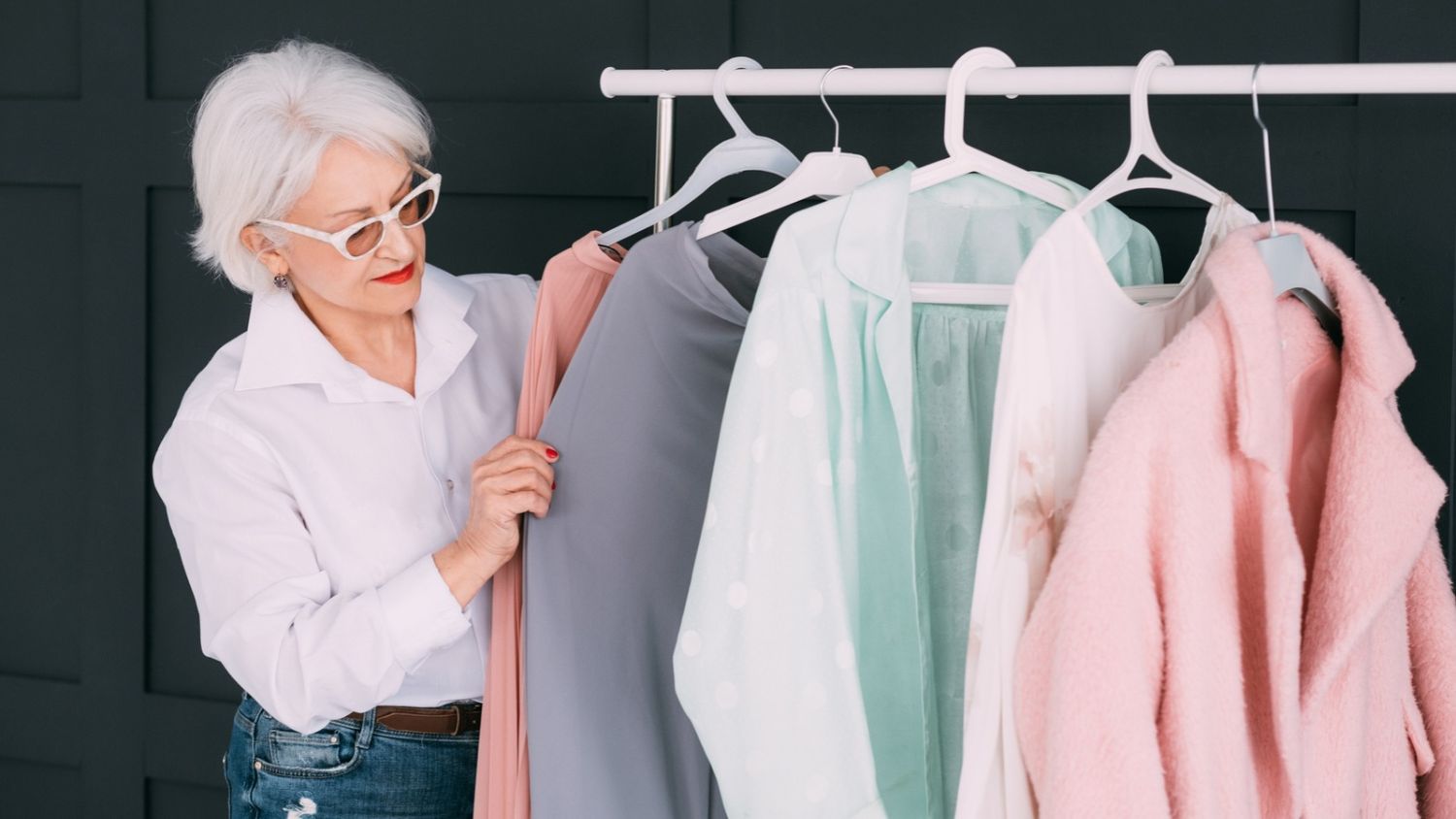
Why You Have a Closet Full of Clothes but Nothing to Wear After 60
You open your closet. It’s full. There are shirts, pants, dresses, sweaters, jackets, shoes, and probably a few things still wearing their tags. Yet somehow, after standing there for several minutes pushing hangers back and forth, you arrive at the same conclusion:
“I have nothing to wear.”
How is that possible?
Usually, the problem is not that you need more clothes. The problem is that the clothes you own aren’t working together, don’t suit your current lifestyle, or simply aren’t the pieces you naturally reach for anymore.
After 60, this can become especially noticeable. Our bodies change. Our schedules change. Our tolerance for uncomfortable shoes may disappear completely. We may travel more, work less, work from home, attend fewer formal events, or simply decide we are finished wearing things that require constant adjusting.
Meanwhile, our closets may not have caught up.
Your Closet Doesn’t Match Your Actual Life
One of the most useful things you can do is look at how you really spend your time. Not the life you think you should dress for, but your actual daily life.
Perhaps most of your week involves walking the dog, grocery shopping, meeting friends for lunch, volunteering, traveling, or working from home. But open your closet, and you may find business jackets, dressy blouses, uncomfortable shoes, special occasion dresses, and plenty of clothing that really doesn’t makes sense for those activities.
Meanwhile, the five comfortable outfits you wear constantly are doing all the work. Your wardrobe should roughly reflect the way you divide your time. If 70% of your life is casual, it makes little sense for half your closet to consist of dressy clothing.
You Have Plenty of Clothes but Not Enough Outfits
This is a big distinction. You can own 75 individual pieces and still have very few complete outfits.
Maybe you have a beautiful printed blouse, but it never looks quite right with your pants. You bought wide-leg trousers but don’t own the right shoes for them. You have several jackets, yet none work over your favorite tops.
I call these “forever single” pieces. Clothes that require you to buy something else before you can actually wear them. They aren’t necessarily bad purchases. They are simply not connected to the rest of your wardrobe.
Before buying something new, ask yourself: Can I wear this with at least three things I already own? If the answer is no, you may be buying another closet resident rather than something you will actually wear.
You Own Too Many Versions of the Wrong Thing
Sometimes our closets reveal our shopping habits better than we would like. You might own 14 pretty tops but only two pairs of pants you actually like. Perhaps you keep buying cardigans even though what you really need is a lightweight jacket.
Or your closet contains five pairs of nearly identical black pants, yet every time you go out to dinner, you complain that you don’t have a good top.
We tend to buy what we enjoy shopping for rather than what our wardrobes need. Shoes are a perfect example. A gorgeous pair can follow you home remarkably easily, but if the shoes that actually get worn are sneakers, ankle boots, and comfortable sandals, those are probably the categories worth investing in.
Take inventory before going shopping. The missing piece may be surprisingly obvious.
Your Clothes Fit, But They Don’t Feel Right Anymore
There is a difference between clothing that technically fits and clothing that feels good. A waistband can button and still annoy you all day. A blouse can fit across the shoulders but still need constant tugging down. A dress may look perfectly nice in the mirror yet somehow make you feel unlike yourself.
Our preferences can change considerably as we get older. Maybe you once happily wore fitted jackets and now prefer softer layers. Perhaps heels have been replaced by comfortable walking shoes. Maybe you once loved elaborate prints but now feel better in simple colors.
That isn’t giving up on style. It’s developing a clearer understanding of what you enjoy wearing.
Pay attention to the clothes you repeatedly choose. They are giving you valuable information.
Your Closet Has Too Much Visual Noise
Sometimes there really are too many clothing items. When everything is squeezed together, it becomes hard to find anything. You forget what you own, overlook good pieces, and end up grabbing whatever is easiest. This can create a strange situation where you wear the same six outfits, even though you own enough clothing to dress a small village.
You don’t necessarily need a dramatic closet purge. Start by creating breathing room. Move true special occasion clothing somewhere less prominent. Store heavy seasonal pieces when you aren’t using them. Put anything needing repair or alteration in a separate place rather than letting it hang indefinitely among wearable clothes.
Bottom line, the easiest clothes to see should be the ones you can actually put on today.
You’re Missing Simple Outfit Formulas
Women who always seem to look put together aren’t necessarily spending half an hour styling themselves every morning. Often they know which combinations work.
An outfit formula is simply a combination you can repeat with different pieces. Once you know your formulas, getting dressed becomes much easier. There’s no prize for creating an entirely original outfit every morning. If something works, repeat it.
What’s Your Color Palette?
You don’t need a capsule wardrobe consisting entirely of beige, black, and white. But having some connection between the colors in your closet makes an enormous difference.
If every new purchase introduces another unrelated color or print, putting outfits together becomes harder. Choose several neutrals you regularly wear, then add a handful of colors that work with them. My own preference is black, white, and olive as a base, with colors such as burgundy or blue added in small amounts. Someone else might prefer navy, cream, camel, and red.
The exact colors aren’t important. What matters is that much of your wardrobe can mix without requiring complicated negotiations every time you get dressed.
You’re Shopping for Individual Pieces
Shopping can easily become recreational. You see a beautiful sweater. You buy the sweater. Nothing wrong with that. But if you genuinely want a wardrobe that works better, try shopping with a specific problem in mind.
Instead of “I need some new clothes,” try “I need two tops that work with my black and olive pants.” That kind of shopping is much less glamorous, but it creates a far more functional closet.
You Probably Don’t Need More Clothes… You Need Better Connections
Having “nothing to wear” rarely means having literally nothing to put on. Often, it means you don’t have enough clothes that work easily together.
A useful wardrobe isn’t necessarily a small wardrobe, and there is no magic number of pieces you should own after 60. The goal is simpler than that. You want to open your closet and see clothes that fit your body, suit your lifestyle, coordinate reasonably well, and make getting dressed relatively easy.
And if you can accomplish that without buying another 14 tops, your closet (and probably your credit card) will thank you.
Let’s Have a Conversation:
Do you ever stand in front of a full closet and feel like you have nothing to wear? What do you think is missing from your wardrobe…the right basics, better-fitting clothes, comfortable shoes, or simply fewer choices? Which pieces do you wear again and again? Tell us about it in the comments below.


