


What the Happiest Retirees Have in Common (It’s Not Money)
Retirement today can last 25 or 30 years. That’s a whole second adulthood, and much of it can be healthy and full. Yet some people flourish in it, while others watch their world slowly shrink. The difference rarely comes down to the size of the nest egg.
I see this up close. My work is helping older adults and their families, usually right when walking or balance starts to change. The people who thrive tend to share a handful of habits, and the research backs them up.
They Stay Close to People
The Harvard Study of Adult Development has followed the same group of men, and later their families, since 1938. Its directors say the clearest lesson is that good relationships keep us happier and healthier as we age. How satisfied people were with their relationships at 50 predicted their health at 80 better than their cholesterol did.
Work used to hand us company without any effort. Retirement asks us to build it on purpose. Happy retirees keep standing plans: Tuesday breakfast with old colleagues, a walking group, a Sunday call with a sister, a monthly card night. The U.S. Surgeon General’s 2023 advisory on loneliness linked isolation to higher risks of heart disease, stroke and dementia.
Try this: put people on your calendar the way you once put meetings there.
They Have Something to Get Up for
A 2019 study of nearly 7,000 adults over 50 found that people with the weakest sense of purpose were more than twice as likely to die during the study period as those with the strongest.
Purpose doesn’t have to be grand. It can be volunteering at a food bank, mentoring someone in your old field, picking up a grandchild from school, or keeping a garden the neighbors admire. What matters is that someone is counting on you, or something is better because you showed up.
They Keep Moving, on Purpose
Federal guidelines for older adults call for about 150 minutes a week of moderate activity, like brisk walking, plus strength work at least two days a week and balance exercises. Split into 20 or 30 minutes a day, it’s very doable.
Strength and balance are the parts most of us skip, and they’re the ones that protect independence. Leg strength is what gets you out of a low chair, up the stairs and steady again after a stumble. Tai chi, water aerobics or a senior fitness class covers all of it and throws in new friends for free. If your balance already feels shaky, choosing the right walker or rollator means you can keep up the daily walks while you rebuild it.
They Keep Learning
A class, a language, an instrument, even a tricky new card game keeps the mind busy and brings new faces into your week. Community colleges often offer free or discounted classes for older adults, and libraries run more programs than you’d guess.
They Adapt Instead of Quitting
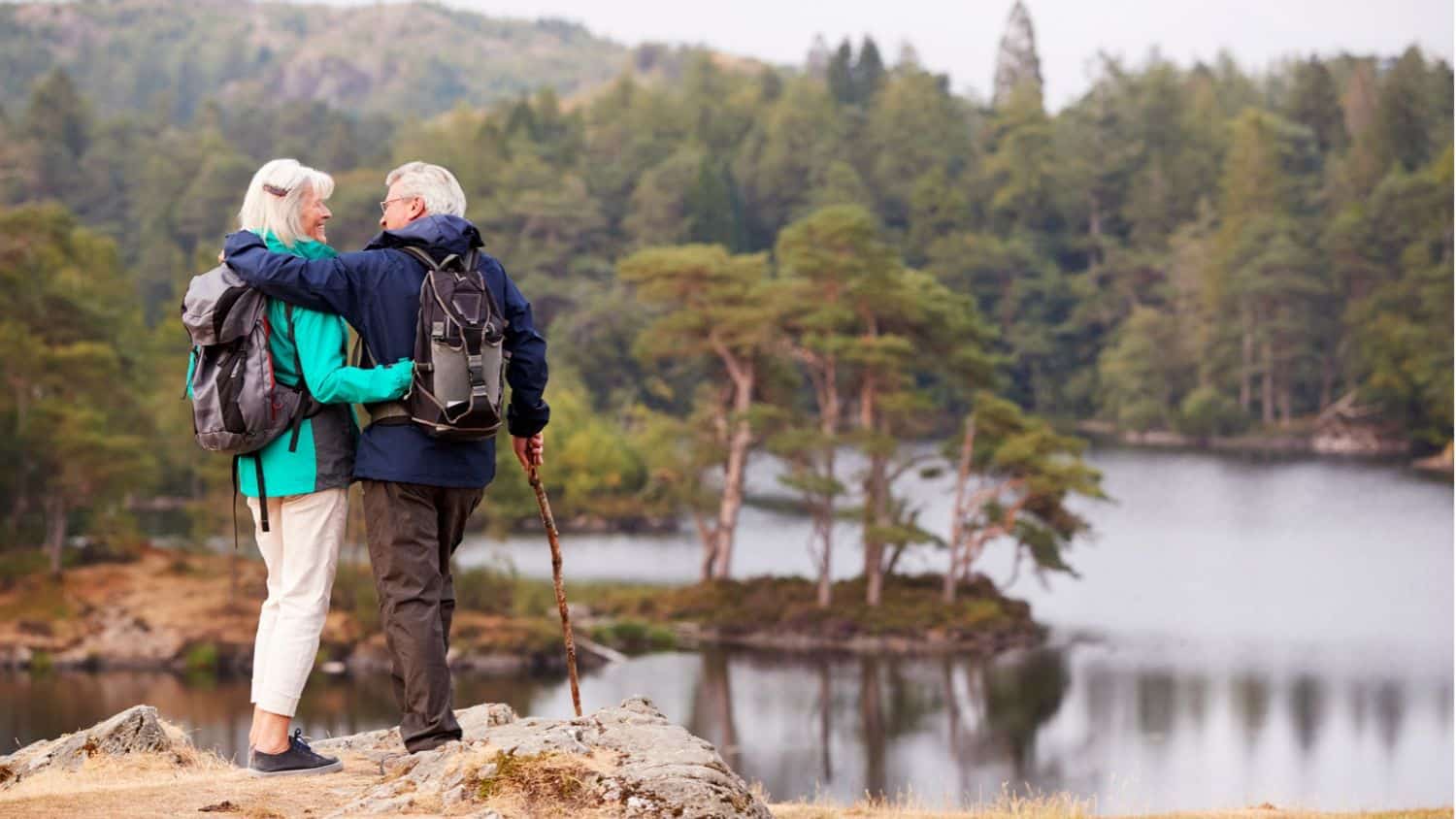
The happiest older adults aren’t the ones who never have health problems. They’re the ones who adjust and keep going. A bad knee means trading the tennis court for the pool. Unsteady on uneven ground means bringing a cane on the trail, and the hikes continue.
In my work I hear the same sentence all the time: “I’m not ready for that yet.” I understand. Nobody wants to feel old. But saying no to a walker usually means walking less, going out less and losing strength faster. Most common senior mobility challenges have simple, practical fixes, and today’s equipment is lighter and better designed than people expect.
When long distances get hard, plenty of active retirees keep a lightweight folding wheelchair in the trunk for museums, airports and outdoor markets. Using one isn’t giving up. It’s deciding you’re still going.
They Set Up Their Homes Before They Have To
About one in four adults 65 and older reports a fall each year, according to the CDC. Thriving retirees get ahead of it: grab bars by the tub and toilet, brighter lights on the stairs, a night light between the bedroom and bathroom, fewer throw rugs. Done in your 60s, these are a weekend project. Done after a fall, they’re an emergency.
The Real Secret
None of this takes a big budget. Stay close to people. Find something that matters to you. Move every day, with strength and balance in the mix. Keep learning. And when your body changes, adapt, and use whatever helps you keep doing what you love.
The people who get the most out of retirement plan for it the way they once planned a career: with intention, a little flexibility and plenty of good company. So start small this week. Call the friend you keep meaning to call.
Let’s Have a Conversation:
Which of these habits comes most naturally to you, and which one would you like to work on this year? What has made the biggest difference in your own retirement so far? Please share your experience in the comments below.

This is unbelievably relatable! I engage in so many of these activities now! Weekly dates with friends, garden club, labor council, Tai Chi for balance, swimming, and taking an interest in maintaining my house and garden. It took several years to build purpose back into my life after several tragedies. Thank you for being spot on!
To keep learning resonated with me the most. Most recently that has been ukulele and guitar lessons for 55+. I really enjoy playing together in a group of learners similar to myself. It’s been a huge surprise how much I enjoy practicing at home, too. With online info. so readily available, a 30 minute practice easily becomes an hour or 2. I’m also an avid reader and belong to several book clubs, andI like to do crafts, puzzles, and walk the trails in my island community.
I get my people time these days mostly through the activities I belong to and enjoy. I’ve always been very content on my own and needed more solo time than average, but after head surgery a number of years ago, I needed even more because noise, including exuberant conversation, can really bother me. Plus, for 35 years my career was very people saturated and, for a number of years before I retired and afterwards I was the family member who was the go-to person who organized and was called upon for the senior care of both my parents before they passed away. So now quiet is an absolute luxury! That said, I’m glad I live in a condo where I run into neighbours all the time and get together with a next door neighbour regularly. Family is pretty scattered and busy, so I keep in touch via technology mostly and just happily do my own thing!
I recently hurt my knee so am navigating that situation right now. I’ve been really thankful for the walker, cane, etc. I bought before surgery years ago, as they’ve helped me get around while I heal. The situation has made me think about changes I might want to make to my home so I can age in place for as long as makes sense. I’m not opposed at all to moving eventually into independent living, as I have witnessed seniors who thrive in that environment.
By the way, I think researching and using home care is a good idea when there’s a health issue. For my first head surgery in my early fifties a friend stayed with me and family helped out. She was a nurse and offered to fly out for a week and family travelled and stayed in hotels nearby. For my second head surgery in my mid-sixties I opted to hire 24/7 care. To be honest, the hired care was much easier to navigate, much as I appreciated the support of friends and family the first go-around. I think too many people rely exclusively on family and friends when a health issue strikes. This can be really taxing on family and friends, depending on the situation, especially if family and friends are age too!
i really enjoyed seeing the ‘prep the home before you have to’ part – it made me feel like i’m keeping up with changes pretty well – having had surgeries, i installed some of the safety features, and i just left them in place; i feel like in leaving them, i’m right in tune with this article
we have a lot of forewarnings that things are changing; great idea to use that information for tomorrow or next year or my eighties
thank you
Connection to people is probably the one thing that will keep us moving forward. Great article, thank you for the advice.