


What We Lose When Our Places Disappear – and How We Carry Them Forward
There is a particular kind of grief that doesn’t have a funeral.
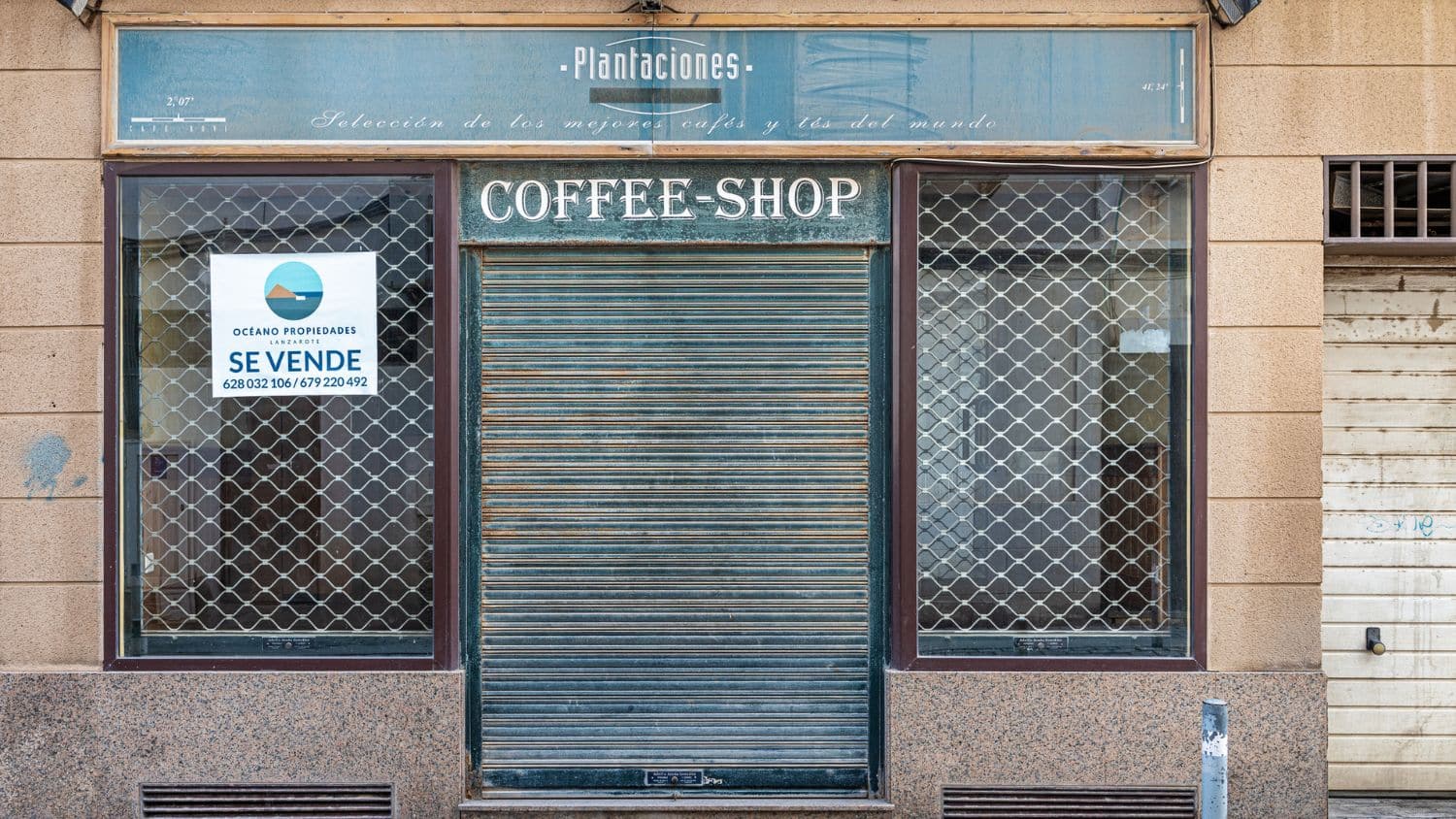
No one sends flowers when your favorite restaurant closes after 50 years. There is no ceremony when the beach bar where you spent a hundred perfect afternoons nails a sign on the door and goes quiet forever. My wife and I created so many memories with friends and family at these two places that we are left lost with their loss.
The world moves on however, mostly unbothered. But you and I are left standing there with a reservation to nowhere, holding decades of memory and no clear place to put them. This is the grief of lost places. And it may be one of the least-acknowledged losses of a life well-lived.
What Billy Joel Understood
In 1983, Billy Joel wrote “Keeping the Faith” as his way of explaining a creative revival – a debt he felt he owed to the music, the friends, and the culture of his youth. The song is a love letter to a world that no longer exists: the matador boots, the shark skin jackets, the 45s spinning on a turntable, the particular electricity of being young in a specific time and place. Joel grew up in Levittown, Long Island, and despite the judgment and criticism common in that small-town world, he found identity and solace in his friends and in the music they shared together.
What makes the song remarkable is its honesty. Joel doesn’t pretend the past was perfect. He offers one of the most quietly wise lines in his entire catalog: “the good old days weren’t always good, and tomorrow ain’t as bad as it seems.” He isn’t asking us to live there. He’s asking us to carry it – the feeling, the identity, the fire that got lit in us – forward into whoever we are becoming.
That distinction matters enormously. And it becomes more urgent with every place we lose.
The Places That Made Us
We don’t fully understand what our places mean to us until they’re gone. The restaurant isn’t just a restaurant. It’s the table where you celebrated, argued, reconciled, and laughed until something came out of your nose. It’s the waiter who knew your order and hugged you when you arrived. It’s years of dinners that somehow became the architecture of a life. When it closes, you don’t just lose a place to eat. You lose a place to be – a physical location where your history was stored and your identity was reflected back at you.
The beach bar is the same. Shipwreck in St. Kitts wasn’t just rum punches at sunset. It was who we were when we were there. The version of yourself that exists only in certain latitudes, with certain people, in the warm unhurried hours of an afternoon that refuses to end. When it closes, that version of you loses its address.
Psychologists call these locations memory palaces – physical spaces so saturated with experience that simply walking through the door triggered a cascade of identity and emotion. When the space disappears, the cascade has nowhere to go. That’s not sentiment. That’s neuroscience.
This Happens at Every Stage
We tend to think of this kind of loss as something that accumulates only with age. But it visits us throughout life, each time in a different costume.
The childhood home sold to strangers. The college bar that became a bank. The neighborhood that priced you out. The office building you worked in for 20 years, demolished for condominiums. Each generation has its own version of the closed door, the dark window, the sign that says thank you for the memories as if a laminated notice could possibly cover it.
What changes as we age is not the loss itself, but our growing awareness of what the loss means. Younger people experience it as shock – the world was supposed to hold still. Older people experience it as pattern recognition – this is what time does, and it does it without asking. That recognition is not resignation. In the right hands, it becomes wisdom.
How We Carry It Forward
Joel’s answer to the vanishing world of his youth was not to mourn it into paralysis. It was to make something from it. The entire album – An Innocent Man – was his way of saying: this shaped me, and I won’t pretend otherwise, and I’m not ashamed of what I’m made of. Joel related: “The material was coming so easily and so quickly, and I was having so much fun doing it. I was kind of reliving my youth.”
This is the model. Not preservation – you cannot preserve what is gone. Not denial – the restaurant is not coming back, and Shipwreck’s particular magic existed only in that particular place. But integration. Folding what you loved into who you are, so that the place lives in you even when you can no longer visit it.
- This means telling the stories.
- It means finding the photograph and putting it somewhere you can see it.
- It means ordering the same drink somewhere new and tipping your glass to the place that first introduced you to it.
- It means letting the people who shared those places with you know – explicitly, today, not eventually – what those years meant.
It also means staying open to what comes next.
Joel’s most generous line is that tomorrow ain’t as bad as it seems. Not that tomorrow replaces what was lost – nothing does. But that the capacity for meaning, for joy, for the kind of belonging that makes a place sacred, is not finite. It doesn’t run out when the doors close.
Still Playing
The closed restaurant. The shuttered beach bar. The empty booth, the dark stage, the locked door. These are not the end of the story. They are proof that something worth grieving existed – that you were paying enough attention to love a place well, that you lived richly enough to accumulate losses worth feeling.
Billy Joel went to the grave of his musical youth, picked up what mattered, and walked back into the present with his arms full.
You can do the same.
The good old days weren’t always good. But they were real, and they were yours, and nobody gets to take that part.
Keep the faith.
Let’s Have a Conversation:
Taking a trip down memory lane, which places if years past that were your favorite no longer exist? What do you remember them for?


This article really moved me… I have missed 6 or more places that my former husband and I used to go to! He just passed in Feb 2026. This article was beautifully written and I wound up having tears go down my cheeks. I am learning to move on and hold those memories close…..it’s hard, but I am a tough 76 year old, finding my way again in this Southside of Indianapolis, IN. Thank you for your article!
Yes, we are learning to adapt as well. I think our beach bar will reopen on another part of the island. The government forced them off. But the view will never be the same. And I think we will be on a forever quest to find our go to place in NYC.
The local bowling club[lawn bowls] that I have been a member of for over 50 years closed a couple of weeks ago. No lead up just an email to staff saying you no longer have a job. I remember the staff helping me get my husband up the club house stairs after his accident in 2024. I’m grateful to the help he received in addition to being in a club where we knew people in a casual way. I will remember the good times and miss the “old days”.
I never lived long enough anywhere to build those memories… I always left after 3 years here or there…
I had to mourn the few memories and people I had met (some of them are still friends over the distance and years). However I do appreciate the chance I have had to picture so much in my mind and be able to tell those friends how precious they have been to me …
Oh, gosh, so many places – in different cities and states – are no longer around, or have changed names and characters, I don’t think I could list them!
The one most recent and impactful was the closure of the camera store a few years ago. I was a budding photographer at age 60, 13 years ago, and there was a camera store about a 10 minute walk from home. Of course they offered excellent equipment and accessories, and did camera repair as well, but more – the people who worked there were professional photographers themselves. They could not only show how every piece of equipment worked, but give suggestions on how to use it to your best advantage.
They also had monthly, freebie Saturday-morning talks (with complimentary coffee and cookies!) on various topics on or related to photography. Once a year, during Fall Color season, they’d have a talk on how best to photograph colors, and then several of the photographers from the store would meet us at a nature park about a mile away and help anyone with on-site questions about settings, lenses, etc. That place was special and had been in business for over 70 years.
To say I miss them would be an understatement, and nothing has come along to take their place. I do belong to photography groups where one can receive and give assistance, but there are no local outlets for equipment.
I’ts impossible to replace an important venue with another one. I don’t have a solution but hope to find a social activity that doesn’t require my username, password ,etc.
I know, I love to do things in person, too!
You may want to check the schedule of your local public library. Mine has both weekly activities and special events. One evening they had a class on food dehydrating; that was years ago and I still do it.
Also, if you have a senior center nearby, check their schedule. The one close to me has many diverse opportunities for socialization.
I hope you find something enjoyable!