


“Want to Be Friends?” We Don’t Say That Anymore, but Maybe We Should
Sometimes I just want to go back 64 years to when Libby Carlton and I hooked pinkies at Camp Fire Girls and swore to be best pals. We bonded over our love of Kool-Aid and our leader, Miss Kemp, who taught us how to change a tire.
“You girls may need to do this on your own one day,” she said, cranking the jack like a pro. Libby and I nodded at each other in mutual understanding that we would grow up to be independent women, together.
Alas, it’s not so easy to make friends these days, even when constant digital connectivity makes us believe it is.
In fact, experts tell us, we’re in a bit of a friend crisis.
The Key Is Prioritizing Friendship
A landmark Surgeon General report recently proclaimed loneliness at epic proportions, a public health threat as great as smoking, obesity and addiction.
Those with strong social connections are happier, healthier and live longer, according to other important research.
The pandemic tested our limits on being physically alone, and now, with the relationship landscape forever altered, “friendship” as a topic appears to be trending.
New York Times’ writer Anna Goldfarb, in her book, Modern Friendship, laments how easily we can let friendships drop in these days of distraction. She offers practical advice like following up on vague promises to “get together” and being forever flexible in defining friendships in the digital age.
Journalist and documentarian Rhaina Cohen, author of The Other Significant Others: Reimagining Life with Friendship at the Center, argues against having a hierarchy of relationships in which romantic partners are traditionally prioritized. Friends, she writes, are just as important, and, in fact, help us bring good feelings back to significant others at home, if we happen to have them.
And memoirist Lilly Dancyger, in First Love, Essays on Friendship, writes about female friendships as vital bonds that teach us fundamentally about love and how it helps us survive.
Not Just for Giggling Tweens
For many of us, it might seem kind of corny to think about “friends,” “making friends,” “best friends,” etc. It conjures up images of matching heart necklaces at Claire’s and giggling tweens. But when I remember Libby, I remember how that connection felt, and it was sweet. I felt seen and safe in an already rapidly changing world holding a future I could only imagine.
In the years since, my friendships ebbed and flowed until as a working mother and grad student starting in the 1990s, to be honest, I wanted to cull most people from my life except those who (1) paid me, (2) could entertain my children, or (3) were willing to cook and serve food efficiently.
People generally stayed out of my way, heeding my body language that said, well, “Stay out of my way.”
Recently, as a senior member of society, with that future grown shorter and many of my lifetime of friend connections now mostly on Facebook, I decided to start practicing making friends again.
That prompted me to do what I usually do in new situations – look to see what everyone else is doing.
I started reading Sixty and Me, and AARP’s the Ethel, and I looked into special book groups, Meetup gatherings and other outlets for older women. One, in particular, stuck with me because, well, there was a chapter in my area, and it emphasized helping in transitions, and I was definitely in one.
I was trepidatious the first time I went to an event sponsored by Women’s Connection (formerly The Transition Network), but I really needed this. Memories of my bond with Libby beckoned.
First Steps Can Be Scary
I soon discovered the secret sauce of the group – making everyone feel comfortable even when showing up alone. Despite all that women have attained, it’s still sometimes hard to arrive at an event full of strangers by yourself, but Women’s Connection made it easy.
It’s full of accomplished women who don’t tout their achievements, educated women who apply what they’ve learned in life, and responsible women who look after others and practice their beliefs – such as in sustainability, helping their communities and inclusivity. If there’s not a chapter in your area of the U.S., there is a virtual national chapter, or you can start one.
For international connection, Sixty and Me is my go-to.
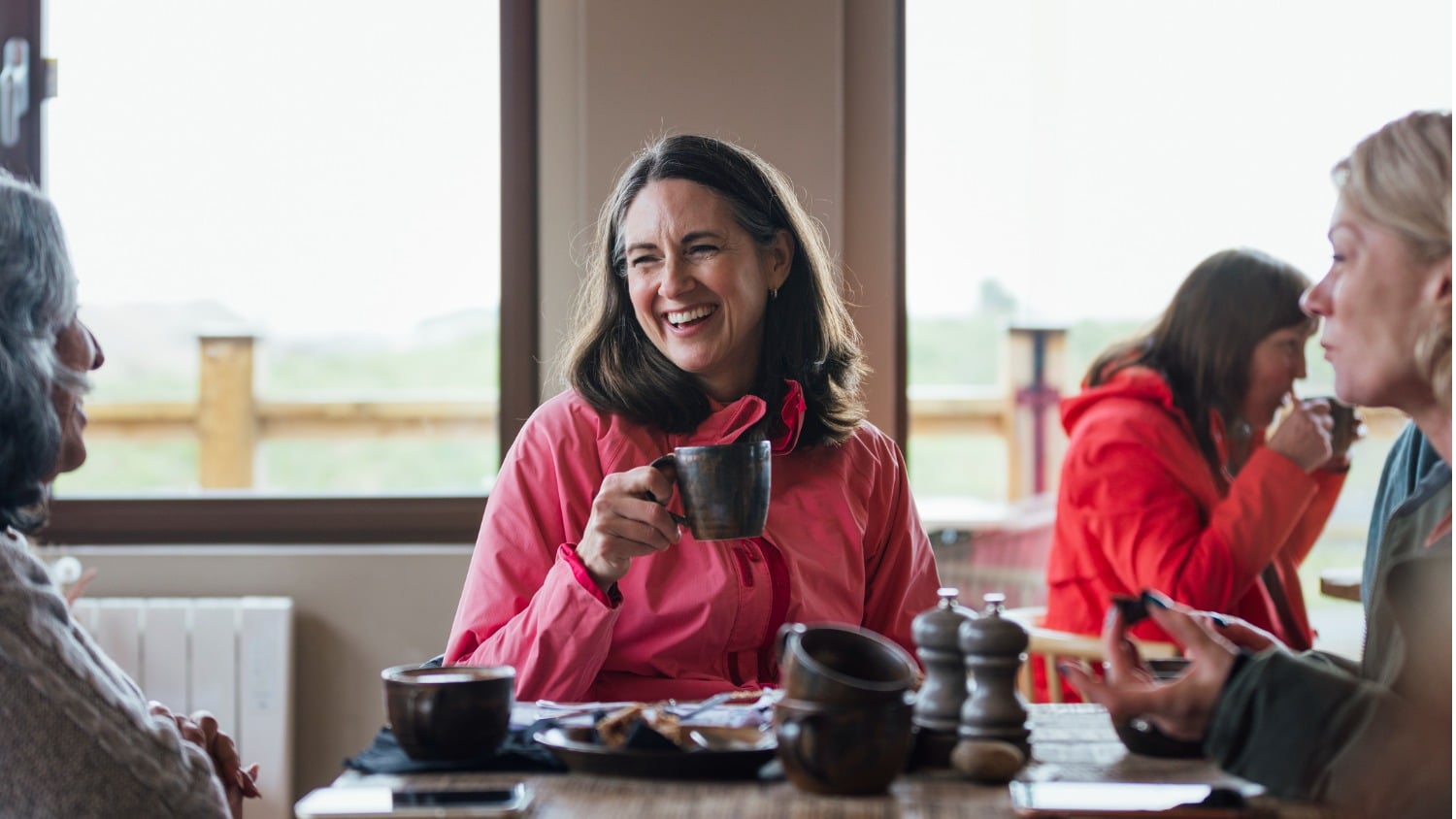
For any group you locate, that’s the point – finding lots of opportunities for making close friends or having a larger group of friends whom you know may not be at every gathering or event but will offer a friendly face next time around.
I wanted a group where people talked openly about the need for friendship and making friends. I didn’t find that in a lot of places.
Be Intentional and They Will Come
I have a raft of invitations in my in-box right now, thanks to my own recognition of that need and my decision to reach out to like-minded women. Someone from the group contacted me recently and said she was an introvert but wanted to get together. I could relate. Can’t we all at times?
It was a Libby-like moment.
It could be that my resting b*tch face from my overworking years has softened with my waistline, but it seems making friends has gotten easier the more I decided it was something important to me and that I needed to be more distinctly attuned to.
Without so many deadlines and bosses to please, I’m more approachable, I’ve noticed. And it doesn’t take much to provide an excuse for bonding. Gathering over a cup of Kool-Aid, or a demonstration of female empowerment, works almost every time.
Let’s Have a Conversation:
Have you found yourself in a “friend crisis” as you’ve gotten older? Have you sought out a group of women with which to bond, whether in person or online? What strategies have you used to make friend connections later in life?
Tags Friendships


I have been trying so hard to find friends. I get lonelier every time I see a group of women doing things together. I have tried a book club; I have a bad knee, so exercise/walking is difficult; I went back to work part-time.
I am nice and kind and thoughtful.
I don’t know why it is so difficult!
I hear you Maria, I feel the same way! Maybe we need a new perfume!
My expectations used to be that it should be easy but I had to get over that! I have to fight the idea that I need to rush something because I’m running out of time ha ha.
Recently moved to a 55 active adult building. I am friendly in small group activities have not developed any real friends. The saying goes, “ you can’t make old friends” but just maybe a lighter type of relationship is good enough at this stage.
Hi Paulette – I think I’ve come to this same conclusion — all friends don’t have to be besties.
Yes, and it seems partly due to the state I live in: Colorado. I’m not the only one to complain about the difficulty of making friends here, no matter what age or stage.
I have joined a women’s group however, and it’s enabled me to meet up with other women. I haven’t yet developed friendships out of it. I still hope that might happen. But it does seem as if even other retired seniors are pretty busy still. Maybe when we’re stuck in our rocking chairs?
Hi Ava – I find it’s so hard to match up timewise with people when, as you say, everyone is busy. I try to notice when I’m busy and don’t have time for friends rather than experience extreme FOMO (fear of missing out).
Thank you for this article. I have been very lonely for friendship and this has made me think. I want to make friends and love having true friends. I have a lot of acquaintances but really want true friends that are a little more outgoing than myself. If you met me you wouldn’t think i am shy, but I am. I am going to practice this and make new true friends like in my tween years.
Best of luck to you, Julie. You’ve got a great head start, likely more than most.
I am my own best friend 🙂.
I agree that at this age, we may be less likely to “need” a friend for things like reassurance and validation. That might make making friends easier! I, too, try to keep my own counsel later in life. Love this!