


Ephesus at Your Own Pace: A Relaxed Itinerary for Travelers Over 60
Every spring and fall, we meet travelers in their 60s and 70s who have waited decades to visit Ephesus. Many have read about this place since their catechism or college history classes. And many arrive worried that the day might be too long, too hot, or too taxing on their knees.
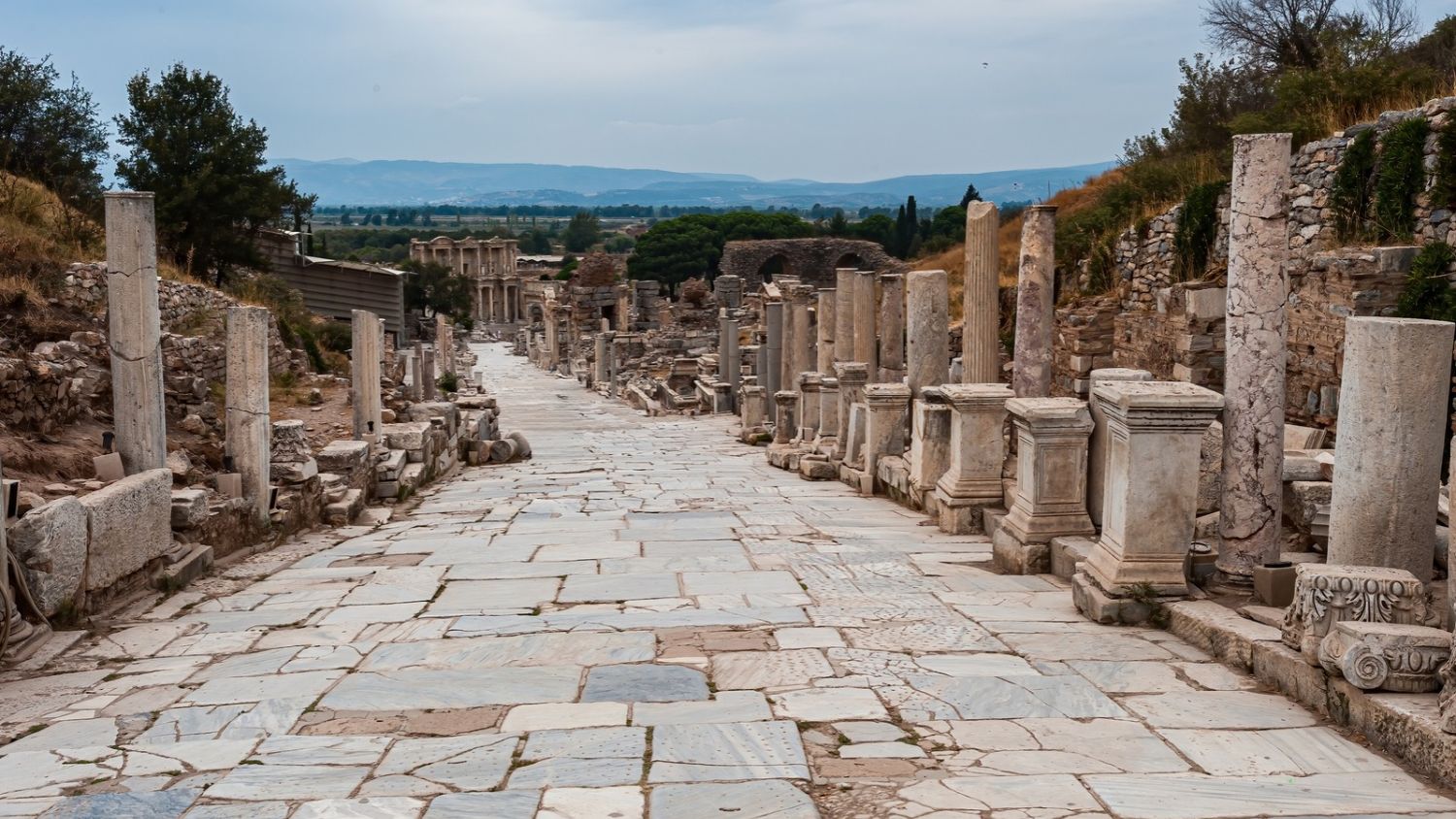
The good news is that Ephesus is best enjoyed with a leisurely visit. This ancient city isn’t a museum to be rushed through; rather, it’s a long, gently sloping marble street flanked by sites worth stopping at. With a little planning, you can enjoy it without feeling pressured or exhausted.
Start at the Top and Work Your Way Down
Ephesus has two entrances: the upper gate and the lower gate. The most practical thing to do is to enter through the upper gate and walk downhill until you reach the lower gate.
The main route between the two is about one and a half kilometers (one mile), and almost the entire way is downhill. If you enter from the lower gate, you’ll have to climb that slope or walk the route twice. Ask your driver or guide to drop you off at the top and pick you up at the bottom. Most private tours do this by default; if you’re on a cruise excursion, it’s worth checking.
If you’re arriving by sea, our guide to excursions in Turkey details the options available from the port of Kuşadası.
Arrive Early and Avoid the Midday Heat
The site opens at 8:00 a.m. The first two hours are the coolest and quietest. Toward the end of the morning, groups from cruise ships docking in Kuşadası arrive, and the main street fills with people.
There is very little shade in Ephesus. From May through September, the marble reflects sunlight, so in the afternoon, the heat index can be much higher than the forecast indicates. If you’re visiting in the summer, try to finish your tour before noon. If you visit us in April, May, October, or early November, the weather is usually ideal; in fact, these are the months we recommend to most of our guests over the age of 60.
Keep In Mind What’s Included in Your Ticket
The general admission ticket to visit the ancient city costs 40 euros per adult in 2026. Payment can be made in Turkish lira or by card at the entrance.
To visit the “Terrace Houses” – where Ephesus’s wealthiest residents lived, surrounded by mosaics and walls decorated with paintings – you’ll need to purchase a separate ticket for 15 euros. Since they’re covered by a roof, they offer pleasant shade; however, the interior tour takes place via walkways and metal staircases situated above the excavations. If you have difficulty with stairs, you can view the site from the first level and skip the rest without any regrets.
If you’re not sure whether it’s worth paying the additional admission fee, I’ve put together a brief guide to the Terrace Houses that might help you decide.
The “Museum Pass Türkiye” grants access to the Ephesus Museum (in Selçuk) and the Basilica of St. John, but it does not include admission to the Terrace Houses.
Plan Your Rest Stops
Imagine your visit to Ephesus as a stroll between benches. These are the ideal places to take a break:
- The Odeon, near the Upper Gate. A small theater where the city council used to meet. Sit on the stone seats and get your bearings.
- The Street of the Curetes, the main sloping thoroughfare. Take your time walking along it; on either side, you’ll find stone blocks where you can rest.
- The Library of Celsus. This is the facade that everyone photographs. Step back a bit to admire it from a distance before getting closer.
- The Great Theater, near the Lower Gate. In its heyday, it could seat about 25,000 people. The Book of Acts (chapter 19) describes the riot that took place here during Paul’s stay in the city. Even if you don’t climb up to the stands, the view from below is breathtaking.
Allow between two and a half and three hours to complete this tour at a leisurely pace. Add another hour if you decide to visit the Terrace Houses.
Watch Your Step!
The marble pavement is beautiful, but it has become very smooth after centuries of foot traffic. It can be slippery, especially after rain or due to morning dew.
Wear comfortable walking shoes with good traction. Leave sandals and new shoes at the hotel. If you usually use a hiking stick, bring it along; many of our visitors find it very helpful for navigating the uneven terrain.
Pack a Small Daypack
We recommend bringing:
- A full bottle of water (there are kiosks, but very few inside the grounds).
- A sun hat and sunscreen, even in the spring.
- A light jacket for the early morning hours.
- Any daily medication you need – always keep it with you in your backpack, not on the tour bus.
- A small snack.
You’ll find restrooms at both entrances. Since there are very few inside the site, we recommend using them before starting the tour.
Don’t Try to See Everything in a Single Day
The Ephesus area offers much more than can be seen in a single day: the Ephesus Museum in Selçuk, the Basilica of St. John, the House of the Virgin Mary (located on the hill), and the village of Şirince. Guided tour itineraries usually pack all of this into a single day. For travelers who prefer a more leisurely pace, we suggest splitting the visit: explore the ancient city in the morning and rest in the afternoon. Save the House of the Virgin Mary and the Basilica of St. John for the next morning.
Spending two nights in Selçuk or the surrounding area turns a grueling excursion into a relaxed visit.
Consider Hiring a Private Guide
A good guide does much more than just tell stories. For older travelers, a private guide sets the pace, finds shaded spots, knows where benches are, and can adjust the itinerary if you’re feeling tired. In Turkey, licensed guides carry an official ID; don’t hesitate to ask to see it.
If you join a group tour, let the guide know right from the start that you prefer to walk slowly. Most guides appreciate being told in advance.
Some Frequently Asked Questions from Our Guests
Is Ephesus wheelchair accessible?
Only partially. The ancient streets are made of uneven marble and stone, and there are steps in some areas. The areas near the gates are more accessible, but it’s difficult to tour the entire site in a wheelchair.
How Much Time Should I Set Aside for the Visit?
Between two and a half and three hours to walk along the main street at a leisurely pace, plus about an hour for the Terrace Houses.
What’s the best month to visit?
April, May, October, and early November usually offer pleasant temperatures and fewer crowds than during the summer.
Ephesus has been welcoming visitors for over two thousand years; it’ll still be there after you’ve had a cup of coffee. Walk slowly, sit down often, and let the place speak to you.
What Do You Think?
Have you been to Ephesus, or is it still on your bucket list? What helps you most during a long day of walking at an archaeological site: starting early, wearing good shoes, or having a patient guide? I’d love to hear your tips in the comments section.


