


My Hair Started Thinning After 60: Here’s What Nobody Told Me, and What Finally Worked
Two years ago, after surgery, I lost something I’d taken for granted my whole life.
My hair.
Not all of it, but enough. It was thinner, duller, and the curl I’d always had just… flattened. My bun on top of my head, the one I’d worn for years, suddenly needed an extra wrap of the hair band to hold it in place. Such a small thing. But I felt it every single morning.
I felt less like myself. Less confident. Less vibrant. My big, beautiful head of hair, the one that had always been part of how I showed up in the world, felt like it was quietly disappearing.
Today? I’m back. And then some.
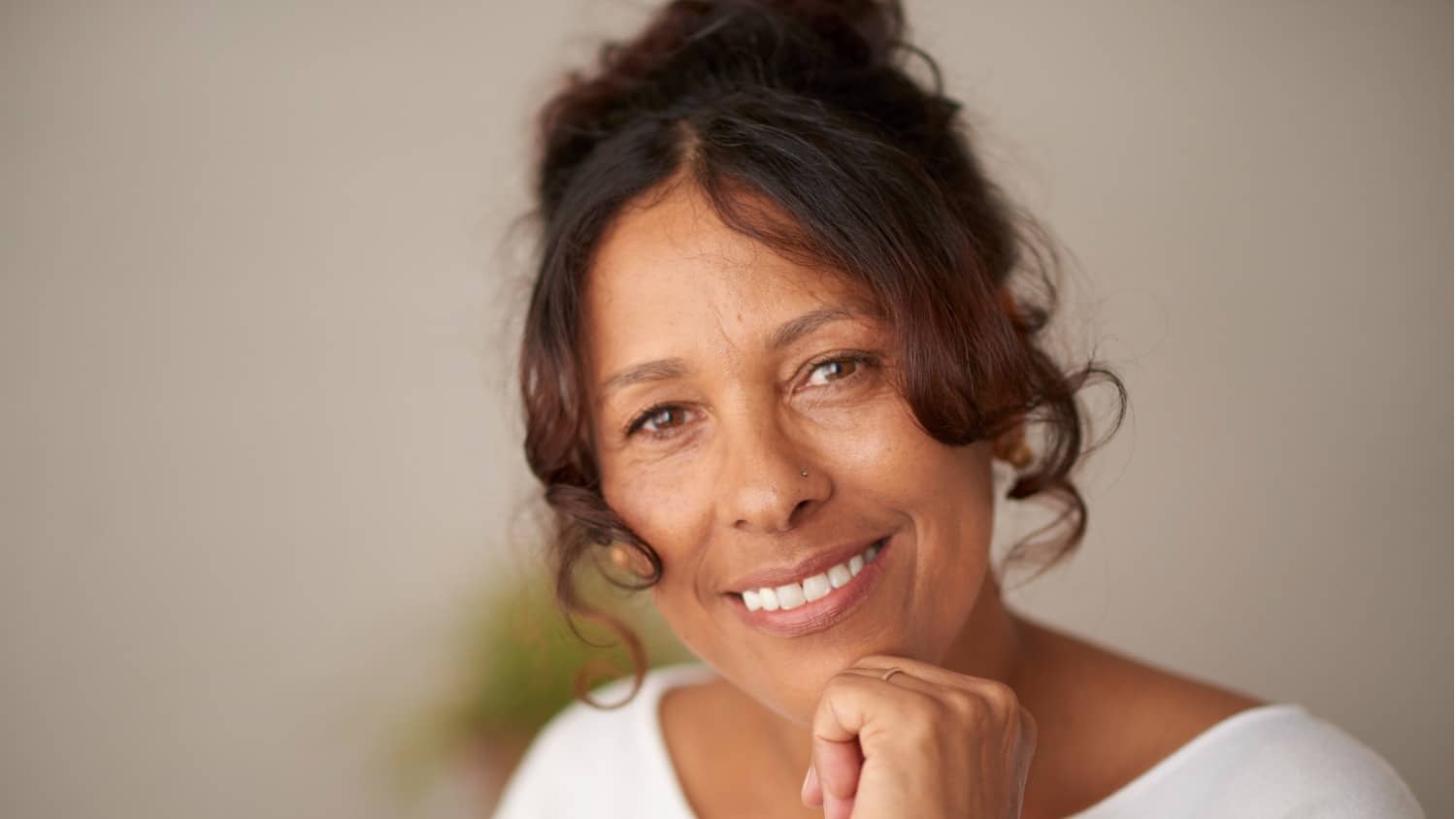
My hair is big, full, and growing faster than it has in years. The curl is back. The volume is back. I get compliments constantly and honestly, I feel like myself again, the version of myself I thought I might have lost for good. I am 67 years old, and my hair has never looked better.
That is not luck. That is biology working the way it was designed to when you give it the right signals.
But as a Doctor of Naturopathy with 35 years of practice, I needed to understand WHY it happened and more importantly, WHY it reversed. Because if it worked for me it could work for you too.
What Thinning Hair Actually Takes from a Woman Over 60
This is not vanity. I want to say that clearly and with the full weight of years of practice behind it.
Hair is deeply tied to how women experience their own femininity, their confidence, and their sense of self. When it starts to change, something shifts that goes far beyond the physical. Women tell me they stop putting their hair up because it feels like drawing attention to something they’re ashamed of. They avoid certain lighting. They don’t like to be photographed. They feel invisible in a way that’s hard to name but impossible to ignore.
For women over 60 this experience often carries an additional layer: the fear that this is just the beginning. That the body is starting to betray them in ways they can’t control. That the most vibrant version of themselves is somehow behind them now.
I am here to tell you that is simply not true. And biology proves it.
Why Hair Changes So Significantly After 60
By the time we reach 60, the hormonal landscape has shifted considerably from even a decade earlier. Estrogen, which played a protective role in keeping hair follicles in their active growth phase, is now significantly lower. Progesterone, which counterbalances the effects of DHT, the hormone responsible for shrinking hair follicles, has also declined. And adrenal function, which becomes increasingly important as the ovaries produce less, is often depleted by years of stress, poor sleep, and nutritional gaps.
The result at the hair follicle level looks like this: the anagen phase, your active hair growth phase, gets shorter. The shedding phase gets longer. More hairs fall and fewer replace them, and the ones that do grow back come in finer and more fragile than before.
At the same time collagen production, which drops roughly 1% every year after 30, has now been declining for three decades. By 60 that cumulative loss is significant and it shows up not just in skin elasticity but in the structural integrity of every single hair follicle.
By the time you notice your hair feeling wispier, this process has been quietly happening for years.
But here is what your doctor probably didn’t tell you: this is common, but it is not inevitable. And it is absolutely reversible with the right cellular signals.
The Collagen Connection Most Women Over 60 Miss
Hair is 95% keratin, and keratin production depends entirely on the amino acids that collagen provides, specifically glycine, proline, and hydroxyproline. Without adequate collagen your body simply does not have the raw materials to build strong healthy hair, no matter how many expensive shampoos or treatments you try.
The problem is that most collagen supplements never actually reach your cells. They pass through undigested because they’re missing one critical thing: protease, the enzyme that breaks collagen protein down into peptide chains small enough for your body to absorb and use. Without protease you are essentially wasting your money, your time, and your hope.
The collagen I use and recommend to my clients has both protease AND hyaluronic acid, which hydrates the scalp from within, supports skin elasticity, plumps fine lines, and creates the cellular foundation healthy hair actually needs to grow. This is not just another collagen powder. It is collagen that your body can actually absorb and put to work.
Why Peptide Therapy Changes Everything
Everything I just described works at the supply level, giving your body the building blocks it needs. Peptide therapy works upstream, at the signal level, and that is what makes it genuinely remarkable.
As we age, our pituitary gland produces less and less human growth hormone, the same hormone that kept your hair thick, your skin plump, your muscles strong, and your energy high. After 60 this decline is significant and its effects show up everywhere, in energy, in body composition, in sleep quality, and yes, in hair and skin.
The specific peptide I use and recommend for hair, skin, and overall regeneration is Sermorelin, a growth-hormone-releasing hormone analogue that has been studied and used in clinical medicine for decades. Sermorelin works by stimulating your body’s own pituitary gland to produce and release human growth hormone naturally. It does not introduce synthetic HGH from outside the body. It simply reminds your own biology to do what it was always designed to do.
It is available through licensed medical telehealth providers and requires proper lab work and medical supervision. I work exclusively with a telehealth medical lab that reviews every client’s labs and supervises their protocol individually. This is not a supplement you order online without oversight. It is a medically supervised therapy, and that distinction matters enormously for both safety and results.
When HGH rises it activates fibroblasts, the cells in your scalp that are responsible for producing collagen. More fibroblasts mean more collagen, more building blocks, and more of what your hair follicles need to grow thick, strong, and healthy again.
Two months into Sermorelin peptide therapy combined with my collagen I am losing fat, gaining muscle, sleeping deeply through the night, and my hair is fuller and longer than it has been in years. I am 67 years old and I am thriving. Not despite my age but because I gave my cells what they needed to regenerate.
This Is Not a Done Deal
Hair thinning after 60 is common but it is not inevitable, and it is absolutely reversible with the right cellular signals. You are not at the mercy of your age. You are at the mercy of what your cells are receiving. And that is something you can change starting today.
Your body already knows how to do this. It just needs the right signals to remember.
And when it gets them? For so many women the hair comes back. Fuller. Stronger. Growing faster than they thought possible at this stage of life. The confidence comes back. The woman who puts her hair up without thinking twice comes back. The version of you that walks into a room and feels like herself again, that woman is not behind you. She is absolutely still ahead of you.
Want to Learn More?
If this resonates with you, I put together a free resource called The Beginner’s Guide to Peptides Over 50 that goes deeper into how Sermorelin peptide therapy works and how to get started safely with proper medical supervision. You can grab it here: The Beginner’s Guide to Peptides Over 50.
Let’s Have a Conversation:
What are your major hair concerns? When did you notice they occurred? What do you know about peptide therapy? Have you heard about benefits or concerns? Let’s discuss in the comments!
Tags Healthy Aging


I’ve been using Vital Proteins Collagen Peptides with Hyaluronic acid and vit C, but I don’t see anything about protease on the container or website. Now I’m concerned! But why does require Sermorelin supervision? That makes me think that perhaps it can be unsafe?
Hi Gail! I hear you…I used collagens without the protease and hyaluronic acid for too long. I’m always open to learning more and the protease just made sense. I’ve used the hyaluronic acid of course…it’s in many skin serums, but here I love it all together! Sermorelin is a peptide that needs to be medically approved by the tele-health labs-not everyone gets approved. If you want a detailed write-up on how that process works just email me at drshirleysays@gmaila.com or feel free to text me at 585-503-6478. My website http://www.drshirleysays.com offer a lot of info, too! Sermorelin is not unsafe at all-it’s been studied and used since the early 80’s. :)
Shirley Piccarreto is talking about peptides.
Here is a quote from Crown Medical Centre, Surry Hills, NSW, Australia-
“Many of these products have never undergone large human clinical trials and are not approved by Australian regulators.”
Lots of side effects mentioned.
Yes, there are a lot of black markets, “gray markets” and foreign markets selling unregulated peptide products online…it’s a non-negotiable to work with a regulated tele-health pharmacy like XMD. In particular, Sermorelin has been used and studied since the early 1980’s. Where GLP’s have a fair amount of side effects, Sermorelin has none and has become a catalyst for vibrant health both for me and millions of other women.
What collagen do you use?
It’s called Complete Collagen and I love the mango flavor, myself. :) . Complete Collagen