


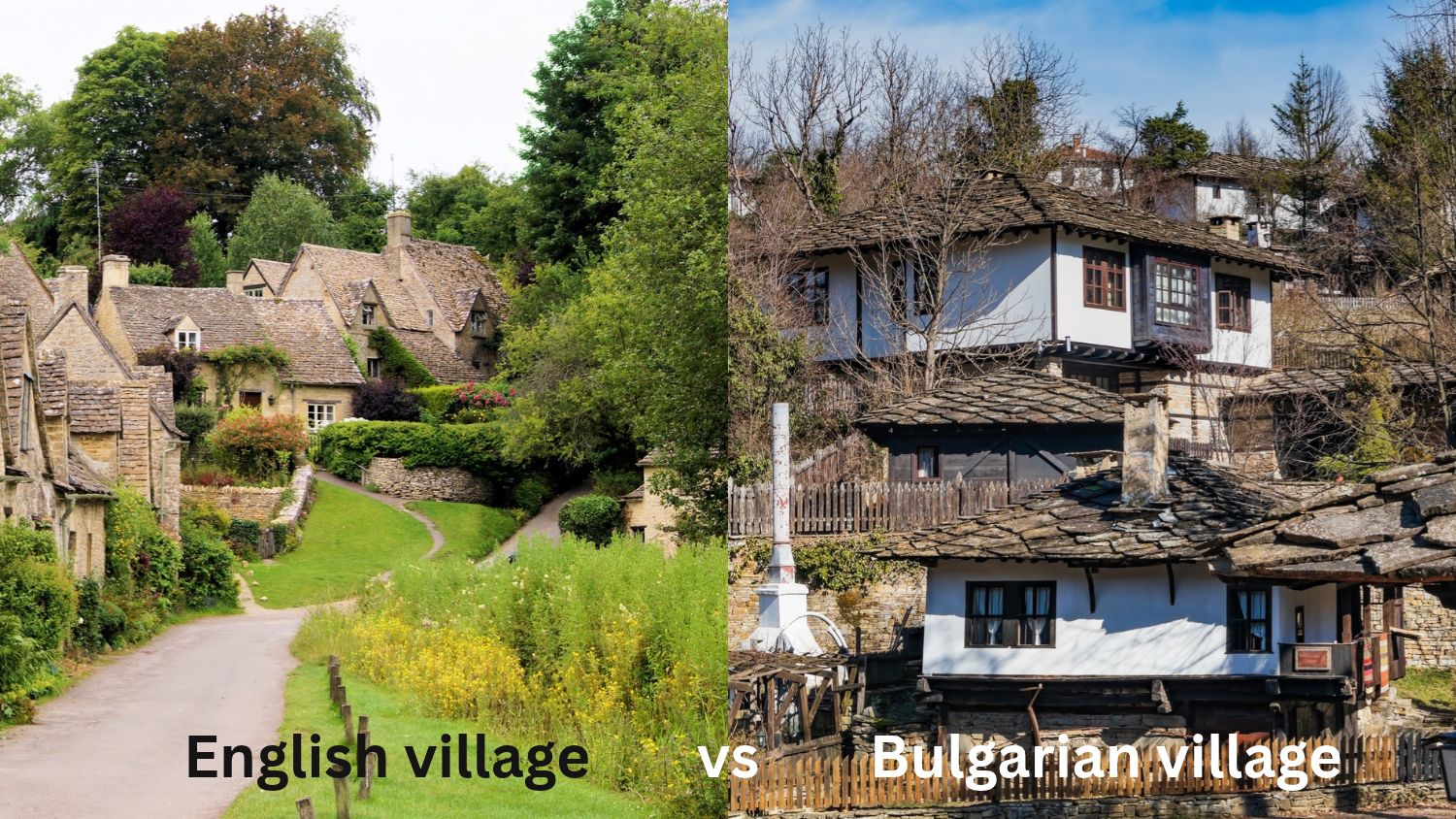
A Tale of Two Villages: The Difference Between a Bulgarian and an English Village
For those of you who read my first article, you will know that my husband Jeff and I left England and moved to Bulgaria 11 years ago. In this article, I will discuss and compare life in an English village to life in a Bulgarian village, with particular reference to those of us in our 60s and over.
Our English Village Was a ‘Chocolate Box’ Village
When we lived in England, we were very fortunate. We lived in a picturesque, chocolate-box village in the West Country. We were also very fortunate in that there was a strong sense of community. There was a lovely little village shop where everyone met up, a very friendly pub, and a lively little church. With all this going for us, you may ask yourself why we gave it all up and moved halfway across the world to a Bulgarian village.
The Cost of Living
Well, I’ll address the elephant in the room first of all, and that is the cost of living in England compared to Bulgaria. Although we had a lovely home in England, our mortgage was huge! It was a constant pressure and worry. Property in Bulgaria is so affordable that we were able to buy something outright. Not having a mortgage has been so liberating. In England, we knew that we would have to carry on working well into our 60s to pay the mortgage off, whereas moving to Bulgaria enabled us to take early retirement.
Other bills are also much cheaper, particularly our water bill. There’s also no such thing as council tax in Bulgaria, just a small tax on property of about €30 per year on average.
We are fortunate in that we both have a private pension in addition to our state pension. However, we do have 11 animals! It would be very possible to live here quite comfortably on a state pension without so many animals!
For those of us in our 60s, the thought of having to work forever simply to keep a roof over our heads can be daunting. We had reached a stage in life when we wanted to enjoy the fruits of our labour rather than spend our time worrying about paying the bills. Being mortgage-free has given us peace of mind and more money to enjoy ourselves.
A Self-Sufficient Lifestyle
Being as self-sufficient as possible had always been a dream of ours, but the most we could hope for whilst living in England was to rent an allotment! In rural Bulgaria, self-sufficiency has been a way of life for centuries, and every village house is equipped for this purpose.
Our house came with a large garden, fruit trees, grape vines, and various outbuildings. We have been delighted to be able to grow so much of our own food. The ground is very rich and fertile, and the vegetables grow much bigger than they did in England. When we first moved here, we planted some tomatoes and brought some of the bamboo canes that we had used at home. When our neighbour saw these, he found it most entertaining. He went home and came back with his arms laden with vampiresque stakes. When our tomatoes grew, they grew as big as a baby’s head! We realised that the bamboo canes would have been useless!
Growing one’s own fruit and vegetables is a way of life over here, not just a hobby. Being retired, we need something to do, and the garden is a great way of keeping us fit and healthy. And, of course, the food is good for us.
We can our fruits and vegetables, make jam and cider vinegar, and we’ve even tried our hand at winemaking.
There is something very satisfying about eating a meal that you have grown yourself. It also makes you feel less dependent on supermarkets and the rising cost of food. But perhaps the greatest benefit is having something meaningful to do with your time. Retirement can sometimes leave people wondering what to do with themselves. Here, there is always something to plant, harvest, preserve or learn.
The Weather
I think it goes without saying that the weather here is much nicer than at home. We get wall-to-wall sun from March to November, with very little rain. It is so hot here that most people have an outdoor kitchen. We live outside for most of the year, eating and spending our time outdoors.
The winters are very cold, just like the winters I remember as a child in the north of England. Everyone here burns wood, and it’s very cosy curled up by our wood burner in wintertime. Chopping, stacking and carrying the wood are all physical activities that modern conveniences have superseded in most English houses. We feel that we benefit from this extra exercise, and there is a great sense of achievement in seeing a stack of wood – it’s better than money in the bank.
Glorious Countryside
The countryside surrounding our home is simply magnificent – particularly the mountains. The Bulgarians have a saying that when God was handing out land to people, he forgot Bulgaria, so he gave them a piece of heaven instead. We have a forest close to our home where we love to walk our dogs. Unlike England, we are free to roam wherever we like. There are no private land signs or “trespassers will be prosecuted” signs. It’s wonderful to have all this freedom. And with all this lovely countryside, there’s always somewhere to explore now that we have more time on our hands.
Keeping Up with the Joneses
Our village in England was very middle class, and there was always an element of “keeping up with the Joneses.” There were comparisons between cars, houses and foreign holidays. There’s no such pressure in a Bulgarian village. The only competitiveness here is between the size of one’s tomatoes!
A car is considered “new” if it’s six years old! No one has a conservatory. Many people are genuinely poor, yet there’s far less competition and far more contentment!
Christmas doesn’t arrive in the shops in July. Easter doesn’t arrive in January. And when they do come, they don’t take over entire supermarkets.
And Valentine’s Day is overshadowed by the much older celebration of Trifon Zarezan, a fascinating tradition connected to vine-pruning and wine. Bulgaria makes some lovely wine.
All of the above takes pressure off at a time in our lives when money isn’t as available as when we were working. And we appreciate the simple things more.
A Sense of Community
Anyone who lives in an English village will know that many of the properties are owned by people who can afford a second home. This means that very often, community life suffers when people are only there at weekends.
Everyone knows everyone else in our Bulgarian village, and we especially attract a great deal of attention as we are foreigners. Everyone has been really friendly and helpful, and we’ve never had a problem.
One of the nicest things of all is the yearly festival, when the whole village gets together. The dancing takes place in a large circle around the village green. People hold hands and move together in one enormous circle that becomes faster and faster as the night winds on. No one feels left out.

The Bulgarians have a passion for celebrations. There’s barely a month that goes by when something isn’t happening. We have really loved being a part of all these wonderful festivities.
For anyone who has ever worried about becoming isolated in retirement, this sense of belonging is particularly precious. As we get older, our social circles can change. Children grow up, friends move away, and the workplace that once provided daily contact with other people disappears. Here, there is always someone to exchange a greeting with, a neighbour to stop and talk to, or a celebration to look forward to. We may have moved abroad, but in many ways, we have found a community that makes us feel more connected than ever.
A Slower Pace of Life
This has to be the very first difference we noticed when first moving here. Life in Bulgaria moves at a much slower pace than it did back in England.
Even little things, like paying bills, involve standing in a queue rather than paying online. It is possible to pay online, of course, but many people still prefer to do it in person. And strangely… it’s satisfying. You know exactly where you are with your finances. There are no surprises, and there’s a sense of completion when you walk away from the payment booth. We find this a really helpful way to handle our finances. We always know exactly where we are.
Another thing we’ve noticed is that things rarely start on time!
People arrive when they arrive. There seems to be no rush, no urgency. We’ve even been gently chastised for eating too quickly when we go out for a meal. Bulgarians sit, talk and linger over their food. They don’t mind if it goes cold; the purpose is to enjoy the moment together. It’s something we’re still learning. This slow pace of life fits perfectly with our new retired lifestyle.
Village life moves at an even gentler rhythm than life in the towns. Horses and carts are still a common sight on the roads. There are few fast cars. People rise early, tend their gardens, complete their chores, and always have time for a chat. I don’t think I would ever feel lonely living in this village, even if I was living alone. The fraternity reminds me of the close mining community where I grew up.
So those are just some of the differences between life in an English village and life in a Bulgarian village. As you can see, we are very happy here. Do we ever miss home? Occasionally, and I have many happy memories of life in England. But all things considered, we think we are very fortunate to have found our village.
Moving to Bulgaria won’t be the right choice for everyone, of course. Living abroad brings its own challenges, and leaving family and familiar surroundings is never easy. But for anyone approaching retirement who wonders whether it is too late to make a big change, I would say that it isn’t necessarily so. Our lives didn’t stop when we reached our 60s. In many ways, they opened up. We have discovered new skills, new friendships and a new way of life. And perhaps that is the real message: getting older doesn’t mean that we have to stop doing new things.
Questions for Readers:
If you are approaching retirement, would you consider moving abroad to enjoy a lower cost of living, and what would be your biggest concern? For those who have lived in both England and Bulgaria (or someplace abroad), what differences have you noticed in village life?
Tags Living Abroad


