


When Injury Strikes After 60, Will You Give Up or Get Going?
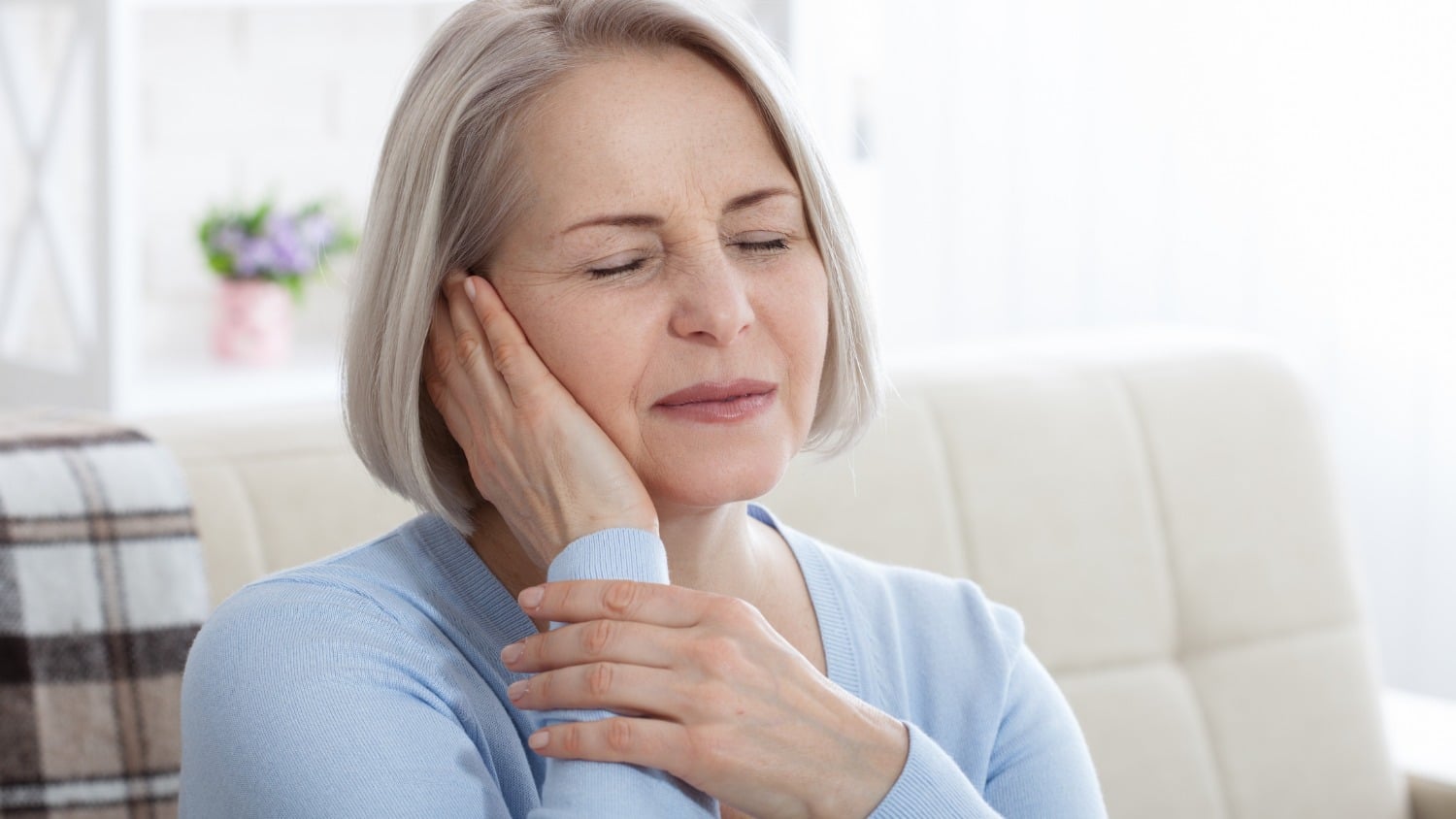
My knee hurts. I don’t know what awkward dance move I made to stress the darn thing, but the bottom line is – it hurts.
As I tape it up before going to sleep, I grumble about it, which, of course, does no good whatsoever. I wake up in a foul mood, trudge down the stairs with a slight limp, still grousing.
But when I sit with my morning cup of tea, seeing the brightness of a new day, hearing the birds sing, I shake myself. What am I doing? I know better than to be complaining, moaning, and groaning.
I know, from umpteen studies and scientific research, that what we think has almost immediate impact on how we feel and how our bodies function. And the worst possible thing I can do, relative to my knee, is feed my body pessimistic thoughts.
How You View Your Injury Impacts How Fast You Heal
A study done specifically on 60-and-older individuals found that how people think about their aches and pains shows up in how quickly and well they heal – or don’t.
Those who think pessimistically tend to experience decreased mobility and greater likelihood of more disabilities. Those who think optimistically experience better mobility and a decreased likelihood of further disabilities. What you think matters.
Ann McGowan is a stellar example of one who thinks optimistically about her aches and pains. A National Senior Games champion, who at 93 won a silver medal for the long jump and a bronze medal for shot put and discus, Ann persevered despite her back surgery and a recent mastectomy.
She saw no reason to stop doing what she enjoyed for over 40 years. Had Ann thought that back surgery or a mastectomy were permanent obstacles or that they spelled the end of the sports road for her, she would never have gone on to win these – and many other – medals.
But most importantly, she would have needlessly deprived herself of her passion.
How can we think optimistically about our aches and pains? Here are two easy ways:
#1 Temporary or Permanent Injury?
Let’s take my knee as an example. Is it a temporary or permanent injury? I can look at it either way.
I can say to myself, “Well, it’s not the first time I’ve done something unfortunate in class, or stumbled, or tripped, or in some other way hurt my knee. I’ve always recovered. It may take more or less time, but when I do the things I know to do – physical therapy, tape my knees, use ointments, take it easy, stretch more – my knee heals.”
Or, I can say to myself, “Well, so much for dancing. That’s over. I can’t dance with a bum knee, that’s for sure. It’s my own darn fault, trying to do things older people shouldn’t even consider.” With that, I don’t do any of the healing things I would have if I had looked at my knee as a temporary hurt. I accept the permanence of the hurt, and with that, my body gets this message: “Don’t bother trying to heal. We’re done.”
Thinking optimistically about aches and pains is to think of them as temporary, not permanent. Just like a child who falls down and skins her knee doesn’t think of the injury as permanent. She simply gets up and keeps on going. Kids know – we know – the body heals.
#2 Bump in the Road, or the Whole Road?
I can look at my knee and think, “Well now, that was interesting. Fortunately, I have another knee, plus the rest of my body that’s doing pretty OK. Maybe I can work with my dance instructor, so we don’t stress my knee while it’s healing, put some emphasis on the other things I need to learn.”
And with that thought, I’ve categorized my knee injury as simply a bump in my dance road, not the definitive end to that particular journey.
Or, I can think, “Oh, no! I’m over 60, it’s all downhill from here. My knee is the first to go, next it’ll be a hip – or two,” and that’s it. I don’t expend any thought, effort, or energy in actually helping my knee heal, I abandon it – literally.
My body, obedient servant to my mind, responds with, “As you wish,” and sure enough, I would lose more mobility and be prone to further disabilities as the above study showed.
Don’t let your aches and pains turn into permanent misery or put a stop to whatever it is that you love doing. Think of them as temporary, a mere bump in the road, and you’ll be back on your happy way soon enough.
Let’s Have a Conversation:
What kind of injuries have you experienced that took a long time to heal? What motivation techniques worked for you to get back on your feet after an injury? Have you had to readjust your life after an injury? How did that affect you? Let’s discuss the things we do to adjust when healing from an injury.
Tags Medical Conditions


I broke my femur for the second time and had a long recovery. Then 2.5 years ago after caregiving for my husband for 3 years he passed away. I literally fe;; apart. Got a UTI without knowing it and became so weak I could barely get up out of a chair I was so weak. During the femur fall I pulled my right arm muscles. Terrible pain Thought I needed a shoulder replacement. Then EMS LIFTED ME OFF THE FLOOR AND PULLED MUSCLES IN MY LEFT ARM. Seven months of Physical and Occupational therapy and I am stronger and getting better everyday.
I literally feel your knee pain. I had 2 Knee replacements this year 1Dec and 30May…I am a Yoga fiend, and could barely wait to get back. My walking distance improved and I was ready to tackle yoga…My Dr. told me that there isn’t anything I can do to hurt the knee (cement and steel!) So, I started slow and I am now able to kneel on both knees and do my poses, the lunges feel great, and balance–continuing balance..What I have learned is to just do something…keep mobile or you will pay. If I go more than 1 day without doing some kind of whole body stretching I start to gum up. Movement is so vital.
I was in a car accident many years ago. I fractured my lower back and upper neck joints. I did many months (7 days a week) of physical therapy and aqua therapy. The doctors told me I would never work again, so I went back to school to get a paralegal certification. They told me I would never drive again, so I purchased a vehicle. For the past 20+ years, I have worked a full=time job and drive everywhere. A case of mind over matter.
Jane, you are an inspiration!
i was in a car wreck 2 years ago -almost to the day now- it took me 22 months with an HMO (they’re ev’thing i’d heard about, but was pinching pennies – no regrets; i am otherwise very healthy).
my leg got jammed up pretty good, and it was already recommended for a hip replacement, so not an entirely ‘new’ situation, but from the outside (since i keep the complaining down as much as possible) it was entirely new and ‘shocking’, one friend said
i was a gym rat, paddler, Always Active since my ass looked so bad at 23 i knew SOMEthing had to be done, and i never quit moving and doing
so my leg situation is somewhat permanent (as permanent as anything), but my strength training has me ready to prep other parts to pick up the slack
when people ask me how i’m doing, i’m ‘good’ or ‘no complaints’, as all my complaints are in process, and better insurance to take another run at things after my Son’s New Year’s Eve wedding …
this article helped me see i’m on the right path for me — doing what i can, adjusting my lifestyle accordingly, doing what i know, and no whining, please (though a nice big cry in private does help me clean the circuits over abilities lost that are sweetened by the memories of doing what i can while i can … as long as i can)
thanks for the validation and encouragement
Beth, you are an inspiration! Keep going and don’t lose heart. I saw what losing heart did to my grandmother after hip replacement surgery. She was almost convinced she won’t recover. But inner courage and hope, with faith in God, do miracles. Grandma gave herself courage and stood up and walked and I am inspired by her.