


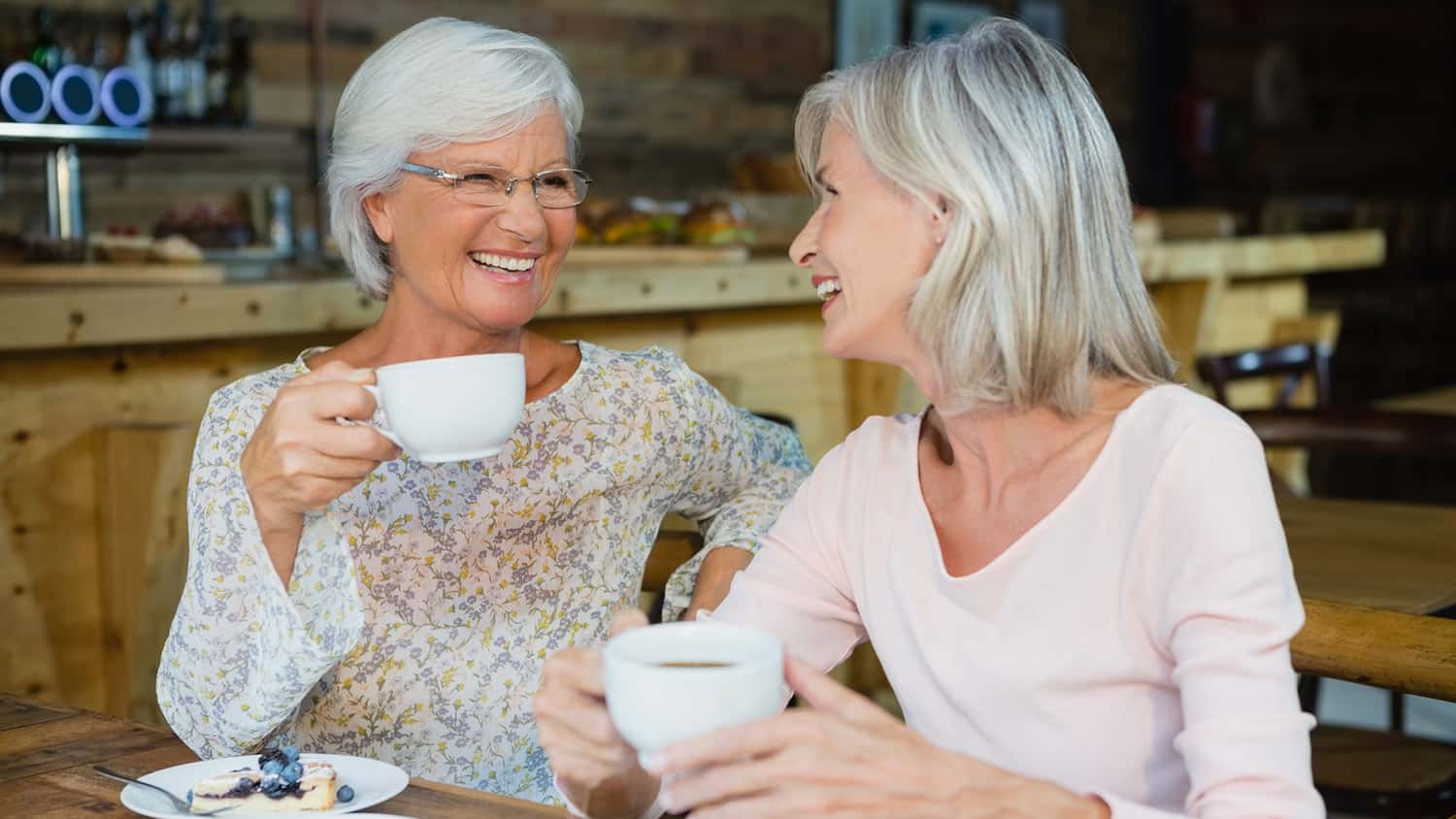
Why Friendship Matters More Than Ever: The Case for Face to Face Friendship After 60
Friendship matters even more after 60. Friends keep us active and engaged. They keep us connected to the world around us.
A circle of friends can provide support and encouragement, a sounding board and a sense of security which emboldens us to try new experiences. All of this is especially important if we are in our 60s and solo. Yet good friends can be hard to find just when they’re needed most.
Many of us live alone, are retired or may work from home. Schedules are busy. Social media can connect us, true, but it also keeps people at arm’s length. Remembering names and new casts of characters is becoming increasingly difficult. Moreover, knowing what to share with someone you don’t know very well (yet) can be tricky.
Finding and making new friends isn’t always easy, but it is important. Having friends – whether it’s one or two confidantes or a circle of women with similar interests – is key to happiness and, often, healthiness. Face to face friendships really are good for us.
Laughter Really Is the Best Medicine
Friends keep us happy and that can also keep us healthy. Study after study report that friendships are vital to longevity and to our physical and mental health.
According to the Mayo Clinic, friends can increase our sense of belonging and purpose, reduce stress and boost happiness, improve self-confidence and our sense of self-worth. They help us cope with traumas such as divorce, death or serious illness and encourage us to embrace healthy habits.
Adults who have social support also have a reduced risk of suffering from depression, high blood pressure and cholesterol or obesity. They are also likely to live longer.
A study of 1,500 older adults found that having supportive friends is a better predictor of wellbeing than family ties. The results suggest that the friends that we choose are at least as important as the family that we are born into.
Social support is important to all of us. Neuroscientist John Cacioppo found that loneliness is associated with the progression of Alzheimer’s disease, obesity and lowered immunity. We all need to have a sense of community. Friendship can provide that experience.
Why Making New Friends Can Be Challenging
Sociologists cite three criteria that are critical to making close friends:
- proximity
- repeated, unplanned interactions
- a setting which encourages us to relax and let our guards down.
Proximity can be hard to maintain in retirement, especially if we are living alone. We need to get out in the world and create new opportunities to meet people. Feeling comfortable enough to relax and share in a group of strangers can often feel risky. We must learn to rely on our intuition more.
Women make friends differently than men. Men ‘do things’ together, but don’t necessarily interact on a personal level.
Women share more emotional content with each other and prefer to interact on a face-to-face basis. Women’s friendships take more effort to create and maintain, but they are often also more rewarding.
How to Make More Friends
The best way to make a friend is to be a good friend. Put yourself out there. Be interested in other people. Look for a way to connect with them.
Common interests and activities are great icebreakers. Shared experiences can be bonding. Seek out activities that you enjoy. You’re likely to find others who feel the same way.
That’s why women’s travel and adventure clubs are so popular. Solo women from around the world are creating new travel experiences together. Many report meeting other women who have turned into good friends and repeat travel partners.
The good news is that the friends we make in our 60s are likely to be a good fit. By now, we’re comfortable with who we are and what we need in our lives. We’ve spent a lifetime making friends and we know how it works.
We’re choosier about how we spend our time and more selective about who we spend it with. Most women have friendship as a common goal. We just need to find each other.
There Are Some Simple Ways to Get Started
Take up a new interest and join a club or take a class. Community centers and fitness programs are great places to meet other women.
Volunteer for a charitable or political cause that you are passionate about. You’ll meet other passionate people there. Attend community events and chat with other guests. Give and accept invitations. Your goal is to create more opportunities to connect.
I wrote my book Retiring Solo as I was beginning to think about what my future as a solo woman would look like. The plan that I created for myself is focused on creating friendships, a strong sense of community and the support system that I know I will need in the years ahead.
Online communities are a great way to interact with like-minded women from around the world. However, there’s no substitute for face-to-face friendship when it comes to being happier, healthier and excited about the future. Get out there and make a new friend today!
Let’s Have a Conversation:
Has your social circle gotten smaller or larger as you’ve grown older? Do you have friends whom you can count on in a time of need? What is your strategy for making new friends? What do you like to do with your face-to-face friends? Do you use social media friends to fill the gap? Let’s talk about friendship and how to expand our circle.
Tags Friendships


I have friends that I have known for a long period of time…7-50 years.
All but 2 of them I met at the job that I retired from. One is still working but the others have retired. They are dealing with caregiving, health issues and other responsibilities. I hoped that we would get together more but it was not to be. I was not making NEW friends that were not connected to childhood or the job. I joined a church that very big on lifegroups. The group dynamic was something I was not used to. I navigated solo but with individual friends. I never had a crew in that sense.
In a lifegroup, I met women from all walks of life and varying ages. We meet weekly to discuss life, books that we read and our spirituality. We have
met a couple of times in person. Are we tight friends? No but we enrich each other. I volunteer and met women in that capacity.
Being alone is one thing but loneliness is crushing. I realized
that I had to be open to friendship possibilities. Just open to life, period. Sometimes you connect and sometimes you do not. I have the most interesting convos at a public bus stop. I am connected for that period of time. Connection is important. I am learning to appreciate the time spent with my friends whenever we do get together instead of longing to be together more. I am working on filling up the hole inside instead of looking for them to do that. Enjoying being WITH myself instead being BY myself.
Being intentional to connect in whatever way possible: text, zoom, calls, in
person.
One friend we meet in person monthly and alternate what we do. Currently,
we try something new.
Another, we meet on Zoom and watch Britbox, Amazon videos and movies. She has medical issues and doesn’t get out except for appointments so we
watch the movies, discuss and solve the world’s problems.
I do not do social media.
Relocating when you are over 70 makes it difficult to meet new people. Climate has a lot to do with this apparently. Warmer climate, warmer people, cold climate, well, you know. Post Covid I find it hard to meet people. They are somewhat friendly at functions, but it doesn’t go beyond that. I’ve had friends for years and I think relocating when you are older does make a huge difference. I still keep up with friends I had in elementary school – all of us scattered in various places on the planet.
Jane, you are so spot on. It is hard to meet people as we get older. I find that if people come into a group with a friend, they leave with that friend and have no desire to expand their circle of friends. Few people want new friends, just the ones they’ve known for years.