


The Goal Isn’t to Get Your Old Body Back (+ Beginner Pilates Video)
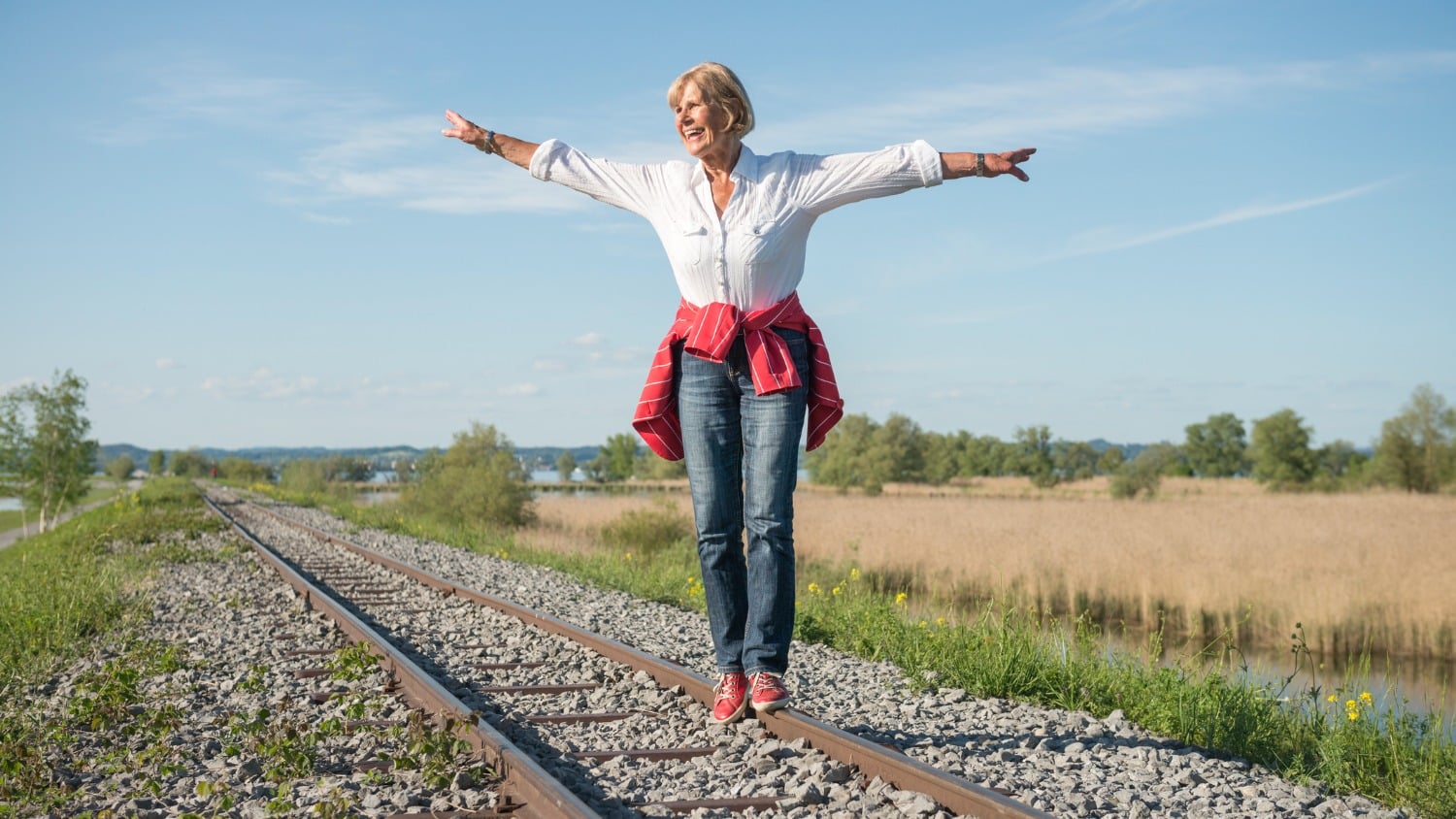
“I never used to feel this way” is a thought that arrives quietly. Your hand reaches for the railing before you’ve decided to reach for it. You pause at the top of the stairs for half a second longer than you used to. It’s not dramatic. No one notices. But you notice a subtle change in your balance.
And Something Shifts
Maybe it’s been happening slowly – the shoulder that aches when you reach overhead, the mornings where your body needs longer to warm up, the stamina that isn’t quite where it was. None of it is catastrophic. But together, these small changes can add up to a feeling that’s hard to name. An unfamiliar feeling from your own body. And underneath that – quieter, harder to admit – a question: Is this just my new normal? Is this something I can actually change?
If you’ve felt this, I want you to know: you are not falling apart. You are navigating one of the most significant physiological transitions of your life. After 50, women naturally lose muscle mass, balance becomes more difficult to maintain, and joints that were silent for decades start to make themselves known. This is not a weakness. This is biology – and it responds to the right kind of movement.
But Here’s Where I Want to Challenge Something
For most of our lives, exercise was framed around one goal: changing how our bodies look. We chased a number on a scale, a size on a tag, a version of ourselves we remembered from decades ago. And if that’s still the lens you’re using after 50, I say this with full respect – weight loss is the least interesting thing exercise can do for you.
What movement actually offers at this stage of life is something far more significant. It offers you a new relationship with your body. Not the body you had at 30. Not the body you think you should have. This body – the one that reached for that railing, the one that surprised you – this body has capacity you haven’t found yet.
I watch it happen with women in my studio regularly. Someone comes in uncertain, moving carefully, feeling self-conscious for what she can’t do. And then, weeks later, something shifts. She starts noticing what she can do. She stands differently. She moves through her day with a quiet confidence that has less to do with a number on a scale and everything to do with what she knows she’s capable of.
The real goal after 50? Not to get your old body back. But to find out what this body can actually do.
And I Promise You – It’s More Than You Think
And that question – where do I even start? – is one I hear often, and it’s the right one to ask. My answer is always the same: slowly, and with intention. And if you’re looking for exactly that, I’d love to offer you a place to begin. This 15-minute beginner Pilates class was designed to be gentle, supportive, and no equipment needed. Just you and 15 minutes.
Questions:
Has exercise changed for you as you’ve gotten older? What is one change you noticed in your body that exercise has helped? Are you noticing your balance feels different? What makes starting (or restarting) exercise feel hard?
Tags Pilates


I had a hard time getting motivated to do anything because I couldn’t do what I did before which was yoga. About 6 weeks ago a friend and I challenged each other. I chose chair yoga and it’s worked great. It’s doing yoga just changed the format a little.
Thank you for writing this article.
I love this so much Judy. So many of us quit the moment our body won’t do what it used to — and you did the opposite. You accepted where you were and then found a way to move that actually feels good. Six weeks in and still going — good work!
I love pilates. With this vid, I can do the first 4:25 minutes as I no longer get on the mat on the floor. I have to be very gentle with my knees.
That’s so wonderful to hear, Joyce! Since getting on the floor is a challenge, a standing class might be just the thing — I have a 10-minute standing Pilates video on my YouTube channel that would be perfect for you and your knees: https://youtu.be/YCdZi49g0ok?si=NwC8Y28x9g5MjYOT