


Beyond Walking: The Gentle Exercise That Secretly Protects Your Bone Density
As we age, the common advice we hear from medical professionals when it comes to protecting our bone health is often the same: make sure you are getting enough weight-bearing exercise.
For many of us, that advice equates to an exhausting mental image. We imagine ourselves sweating through heavy weightlifting, or pounding our knees against the pavement on a morning run. It is enough to turn many of us off exercise.
But what if the key to maintaining strong bones doesn’t require punishing your joints or buying a gym membership? What if it lives right in your living room?
The Overlooked Truth About “Weight-Bearing” Movement
To understand why, we have to look at what weight-bearing exercise actually means. Your bones don’t care if you are lifting a dumbbell, using a workout machine or your own body weight. It only cares about time under tension. Your bones build density when your muscles are forced to work actively against gravity while supporting your own physical structure.
High-impact movements like running absolutely create that stress but they can be incredibly rough on knees, hips, and a sensitive lower back.
This is where the magic of low-impact movement such as Pilates comes into play. When you move through a mindful, structured Pilates routine, you are constantly lifting, pressing, and holding your own body weight against the invisible pull of gravity. The magic of strong bones lives here.
Targeting Your Frame’s Most Vulnerable Spots
Think about the areas of your skeleton that are most vulnerable to thinning, osteopenia, or fractures as the years tick by: your spine, your hips, and your wrists.
Traditional workouts like walking are amazing for your cardiovascular health and your mood, but they primarily move you in a single, forward line. They don’t adequately challenge your upper body or your deep stability structures.
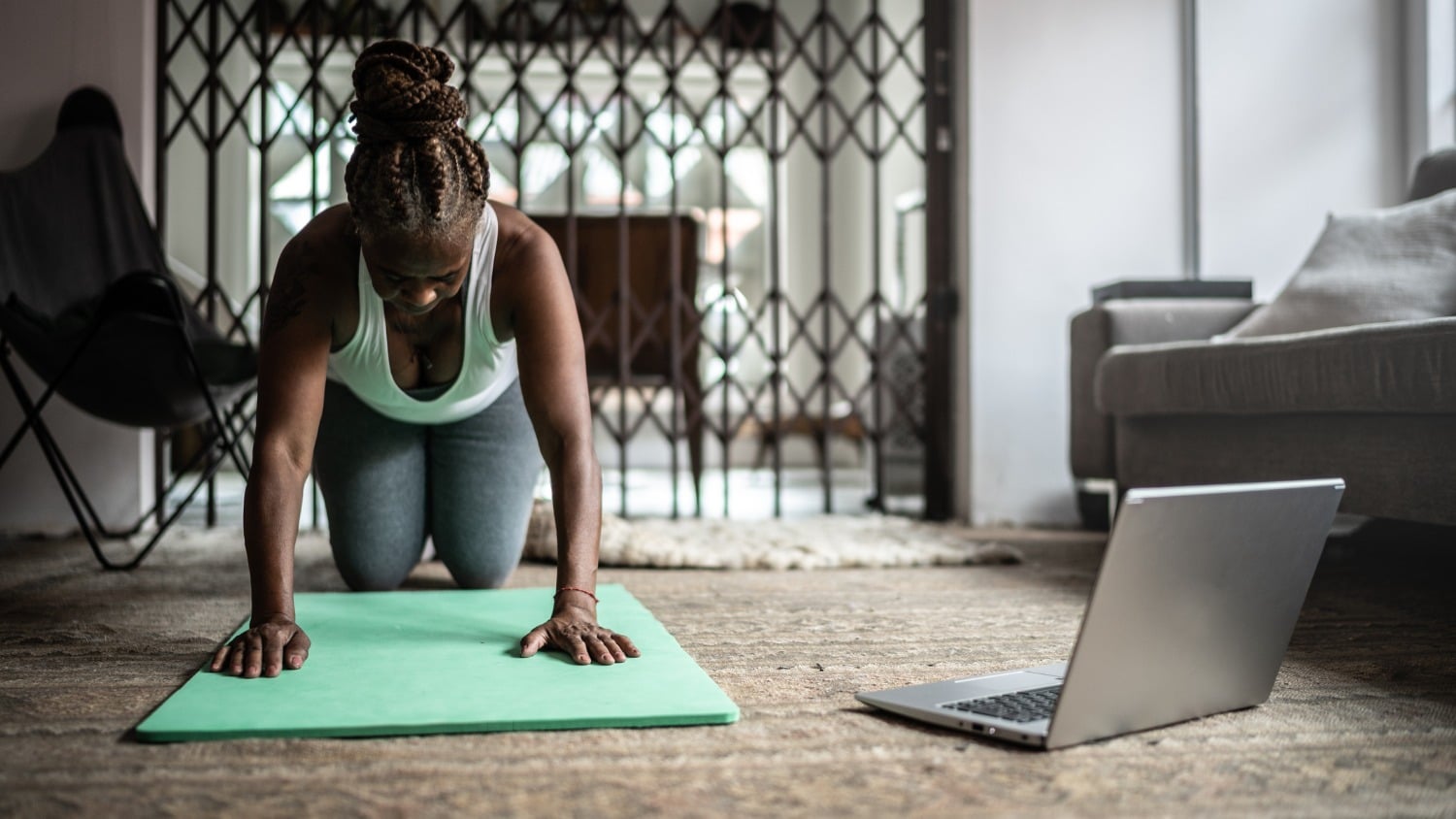
A dedicated movement practice such as Pilates, however, requires full-body interaction but in a low-impact way. Holding a solid plank or moving through a side-lying sequence actively loads your forearms and wrists. Pressing up into a controlled bridge forces your hips and glutes to fire, signaling your body to build bone minerals right where you need them most. Furthermore, safe spine movements gently stimulate the vertebrae and help you stand taller.
Moving with Confidence
The one thing I have learned after teaching movement to women over 50 for the last decade is that the true secret to long-term physical autonomy isn’t intensity – it’s consistency. If an exercise routine makes your joints ache for days afterward, you simply won’t stick with it. Plain and simple.
You do not have to endure exhaustive gym weights to build a resilient skeletal frame. I took a deep dive into the practical biomechanics of this recently to answer a question I hear from women often: is Pilates considered a weight-bearing exercise that can safely protect your bone density?
The answer is a resounding yes. By prioritizing slow, controlled, and intentional alignment over exhausting force, you can build deep structural strength that respects your body’s boundaries while completely transforming how you move through the world for years to come.
The key to longevity in your workouts is to start low and go slow. As I often tell my members, “less can be more.” I know it’s tempting to pick up the heaviest set of weights, thinking this is the fast track to results. I can promise you it isn’t. Slowly challenging the muscle is the fastest way to build strong bones and a strong body long term.
If you are ready to stop guessing which movements to do and want a gentle, physical walkthrough of these exact biomechanics, come join me on your yoga mat. I have filmed a complete, 20-minute YouTube video to help get you started on your journey to building bone density (and leave you stronger and more flexible!). Grab a mat, pick up a pair of light 3-5 pound hand weights, and I’ll see you there.
Let’s Have a Conversation:
What movement do you do to help build strong bones? Have you tried Pilates before? What is your daily movement routine?
Tags Pilates


My doctor told me to “stomp” more when country line dancing!
Haha! I love it. That is such great advice 😊
I power walk 5 days per week, strength train with bands and body weight twice a week and do pilates class once a week.
Rita – this is amazing! Keep it up – your body will love you for it.
I have not done Pilates but I have done yoga routines from when I was in my mid-30s and still occasionally but I don’t do them as consistently as I should. I’m trying to do sun salutations now and other yoga asanas that might help keep me strong and help my back problems as I am 83 now. I will check out your video. Do you think it is better than yoga?
Hi Louise – this is such a great question! To be honest – I am obviously biased towards Pilates only because I have seen how genuinely life changing it can be for women in their 50, 60s, 70s and beyond! Having said that what I always come back to is to find movement you love and stick with it. Whether that’s yoga, zumba, swimming or Pilates. There’s no downside to becoming a stronger, steadier mover as you age. Yoga and Pilates compliment each other beautifully. While yoga builds flexibility and calm, Pilates builds core strength, postural alignment and stability. You might find adding Pilates to your yoga practice gives your lower back even MORE support. Feel free to check out my youtube video and see how it feels in your body. Keep up the good work Louise!