The Last of the Summer Wine
Anyone who knows me knows that I love a glass of red wine or two! I was therefore delighted when moving to our rural Bulgarian village to discover that I had a number of grapevines in my garden. I couldn’t wait to make wine!
When preparing this article, I obviously had in mind the popular sitcom Last of the Summer Wine, which graced our television screens for several decades. One of its prevailing themes was that the characters refused to allow age to rob them of their enthusiasm for life. It was with great excitement that we launched into our first winemaking adventure.
Making the Wine
We collected all the necessary equipment, including a sugar thermometer. Wine-making equipment is readily available in the shops here, as almost everyone makes their own wine. Everyone has grapevines!
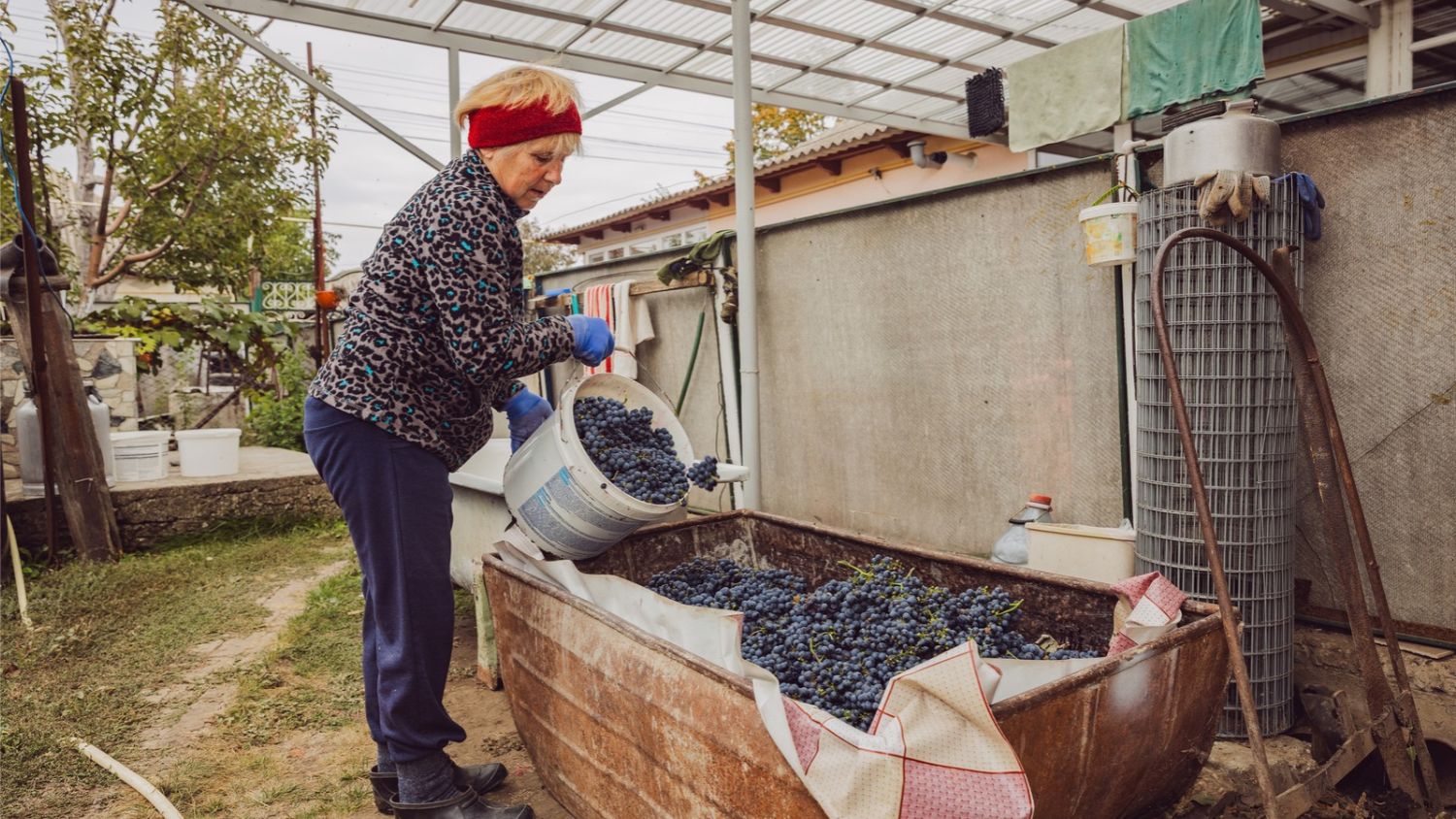
Next came the laborious task of removing all the brown, woody bits from the grapes. This took absolutely ages! We learned that it was acceptable to leave a small amount of stem attached, as this helps with the tannins, but too much could make the wine taste bitter.
Once the wine was made and transferred into buckets, we had to wait patiently, stirring it daily and allowing it to ferment. Then it went into demijohns where it bubbled happily on my worktop. Finally, the exciting day arrived when we could taste our creation and bottle it up.
What a disappointment! It really wasn’t good wine. I now have a lifetime supply of red wine vinegar!
This reminds me of another parallel with the sitcom: it’s okay to make mistakes. Growing older doesn’t mean that we will stop making them, nor should it mean that we stop trying new things. We can laugh at our failures, even when we have put an enormous amount of effort into them. After all, the experience itself becomes part of the story.
Finding a Purpose
For many people, retirement can leave a gap where work, responsibility and routine used to be. Living in a community where there is so much emphasis on gardening and self-sufficiency has certainly given us plenty to do in our retirement.
Making wine might not have been our greatest success, but it gave us something new to learn, a project to work on together and, ultimately, something to laugh about. Perhaps that is part of the secret to enjoying later life: finding things that interest us, even if we aren’t particularly good at them!
Friendship
In Last of the Summer Wine, friendship is at the heart of the story. The characters may disagree, bicker and have very different outlooks on life, but their friendships endure.
Our experience of village life in Bulgaria has taught us something similar. The people in our village are very different from us, with the language barrier alone presenting a considerable challenge. We also have different backgrounds and sometimes very different outlooks on life.
Yet these differences haven’t stopped us from making some really good friendships. We have discovered that friendship doesn’t always require us to think alike or even to speak the same language fluently. Sometimes, a smile, a helping hand or a shared laugh says everything that needs to be said.
The next time we make wine, I’m going to ask one of our Bulgarian friends to give me a few lessons first. It might save me from producing another lifetime supply of vinegar!
Nostalgia
Last of the Summer Wine had a particular affection for an older, slower and more traditional England. For many viewers, it evokes memories of a different era, when life seemed simpler and communities played a more central role in people’s lives.
One of the things we love about living in our Bulgarian village is that we sometimes feel as though we have travelled back in time. In fact, we named our YouTube channel Escape to a Simpler Place and Time to reflect this very feeling.
There are fewer cars on the roads, and horses and carts are still a common sight. Some of the roads are cobbled rather than covered in tarmac. We still have lots of small shops where you can stop for a chat and pass the time of day with the shopkeeper.
Not everyone even has a mobile phone, and people seem much more willing to stop and talk when they meet in the street. Everyone says hello, and a simple trip to the shops can turn into a series of conversations with friends and neighbours.
There is also a reassuring sense of security. We feel comfortable leaving our doors unlocked, and crime is rarely something we worry about.
Of course, village life isn’t always idyllic, and living in a different country brings its own challenges. But there is something wonderful about being part of a community where people still have time for one another.
Perhaps this is what nostalgia is really about. It isn’t necessarily a desire to return to the past, but a longing for some of the things we associate with it: a slower pace of life, a sense of belonging and the pleasure of ordinary, everyday encounters before mobile phones made people much more unsociable.
We’ll probably have another go at making wine at some point, although our experience was very discouraging. I did think of attempting to dry out the fruit, but the thought of removing all of those seeds is daunting. Does anyone else have grapevines in their gardens? Do you make wine or do you make something else with your grapes?
Your Side of the Coin:
Have you ever surprised yourself by discovering a talent you didn’t know you had? Do you still enjoy those unexpected chats with neighbours or shopkeepers where you live? What do you miss most about the way life used to be?
Tags Inspiration