


7 Ideas for Preserving Your Family History
A couple years ago, a historian from a museum in Lueneburg, Germany, contacted me. “Are you the great-granddaughter of Robert Heinemann?” she asked.
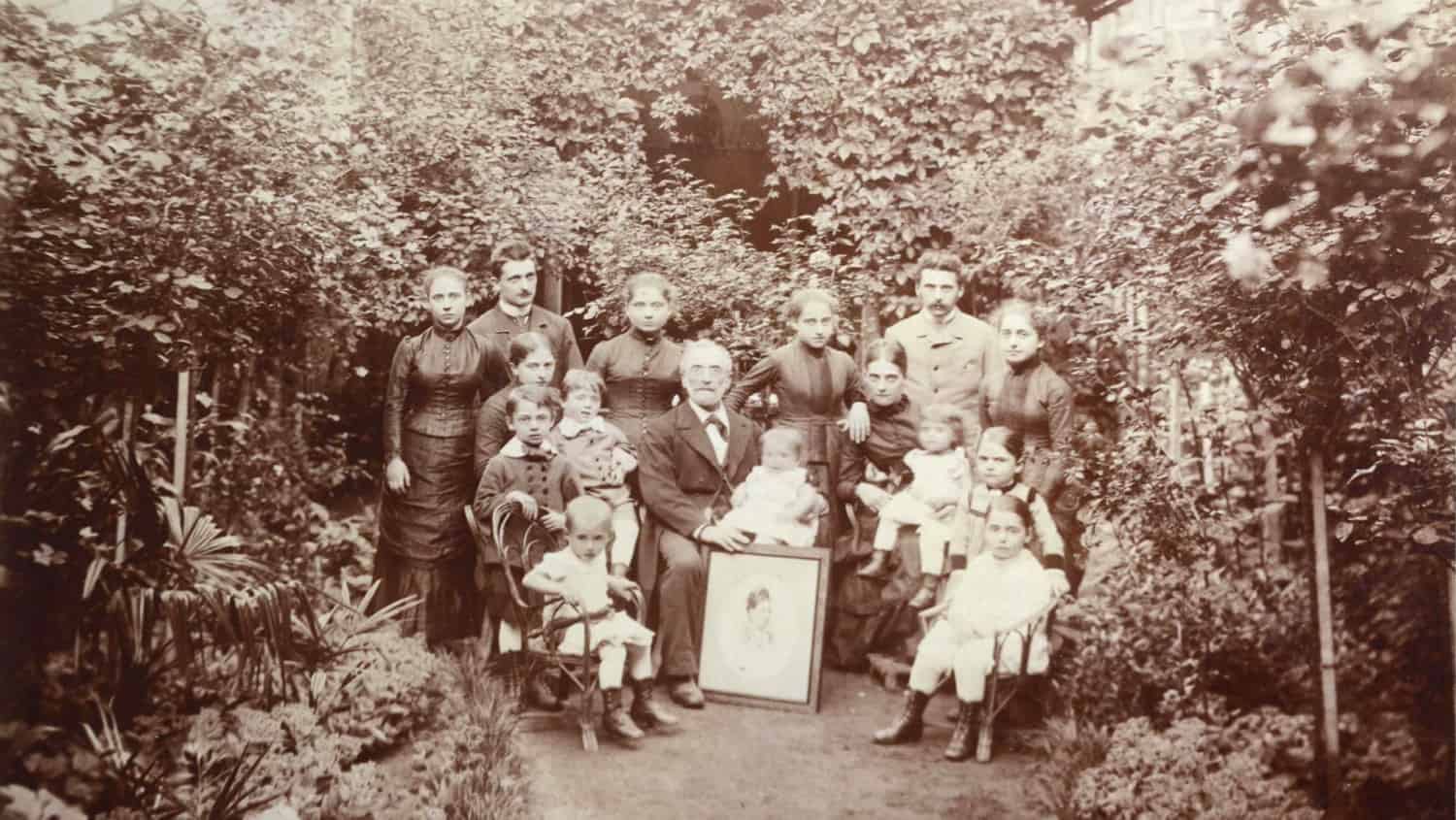
They were looking for descendants of Robert’s father, my great, great grandfather, Marcus Heinemann, who had been a leading Jewish citizen in Lueneburg many years before Hitler.
The museum had items stolen from Marcus’s estate by the Nazis. Marcus had 17 children and the museum wanted to return the estate items to the descendants. That opened an amazing door to the past.
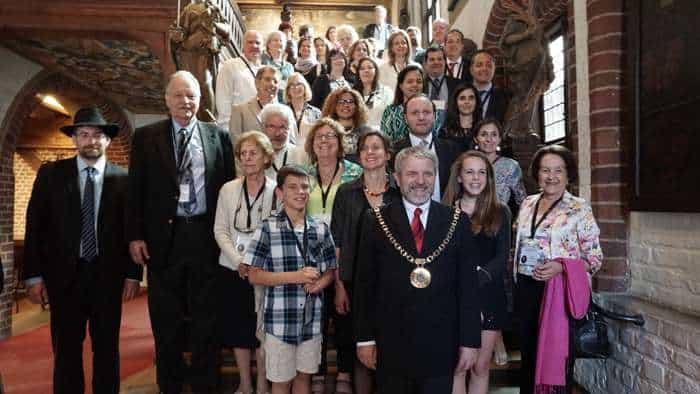
I had always heard about those 17 children from my grandmother, but there was so much I did not know. So, I began searching for family members around the world and organized a family reunion with 40 family members from six countries, nearly all newly discovered.
Through hundreds of email exchanges, we agreed to keep the items in the museum through a long-term loan. But the true value was worth more than money – it woke me up to the deep and powerful story of my family and our history.
As women in our 60s and beyond, we have much to reflect back upon in our lives, while still most likely enjoying the company of a few elderly relatives. Suddenly, unique to this time in my life, I realized the accessibility and the incredible power of linking the past, the present, and the future.
By now, we have gained perspective on life and ripened our own little chunk of wisdom. We have experienced ups and downs, adventures, loves, losses, and realized some dreams. We also have a bit more time to examine that collection of saved paraphernalia, from dried flowers to the cherished photos. And even without the benefit of a historian, there are amazing resources from which to draw.
In this blog, I offer seven ways to wake up and explore your family history.
Write Your Memoir
Dig through your own journals and start writing your memoir. The memoir is actually a sub-genre of an autobiography; however it is less a sequenced historical account with exact dates and chronology, and more of a draw upon your feelings and perceptions.
There are many memoir classes, often available at local community centers and colleges, as well as online memoir courses, to get you launched. These classes can help you select an approach to your work.
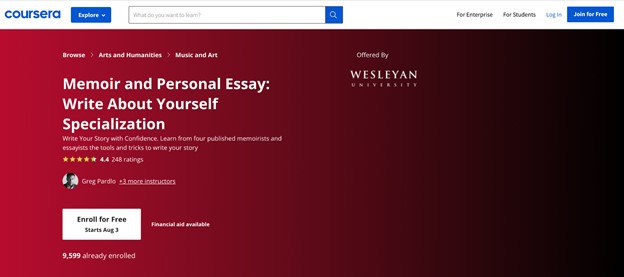
I like the idea of making my memoir a collection of essays about different times in my life without feeling bound to present them in a sequence. The website Goodreads.com has a list of popular memoirs to inspire you.
Look into Storycorps
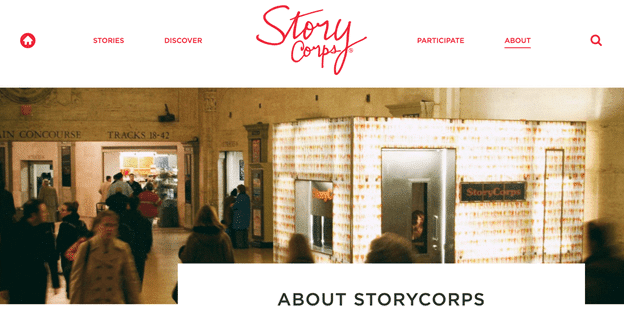
This organization calls itself America’s “oral history project” with over 600,000 interviews with more than 100,000 participants of all backgrounds.
Anyone can download the Storycorps App that helps you prepare and record a high-quality interview on your cell and upload it to the archive. Storycorps also has recording booths in Atlanta, Chicago, and San Francisco, where you can schedule an appointment for a free recording session.
Their model is a two-person interview. Your story will be archived, and you will receive a free CD. Or, their Mobile Story Book may be coming to your town. It is a traveling recording studio that makes its way across the country. You may also use your own equipment to conduct an interview.
Make a Film of Your Family Stories
Set up the video camera in your living room (or maybe backyard) and bring your kids, your siblings, or your friends together for a story-telling night. Plan the questions ahead of time.
Put the camera on a tripod for steadiness and be sure you have clear audio. Encourage them to keep answers short so you don’t have to edit. Also, don’t make it too long. You do want people to actually watch it! Then, make copies for everyone.
I am planning to do this during the holiday season, but first, I will help everyone feel nice and cozy and serve hot apple cider. You can also go online to hire hundreds of family story video production companies to do a professional job.
Create a Family History Kit
Gather taped interviews, music recorded by family members, and digitize some of the old tapes. Put together a kit, which could be a box with videos, audiotapes, copies of articles or stories about the family, or include special photos. Make a copy of the family history kit for each of your family members – parents, siblings, children, nieces, and nephews.
For my kit, I had a family tree, and I digitized the VHS video interview we made when my mother was alive, together with a short autobiography handwritten by my mother in 1939 when she was 19. Everyone told me they loved the kit.
Make a Printed Photobook through Shutterfly, iPhoto or Blurb
They have a range of templates with stories and captioned pictures for the family. All you need to do is plug in your photos and stories. You can order multiple copies for family members.
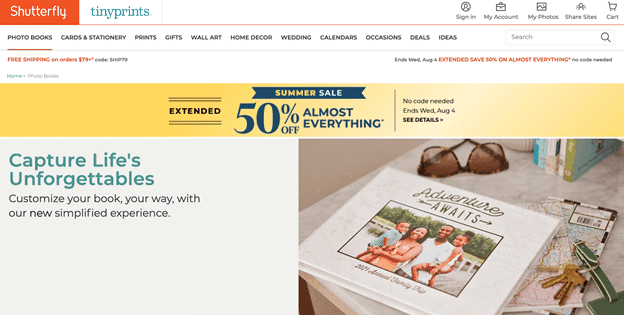
I even was able to do this as a project with my young niece and nephew, who made a book for their grandmother. She supplied the pictures and I showed them what to do. An alternative, low-budget method would be to make a spiral-bound book and mass produce it at a copy shop.
Dig into Your DNA
Did you know that you can explore your ancestry by having your DNA tested? You can find out about your ethnic background and migrations into and from a particular region, or even discover whether you have notable ancestors.
On the popular PBS show Finding Your Roots, Henry Louis Gates explores the personal histories of celebrities. Their website invites you to share your story. It also offers many family history tools and ideas.
My friend Robin used a service called “23andMe.” She says it’s fantastic! She learned about her ancestry, found medical information, and even discovered distant cousins around the world.
Online Search for Family Records
The well-known Ancestry.com is one of many websites that can help you make a family tree and explore your family history. Ancestry.com is probably the largest and most respected website for discovering your family history.
It is also the most expensive option, even with its 14-day free trial. It has a super large database of information, including immigration records and census data in addition to the basic information you would expect, like birth records, death certificates, and so on.
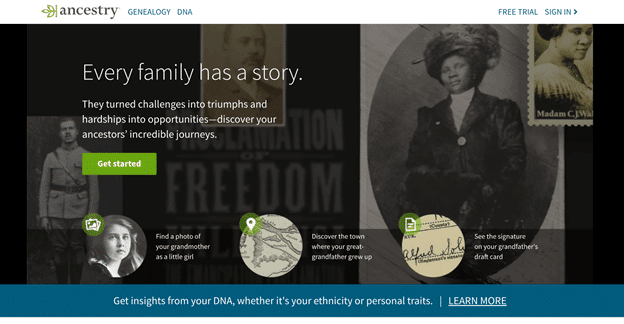
Roots Web is the free community site of Ancestry.com. It is a great way to get started on the journey of finding your ancestors. The big plus is, of course, that it is totally free of charge, and it has many advantages other than just cost. Because it is free, the number of people who sign up is significant, and the free learning communities and forums that are offered lead to lots of great collaboration and connection.
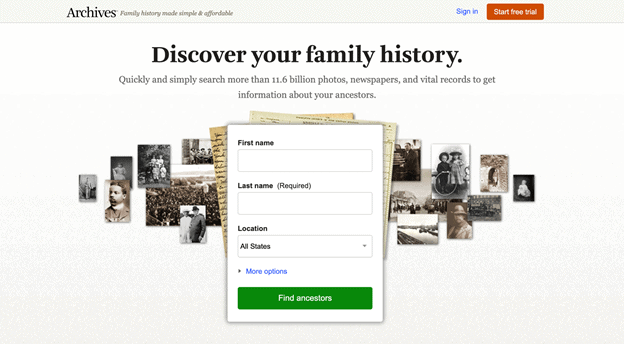
Archives.com is cheaper than Ancestry and offers a week-long free trial. It has all the basic information you would expect, and it claims to offer more than 2 billion records. This includes newspaper clippings of obituaries, which is a good feature.
My friend Kathe also used the free WikiTree A Family Name Index for the family tree and Find a Grave to authenticate times and dates.
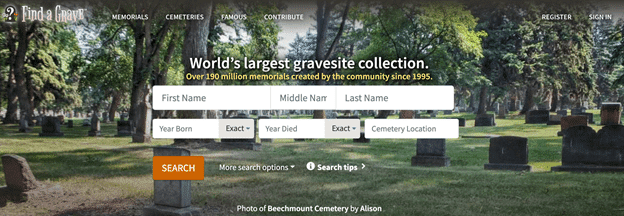
You might even find a photo of the headstone of one of your ancestors. The One Great Family website is another collection of family trees that is becoming an online database of birth and death dates, as well as photos and biographical information.
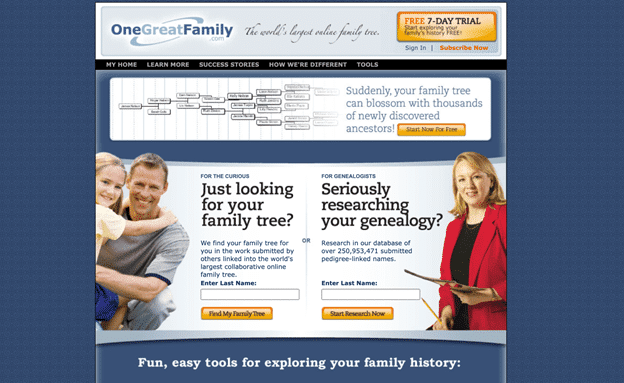
Kathe searched the internet and used these tools to find out many details about her mother’s family. Then, she e-published a 97-page book with photos and stories, which she is giving to her three brothers and sister to commemorate her mother’s recent death.
I am now working on a short film about the life-affirming reunion, transformation and healing that occurred two summers ago between my family, the descendants of Marcus Heinemann, and the German community currently residing in Lueneburg. We are still uncovering the stories from both communities.
Just one small caveat – just because you become a born-again family historian, your siblings, children, or even your parents may not be interested. Not to worry. They may come around when they reach their 60s. Besides, sometimes it’s the future generations who benefit from your splurge into your family history.
Let’s Have a Conversation:
What interesting facts have you found out about your family history? Have you used any of the tools listed in this article? What other family roots digging tips can you share with the community? Please share your story in the comments section below.
Tags Ancestry


In 1997, I found my late maternal grandmother’s ship manifest from the time she immigrated to the US (from Hamburg via Poland) at the US National Archives in Washington, DC. I had grown up near her home and known her well, and was instantly hooked on family history. Off and on over the next 26 years, I worked on my genealogy as more and more became available online, and even did my husband’s maternal family tree. We then visited those ancestral villages in the Abruzzo region of Italy and with the help of a specialized guide, found family records and graves. Finally, last year, after I’d gone as far as I could in US records, we visited Poland and Lithuania to see the lands of my ancestors. Although we traveled independently in the big cities, we contracted with a Polish based company to provide genealogy guides for both my paternal and maternal guides. I felt very much at home, particularly in SE Poland, from where my mother’s family originated. I learned so much about my family, visiting the villages, the churches where they worshipped, and even meeting some distant cousins (with whom I’m still in touch via FB). In Lithuania in particular, I saw so many women with whom I shared a body type (tall and muscular) and similar facial features. My husband looked around in Vilnius (Lithuania’s lovely capital), and said, “You are definitely Lithuanian!” It was the trip of a lifetime and a very profound journey and experience as a result. At times I felt my grandmother was with me, and at one point, my late father as well. When I returned home, it took me quite a while to emotionally and spiritually process everything I’d learned and experienced as a result. I have finally started working on a report on what I learned for my relatives, daughters, and grandkids. The whole journey into my family’s past was one of the best things I’d ever done for myself.
Thank you for listing the resources you used. I will definitely look into those involving memoir writing. I did well with Ancestry and also their DNA service. I additionally found that using FamilySearch.com (a free website from the Mormons that also has some online training) was great. Ethnic genealogy societies and FB pages are extremely helpful, especially if you don’t speak the language. Lithuanian was a particular challenge in this regard. I ordered my grandfathers’ citizenship papers from the Chicago regional office of the National Archives, which added to my family knowledge. Our local library has a great genealogy department, which helped me learn a few tricks of the trade, including that old draft cards often have a few bits of data that help answer questions.
These are great ideas and resources. One of the chapters in my Write Your Life Story for Posterity newsletter is a free step-by-step guide called “Family History.” Many people regret not interviewing parents and writing down family history until it is too late.
Since it is closely related to the topic of the post, I’d like to tell everyone how they can subscribe to the newsletter for free and obtain the Family History guide: maureensantini.substack.com/subscribe
Some years ago I tried ancestry.com for a while, but didn’t find anything useful or interesting about my family. The ideas in this article are very useful for readers who are interested in their family histories, but I encourage people not to wait until older generations start dying. They’re a great source of information. Unfortunately all my grandparents and my father died young, and my mum developed dementia before she died. Now I’m in my 70s and there’s no one else to ask.
I am also in my mid-seventies, and have no one to ask about the questions I have since my mom passed away. My dad had passed some time before her. My story would be somewhat different, however, since I am adopted. My adoption was arranged before I was born through a doctor who was doing prenatal care for my bio-mom, and trying to help my adoptive mom get pregnant, which never happened. It’s possible that I may have half-brothers or -sisters out there, but have never been motivated to look for them.
I checked out findagrave putting the info on my mother. To my surprise ton a sidebar were the birth and death dates of her parents and siblings. I had never seen this info before and have yet to figure out how it got posted. It enabled me to construct a timeline.
i do Storyworth weekly.