


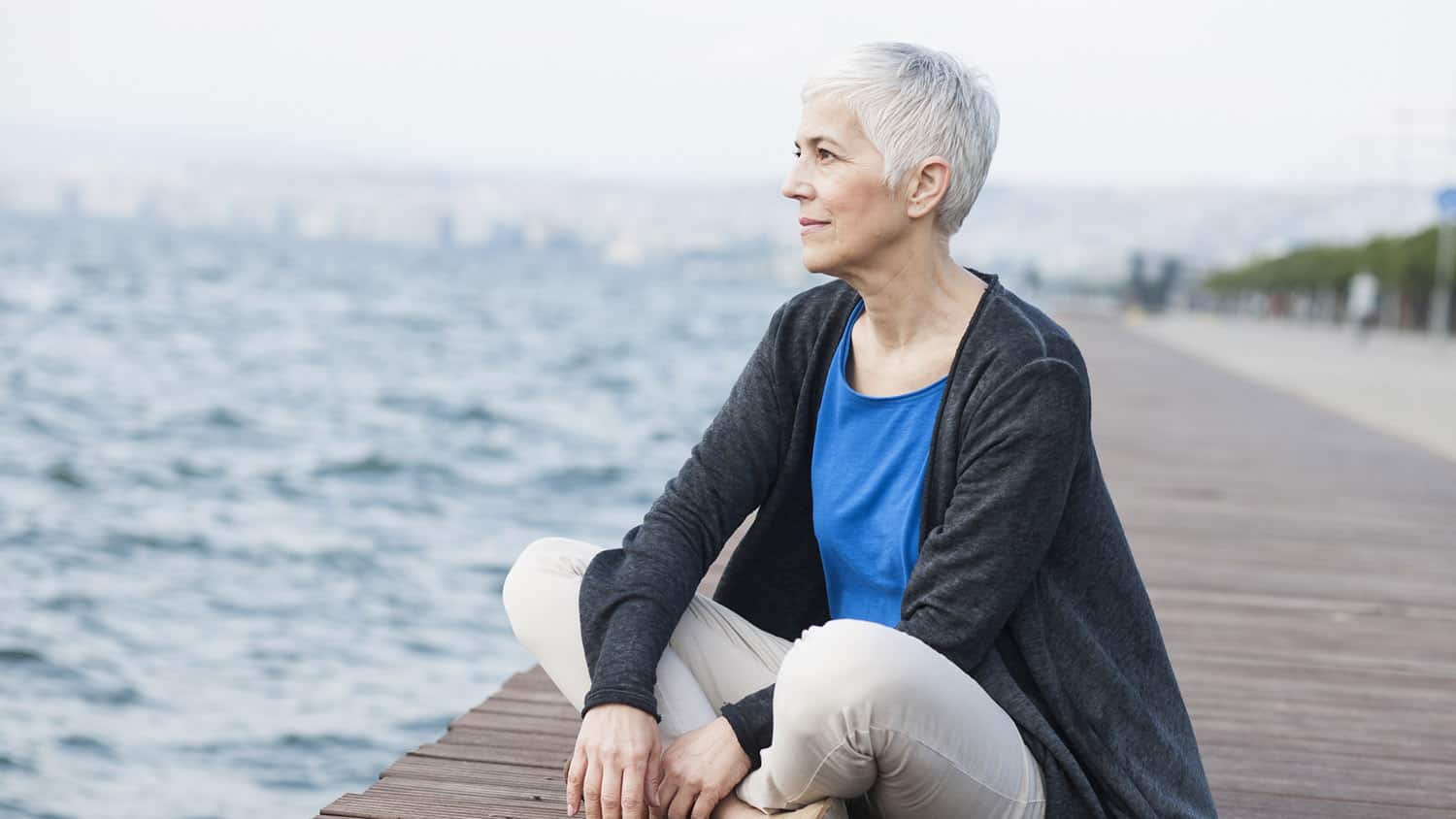
As Older Adults, Can We Rediscover Our Idealism After Losing Our Innocence?
Getting older can be tough. It’s not just the physical changes that we need to contend with. It’s also the psychological weight of countless accumulated experiences that hold us back.
How can we believe in love when we have been betrayed? How can we trust our politicians when we have experienced decades of lies? How can we make new friendships when we have seen how the people close to us react when the dark times come?
Ok, I know that I’m being a bit overly dramatic here. It’s not like we all reach out 60th birthdays and suddenly turn into untrusting, bitter, emotionally damaged older ladies.
That said, in talking to the 1000s of other women in our community, there is no denying that each of us carries these feelings – at least a little – in our hearts. We may not think about them every day, but, they color our behaviors and make it difficult for us to find the happiness that we deserve.
This reminds me of a great quote by Bruce Springsteen who said, “The great challenge of adulthood is holding on to your idealism after you lose your innocence.”
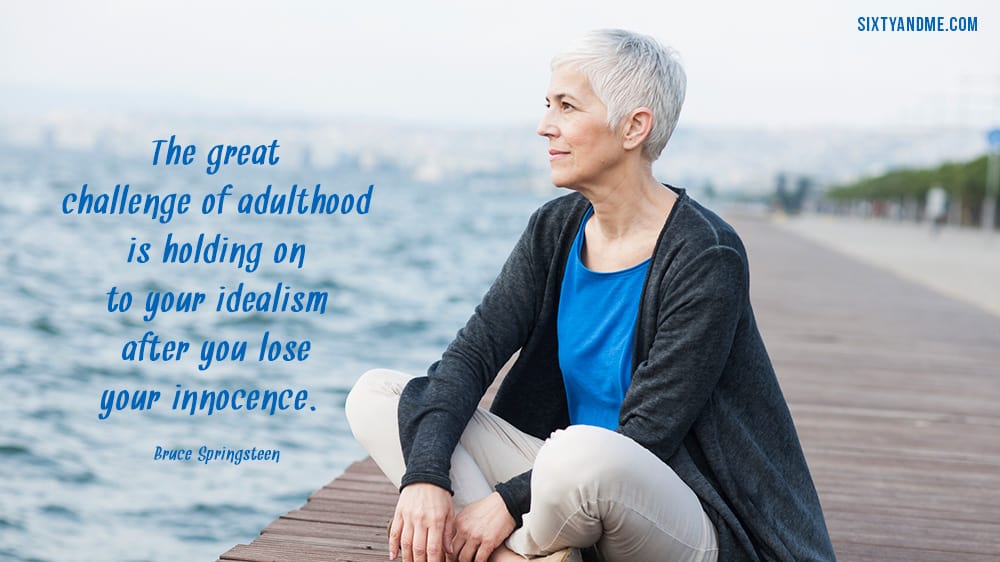
Can We Rediscover Our Idealism?
This quote perfectly captures one of the biggest challenges – and opportunities – facing older women. Now that we are in our 60s and older, we can take a step back and challenge our negative thoughts.
Or, at the very least, we can challenge our implicit assumptions and ask ourselves whether we are, perhaps, being a little unfair on the world.
Trust me, I know how hard this is. I’ve had my share of heartbreaks and betrayals over the years. I lost my home in the financial crisis. I have had good friends abandon me in hard times.
Yet, if I am honest, I have also seen the opposite. I have seen strangers reach out to help me when I needed support. I have witnessed the women in our community lending a hand when they saw someone in need. I have witnessed 80-year-olds falling in love. I have seen my children grow into adults who are determined to make the world a better place.
Do You Want to Change the World? Or Just Yourself?
Idealism is not about having your head in the clouds. It is about reaching for the clouds. It is about rejecting limiting beliefs and tired stereotypes and making a difference. It is about focusing on what you hope you can do rather than on what you think you can’t do.
Every day, 10,000 people in the U.S. turn 65. We are a force to be reckoned with. Let’s use our power for good!
It doesn’t matter whether you and I share the same political views or value the same things. What matters is that we both care about making the world a better place.
So, please take a few minutes today to think about what you really care about. Then ask yourself whether your loss of innocence has killed your idealism. If so, maybe it’s time to rediscover it again.
Let’s Have a Conversation:
Do you agree that older adults can be a powerful force of positive change in the world? Do you think that it is possible for us to rediscover our idealism when we have lost our innocence? Please join the conversation.
Tags Inspiration

Do you think that it is possible for us to rediscover our idealism when we have lost our innocence?
In my case I have a tendency towards optimism and idealism which has stayed with me throughout my old age so far. I am 88. Now I think of what I can do, what my strengths are, what I love doing most, and what benefits will accrue as I pursue those activities into my later old age. I imagine my own ideal late stage life and I feel my way into it. I don’t think we recover idealism in relation to the same things as when we were younger. It is more a case of unashamedly and confidently moving the goal posts to account for my real age!
One example: I loved horses as a child. At 68 I returned to the world of horses and twenty years later I still have two horses, one retired and one quite young. I ride for the pure pleasure of being carried slowly at some elevation through the natural world where I live. I have trained my horses to understand my age-related disabilities, weak muscles, poor balance, and slow reactions. I do not shy away from the idea that I am now a disabled rider. Instead I pride myself on my work with the horses, caring for them myself, saddling up and riding them, with friends or by myself. My idealism is now underpinned by a certain pride in what I am accomplishing with the horses that people find surprising in a person of my age. While I do not ride competitively, I am proud of achieving levels of physical activity not usually associated with people approaching their 90s.