Your Eyes and Ears Get All the Attention. What About Your Other Three Senses?
As we get older, sight and hearing are generally the senses that are most obviously affected and best cared for, whilst changes in taste, smell and touch are far less widely recognised. However, it is the five senses that undergo a change. We may need more stimulation to be aware of a sensation, because the brain receives less clear information due to changes in the sensory cells and the nerves.
I became interested in this issue the moment I realised that I could no longer stand the taste of Sensodyne toothpaste, and the same went for the smell of my window cleaner! However, according to my research, it seems that Sensodyne has never been universally popular because of the potassium nitrate and stannous fluoride it contains, which leave a metallic or bitter aftertaste. That doesn’t solve my problem, but then again… I’m not the only one who goes ‘yuck’!
Therefore, the loss of the other three senses can lead to problems or accidents in everyday life, just as is the case with hearing and sight. I’ve read a few articles from University Medical Centres and made interesting discoveries. I’m sharing them here.
Smell
Changes
- Nerve deterioration: Olfactory nerves in the nose degrade over time, and the nasal lining produces less mucus, which traps odor molecules less effectively.
- Appetite impact: A fading sense of smell directly dulls the perception of complex food flavors.
Risks
- Antibiotics and other medications can inhibit smell.
- Loss of smell occasionally signals something serious, such as a tumor in the nasal passages or even early stages of Alzheimer’s disease or Parkinson’s disease.
- Diseases, smoking, and exposure to harmful particles in the air can speed up the loss of taste and smell.
- Not being able to smell a gas leak may lead to gas poisoning.
- Not detecting the beginning of a fire while sleeping is serious when you have only minutes to get out safely.
- Eating spoiled food without smelling the bad odor.
How to Adapt
- Try a different medicine, if the medicine you take is affecting your ability to smell and taste.
- Use different spices or change the way you prepare food.
- Buy safety products, such as a fire detector or a gas detector that sounds an alarm you can hear.
- Always check the use-by dates on products.
- Don’t hesitate to speak to your doctor if you think the changes are more serious than normal ageing.
Taste
The senses of taste and smell work together. Most tastes are linked with odors.
Changes
- Fewer taste buds: Taste buds shrink and decrease significantly in number.
- Reduced saliva: Decreased saliva production leads to a drier mouth, blunting the tongue’s sensitivity to basic tastes like sweet, salty, sour, and bitter.
Risks
- Too much salt: Oversalting food to compensate, which can worsen high blood pressure.
- Too much sugar: Adding too much sugar to food, which can affect diabetes control.
- Poisoning: Swallowing a toxic product because the bitter taste is not detected.
- Loss of appetite.
How to Adapt
- Perk your food up with herbs and spices instead of salt and sugar.
- Change the way you prepare food.
- Switch to a different medicine, if the medicine you take is affecting your ability to smell and taste.
- Pay particular attention to products that may be toxic.
Touch
The sense of touch makes you aware of pain, temperature, pressure, vibration, and body position. Often because of reduced circulation to nerve endings, the sense of touch declines as we age.
Changes
- The skin loses elasticity and tactile receptors decline, reducing sensitivity to gentle touch, pain, temperature, and vibration.
- With decreased temperature sensitivity, it can be hard to tell the difference between cool and cold and hot and warm.
- After age 60, many people have reduced sensitivity to pain.
- You may develop problems walking because of reduced ability to perceive where your body is in relation to the floor.
Risks
- Safety risks: Reduced temperature and pain awareness can increase vulnerability to burns or untreated injuries.
- This decline can increase the risk of injury from frostbite and hypothermia.
- When you are injured, you may not know how severe the injury is because the pain does not trouble you.
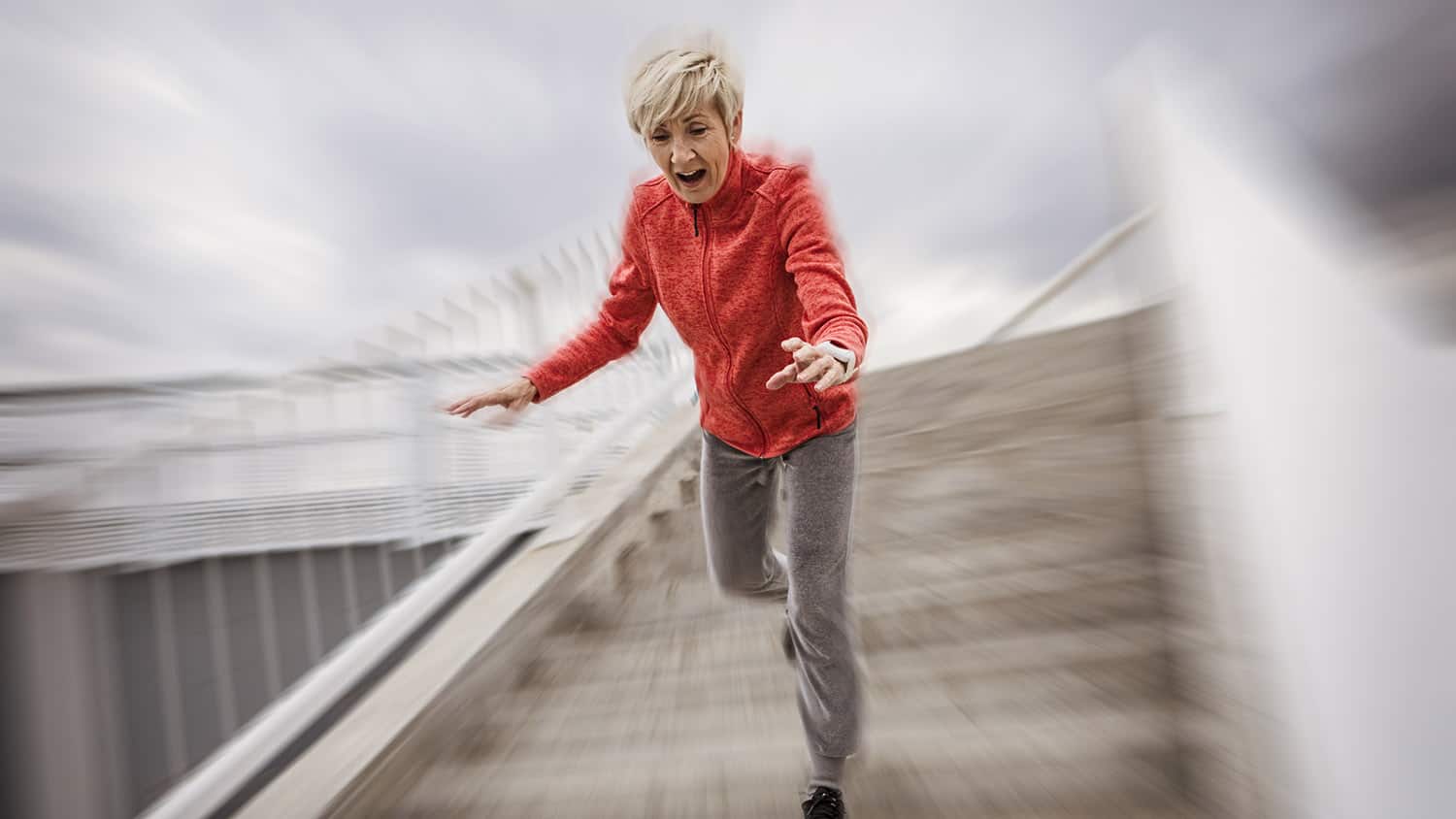
- Reduced ability to perceive where your body is in relation to the floor increases your risk of falling, a common problem for older people.
- Serious burns: Not feeling that shower water is too hot or that a dish coming out of the oven is burning.
- Falls: Feeling the floor less clearly under your feet, which can lead to loss of balance.
- Infected injuries: Not noticing a cut, blister, or wound on the foot.
How to Adapt
- Lower the water heater temperature to no higher than 120°F / 49°C to avoid burns.
- Check the thermometer to decide how to dress, rather than waiting until you feel overheated or chilled.
- Inspect your skin, especially your feet, for injuries.
- If you find an injury, treat it rapidly. Do not assume the injury is not serious because the area is not painful.
Sight
Changes
- Pupil shrinkage: Pupils become smaller and react slower to light, making it difficult to see in dim environments. By age 60, your pupils may decrease to about one third of the size they were when you were 20.
- The pupils may react more slowly in response to darkness or bright light.
- Loss of lens flexibility: The eye’s lens hardens, making close-up focus challenging.
- Reduced peripheral vision, or side vision, is common.
- Aging eyes also may not produce enough tears.
Risks
- Common conditions: Increased risk of developing cataracts, glaucoma, and macular degeneration.
- You may be less able to tolerate glare. It may be difficult to get around indoors.
- You may have trouble adapting to darkness or bright light.
- Problems with glare, brightness, and darkness may cause problems driving at night.
- Retinopathy: disease in the retina often caused by diabetes or high blood pressure.
How to Adapt
- Keeping a red light on in darkened rooms, such as the hallway or bathroom, makes it easier to see than using a regular night light.
- Use eye drops if aging eyes do not produce enough tears.
- Have regular eye exams, especially if you notice changes in vision, glare, night driving, or peripheral vision.
Hearing
The ears also enable us to maintain balance.
Changes
- Gradual hearing loss in both ears typically starts in middle age.
- The ability to hear high-frequency sounds is reduced.
- The ability to tell the difference between certain sounds or to follow a conversation when there is noise around can become a problem.
- Inner ear shifts: Changes to tiny sensory hair cells and inner ear fluids can impact balance.
Risks
- Even mild hearing loss has been associated with a higher chance of developing dementia.
- Impacted ear wax can also cause trouble hearing and is common with age.
- Medicines that damage structures inside the ear can affect hearing.
- Persistent abnormal ear noises can also become a problem.
- Changes in the inner ear can affect balance.
How to adapt
- Use hearing aids if needed.
- Have impacted ear wax removed.
- Ask about medicines that may damage structures inside the ear.
- Mention persistent abnormal ear noises to a health professional.
- Reduce background noise when trying to follow a conversation.
Although the ageing of our senses can lead to fatigue, misunderstandings in conversation, loss of appetite, excessive caution, isolation… there are steps we can take to maintain a good connection with the world. If our brain receives less clear information, it has to work differently to interpret it. There are mechanisms for adaptation and compensation.
The most important in all this is probably to know what is part of normal ageing and what requires medical advice, I hope I’ve helped to clarify a few points.
Adopting healthy daily habits sure helps andknowing that we can train our brain to compensate if we experience a loss is reassuring. Simple lifestyle changes and special support tools help keep senses sharp or help us adapt when changes happen.
Questions:
Have you made any changes to your daily life that have really helped you cope with the decline in one of your senses? Do you have a new habit that might help other readers?
Tags Getting Older