


What Is the DNA Jazz Band and Why You Should Know About It
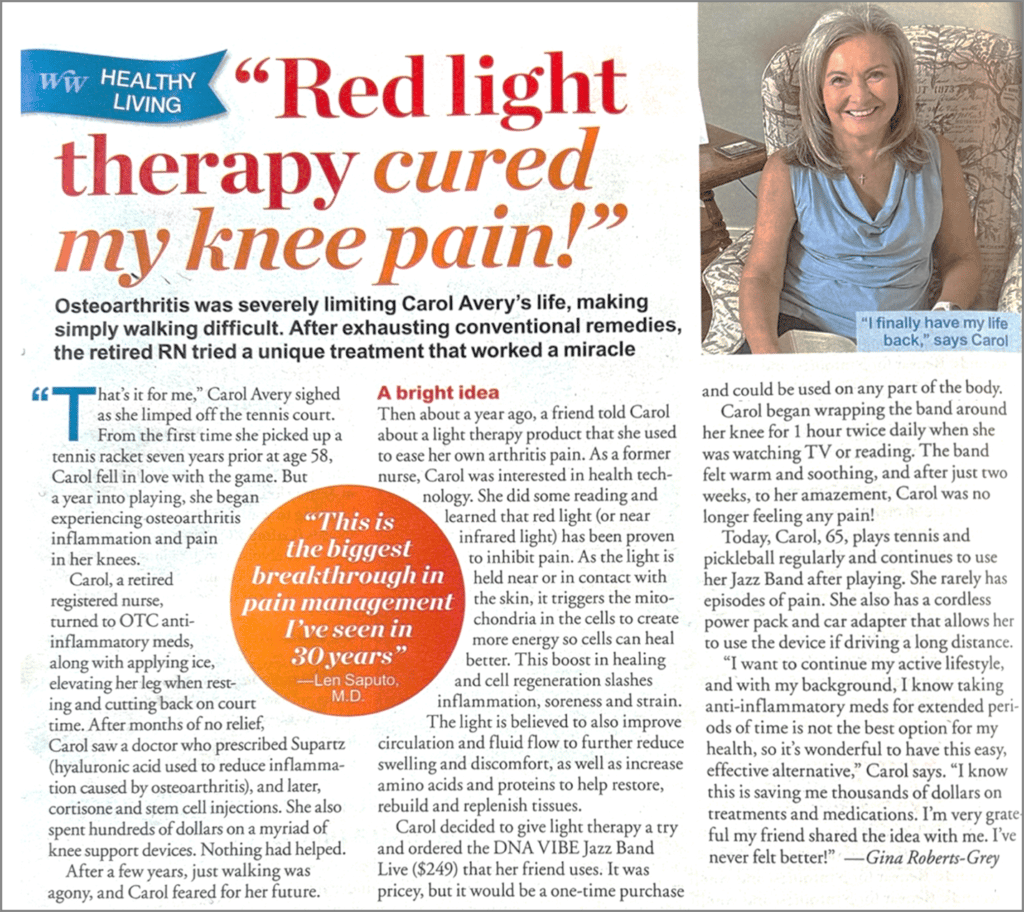
In this month’s issue (February 2023) of Woman’s World magazine there is an article entitled, “Red Light Therapy Cured my Knee Pain.” The article immediately caught my attention as it also stated that the knee pain the person was experiencing was due to osteoarthritis, a degenerative disease that affects the bone cartilage in a joint.
The word “cure” struck me as osteoarthritis involves structural changes that have occurred to the joint, and not just inflammatory conditions or irritated structures.
The person of whom the article was written (Carol) is a retired nurse who states that she had run the gauntlet of trying conventional remedies, including therapeutic interventions, support devices, and pharmacological options, with little to no success in eliminating her knee pain. In fact, she states that the pain was such that it made walking difficult and her love of playing tennis almost impossible.
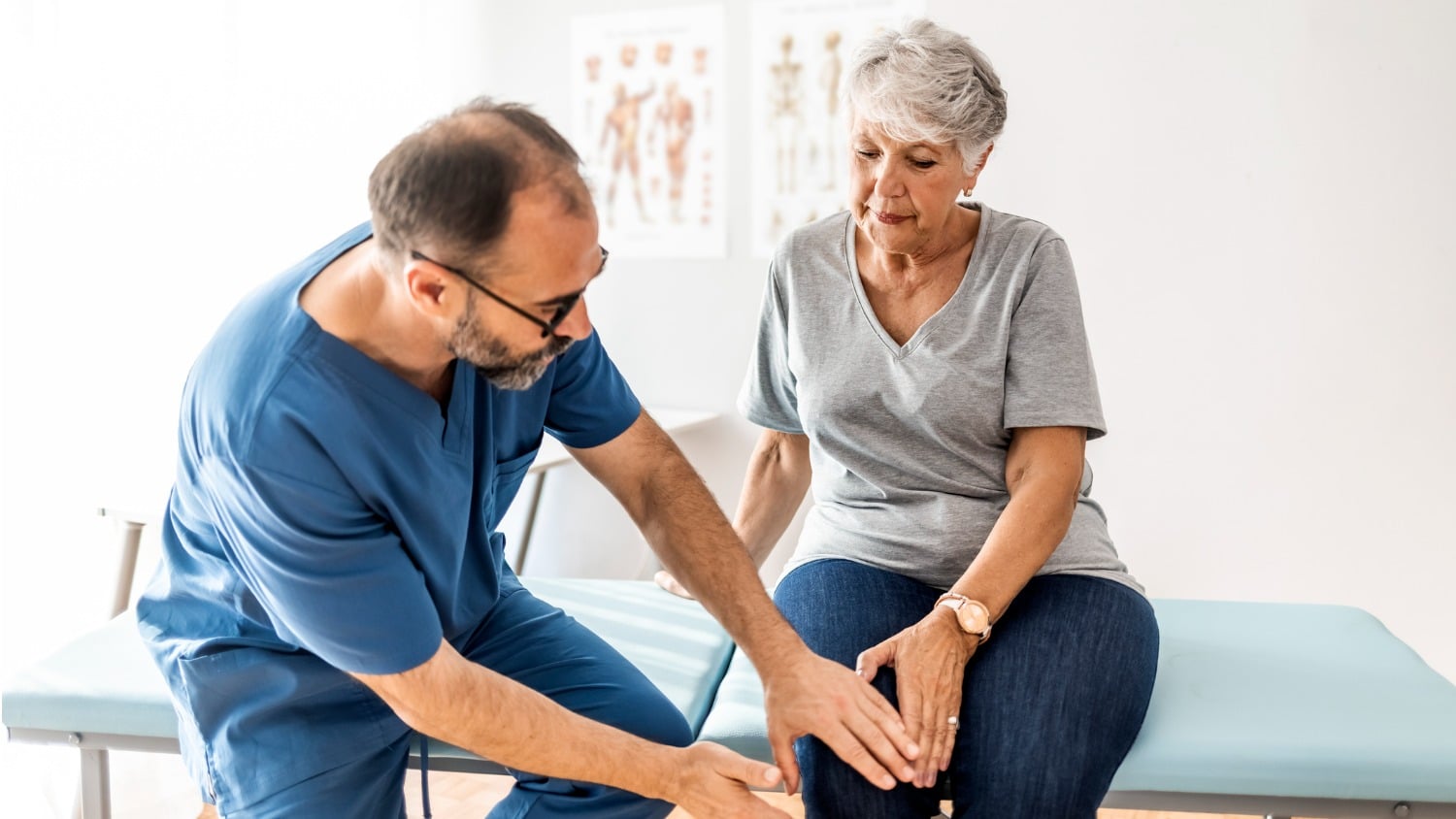
Symptomatic knee osteoarthritis occurs in 10% men and 13% in women aged 60 years or older. About 10% of people aged over 55 years have painful disabling knee OA of whom one quarter are severely disabled.
How Red Light Therapy Works
The article discusses how a friend of Carol’s told her about light (red and near-infrared) therapy. Traditional Red Light therapy, and Near-Infrared Light therapy, has been used for decades to treat pain, usually with expensive machines found in physical therapy and other healthcare clinics, and certainly has scientific evidence showing that red light therapy helps with pain reduction.
The beneficial pain reduction effects of these devices are reported to be produced primarily through a “thermal” or heating effect on the tissues, bringing increased blood circulation (more oxygen and nutrients) and tissue relaxation, and through the stimulation of mitochondria in cells to produce more adenosine triphosphate (ATP) providing an increase in the energy needed to help heal damaged tissues.
The article states that Carol’s friend recommended that she give light therapy a try and recommended a product called the DNA Jazz Band Live.
What Information Is Available?
The makers of the DNA Jazz Band Live device state that their technology is “The only light therapy wearable made in the USA, all of DNA Vibe’s products feature patent-pending Intelligent Light Therapy technology which is light years beyond the simplistic “wearable holiday lights” made overseas. All Jazz Bands feature precision frequency controls, advanced wave-form shaping, proportionate light diffusion for even distribution, and more.”
The “patent-pending Intelligent Light Therapy technology” included in the above-mentioned company statement refers to the combination of four modalities: red light, near-infrared light, micro-vibrational and magnetic signaling. It is also stated that these modalities work together synergistically to deliver red and near-infrared light therapy at the lowest power output/intensity and optimal frequency to maximize the precision and depth of tissue penetration.
This is purported to:
- Stimulate DNA excitation producing an increased production of adenosine triphosphate (ATP), yielding increased cellular energy, vitality and regenerative or healing capabilities.
- Increase blood flow and oxygenation by increasing nitric oxide release that dilates vessels resulting in increased cellular respiration of the target tissues.
- Provide anti-inflammatory, pain mitigation, and cellular protective effects. The mechanical actions of the micro-vibrational and magnetic signaling interrupt pain transmissions, reduce edema and inflammatory markers, all of which reduce the stress enacted on irritated and inflamed tissues and enhance tissue healing.
- Promotes photobiomodulation that stimulates messenger RNA to increase amino acid and protein synthesis to help restore, rebuild, and replenish damaged tissues. The enhanced cellular and molecular effects lead to increased fibroblast during proliferation and subsequently increased collagen production to facilitate quicker wound contraction and tensile strength development in the treatment of tissue repair.
What Else Is RLT Good for?
The Woman’s World article primarily focused on arthritis, one musculoskeletal condition, but red light therapy is also used to treat multiple other musculoskeletal conditions, beyond what this article is focused on.
Further, when you consider these multiple physiological effects and their impact at the cellular level, one can make the connection for red light therapy’s ability to provide protective, regenerative, and healing effects to other conditions such as skin repair and therefore wound repair, bone density and health, sleep enhancement through a stimulatory increase in melatonin hormone, etc.
Some Other Points When Considering the DNA Jazz Band
- The company that produces the DNA Jazz Band does not currently have published scientific literature specifically using their device. However, they reference the myriad scientific articles demonstrating the positive effects of red and near-infrared light therapy, touting a greater delivery of the red light with accompanying “pain gating” associated with the micro-vibrational effects.
- The DNA Jazz Band, because of its lower power output/intensity is without risk and does not require the wearing of protective eyewear.
- The DNA Jazz band is wearable and conforms to most body parts where it would be applied. It can be worn anywhere – at home or on the go and not confined to a clinical setting.
- Like many products, solutions, formulas, etc., the verdict of its effectiveness will come out in time as the number of individuals that use a product report on their experience and their results. Something to keep in mind and an eye on.
Some Final Thoughts
Near the end of the Women’s World article, Carol says, “I know this is saving me thousands of dollars on treatments and medications.” As a kinesiologist I am a strong believer that movement/activity helps heal damaged and inflamed tissues and helps reduce pain in many cases.
A non-pharmacological approach to helping people move (more freely and without pain) is worth investigating. However, keep in mind that the Jazz Band, like any other therapeutic modality, should serve as an “adjunct” to movement/exercise activities. Movement = medicine to joints and tissues of the body.
Let’s Have a Conversation
Is red light therapy a new concept to you? If you have used it, what has been your experience? For what purpose(s) have you used it? If you have used it to treat pain, are you also engaged in efforts to move and gain strength and range of motion for everyday life?
Tags Technology



I’ve used several red light therapy products from NOVAA Labs and have gotten relief for neck and back pain. I’ve also used the light pad for therapy on my hips and for neuropathy in my lower legs and feet. I have another red-light product from a company called Anodyne, and it has also provided great relief for the neuropathy in my feet.