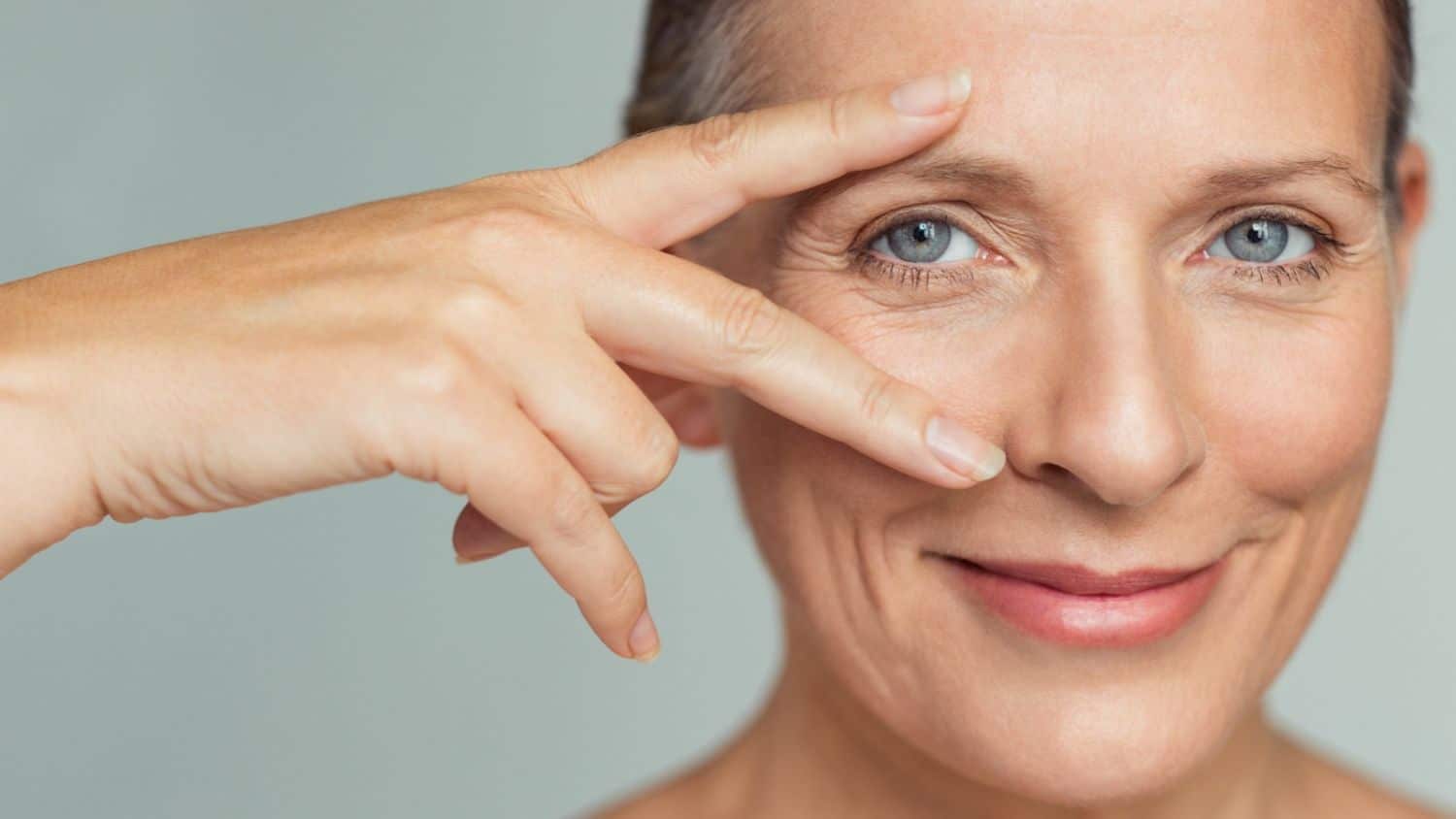
The Architecture of Radiance: “Why the Skin Around Your Eyes Demands Advanced Peptide Therapy”
There is a timeless grace that comes with navigating life’s richer chapters. Every smile line tells a story of laughter shared, and every delicate crease reflects a life deeply lived. Yet, as we celebrate the wisdom and confidence that arrive with our 60s and beyond, our skin begins to tell its own structural story. Nowhere is this narrative more visible than in the delicate periorbital area – the skin surrounding our eyes.
If you have recently looked in the mirror and noticed that your eye area feels more prone to crepiness, deep dehydration, or structural shifting, you are experiencing a biological reality. To truly restore eye suppleness, resilience, and vitality, we must look beyond basic moisturizers. We must understand the unique physical anatomy of the eye area and introduce the precise cellular messengers – known as advanced peptides – capable of rebuilding and protecting our most fragile skin barrier.
The Vulnerable Orbit: The Cellular Anatomy of Periorbital Aging
To understand why the eye area develops more noticeable lines, wrinkles, and structural changes than the rest of the face, we must examine its highly specialized anatomy. The skin surrounding your orbital bone is a distinct biological exception. It is the absolute thinnest skin on the entire human body, measuring a mere 0.5 millimeters in thickness – roughly equivalent to three sheets of paper. In comparison, the skin on your cheeks or forehead can be up to four times thicker.
Because this dermal layer is extraordinarily thin, its internal architecture is uniquely fragile. The extracellular matrix (ECM) of the periorbital region contains significantly fewer densified collagen bundles and a sparser network of elastin fibers. As women transition into their 60s and post-menopausal life, a sharp physiological shift occurs. The body’s systemic synthesis of Type I and Type III collagen drops by up to 30% within the first few years of menopause, and continues to decline annually by roughly 1% to 2% thereafter. In skin that is already structurally thin, this depletion is felt immediately. The delicate scaffolding of the dermis gives way, manifesting as a sudden increase in crepiness and fine lines that appear almost overnight.
Furthermore, this ultra-thin dermal layer possesses an incredibly low concentration of sebaceous (oil) glands. Unlike your cheeks, chin, or forehead, which feature a high density of lipid-producing glands to naturally coat and protect the skin, the eye area lacks an innate protective film. This deficiency means the periorbital region struggles constantly with transepidermal water loss (TEWL). Without a steady baseline of natural sebum, water evaporates rapidly out of the stratum corneum. When cells are chronically dehydrated at a cellular level, they lose their plumpness, causing minor, temporary lines to quickly solidify into deep-set, permanent wrinkles.
The Mechanical Burden: Kinematics of the Orbital Face
Beyond the internal biology, consider the relentless physics and mechanical stresses applied to this fragile region. The eyes are surrounded by the orbicularis oculi, a sphincter-like muscle responsible for opening, closing, and blinking. On average, the human eye blinks between 15,000 to 20,000 times every single day. This does not account for the thousands of other involuntary and voluntary micro-movements we make – such as squinting to adjust to bright light, laughing with loved ones, smiling, or expressing surprise.
Every single one of these expressions exerts a sharp mechanical tug on the micro-thin layer of skin anchored directly above the muscle. This biomechanical phenomenon is known as dynamic stress. In our younger years, a robust, elastic dermal matrix easily springs back into place after a smile or squint. However, when mature skin lacks structural density and elastin resiliency, it can no longer cushion the mechanical force of the underlying muscle contractions. Over time, these thousands of daily micro-pulls cause the thin skin to fracture at the microscopic level. The result is the etching of permanent expression lines, most notably crow’s feet, which map out directly along the pathways of maximum muscular tension.
The Microvascular Crisis: Dark Circles, Puffiness, and Lymphatic Stagnation
The structural story of the aging eye area is further complicated by changes occurring beneath the skin surface within the circulatory system. The periorbital region relies on a dense network of micro-capillaries to supply oxygen and vital nutrients to the tissue, while simultaneously relying on the lymphatic system to drain fluid away. As we reach our 60s, this intricate vascular network undergoes significant degradation. Capillary walls become fragile and more permeable, allowing tiny amounts of blood to pool in the surrounding tissue. Because the skin above it is so thin and translucent, this pooled blood shows through as dark, shadowed circles.
Simultaneously, local lymphatic drainage slows down dramatically with age. Fluid that would normally be swept out of the periorbital space begins to pool in the loose connective tissues beneath the lower eyelids. This fluid retention is the biological cause behind persistent morning puffiness and heavy under-eye bags. Unlike fat pads, which are a permanent structural shifting of the facial anatomy, fluid-heavy puffiness can be directly treated by improving local vascular elasticity and drainage. Without targeted intervention, however, chronic puffiness stretches out the skin’s envelope even further, accelerating skin sagging and causing a tired, perpetually fatigued appearance.
The Science of Suppleness: How Advanced Peptides Act as Cellular Receptors
For mature skin over 60, generic hydration or thick, heavy creams are simply temporary surface fixes that sit on top of the stratum corneum without fixing the underlying structural damage. To truly reverse these processes, we must speak the skin’s biological language. That is where advanced peptides enter the equation. Peptides are short-chain amino acids linked together by peptide bonds, acting as precise chemical messengers. When applied topically in correct concentrations, they target specific cellular receptors, sending direct signals to the skin cells to alter their behavior and act like younger versions of themselves.
Rather than merely masking the symptoms of aging eyes, advanced peptides work at a deeper structural layer to restore density, relax mechanical strain, and clear stagnated fluid. Three specific peptides have emerged as clinical benchmarks for treating the aging periorbital zone:
Acetyl Hexapeptide-8 (The Fine Line Relaxer)
Widely recognized in clinical dermatology under its trade name, Argireline®, this sophisticated peptide specifically targets the mechanical stress of dynamic wrinkles. It works through a unique mechanism that mirrors topical relaxation. It interrupts the SNARE complex, a protein matrix responsible for transmitting nerve signals to the orbicularis oculi muscle. By gently reducing the intensity of muscle contractions around the orbital bone without paralyzing expression, it allows the skin above to remain flat, rested, and smooth. This directly reduces the depth of stubborn crow’s feet and prevents new lines from carving deeper into the tissue.
Acetyl Tetrapeptide-5 (The Puffiness Reducer)
This targeted peptide is engineered specifically to combat fluid retention and poor microcirculation. It works by reducing the permeability of local capillaries, which stops excess fluid from leaking into the surrounding tissue spaces. Furthermore, it actively enhances vascular elasticity and promotes proper lymphatic drainage. By encouraging the rapid clearance of trapped fluid around the eye tissue, it visibly deflates under-eye bags, revealing a smoother, rested, and thoroughly refreshed contour to the lower eyelids.
Palmitoyl Tripeptide-5 (The Collagen & Elasticity Booster)
The core architecture of youthful skin relies entirely on structural proteins. Palmitoyl Tripeptide-5 is a highly specialized “messenger peptide” that mimics the body’s own naturally occurring mechanism for activating Tissue Growth Factor-beta (TGF-β). TGF-β is the key trigger required to jumpstart collagen synthesis within dermal fibroblasts. By bypassing surface barriers, this peptide instructs the skin to generate brand-new, healthy structural proteins. This plumps up the translucent skin around the eyes from the inside out, restoring youthful density and minimizing the appearance of hollow shadows.
Enhancing Peptide Efficacy with 24k Gold
When these three powerhouse peptides are combined within an advanced skincare matrix, their individual benefits are multiplied by the inclusion of active 24k gold blend. Long celebrated for its restorative properties, gold acts as a natural anti-inflammatory agent, soothing the fragile periorbital skin barrier and reducing redness.
More importantly, from a biochemical standpoint, colloidal 24k gold acts as an exceptional cellular carrier. It alters the surface tension of the formulation, allowing the amino acid chains of the peptides to penetrate deeply and absorb evenly into the skin tissue. It shields the fragile barrier, locks in critical moisture, and visibly firms the skin one dedicated treatment at a time.
Exclusive November Sixty and Me Promotion
While Grow Out Oils normally only supplies products to licensed skincare and industry licensed professionals, we are incredibly proud to open our professional-grade vault to offer this exclusive promotion to our Sixty and Me readers and supporters. To help our community experience the profound cellular benefits of advanced peptide technology firsthand, Grow Out Oils is offering an exclusive November promotion on our luxurious 24k Gold Eye Patches. Each jar contains 60 individual eye patches (30 pairs), perfectly shaped to hug your orbital bone and drench your skin in the exact amino acids, active gold, and barrier-protecting nourishment your eyes are craving.
Because we want to protect the professional exclusivity of this launch for our readers, our special community pricing of $46.99 (including free shipping) is completely unlisted on our public ecommerce website.
To secure your jar before the holiday rush, please email our customer care team directly at growoutoils@gmail.com with the exact subject line: November Sixty and Me Offer 24k. Our team will personally verify your community membership and immediately reply with your private product details along with a secure, direct link to complete your payment.
Let’s Have a Conversation:
What is your biggest eye issue? What treatments or products have you tried to date? How well did they do and what effects have you noticed?
Tags Mature Skin Care