


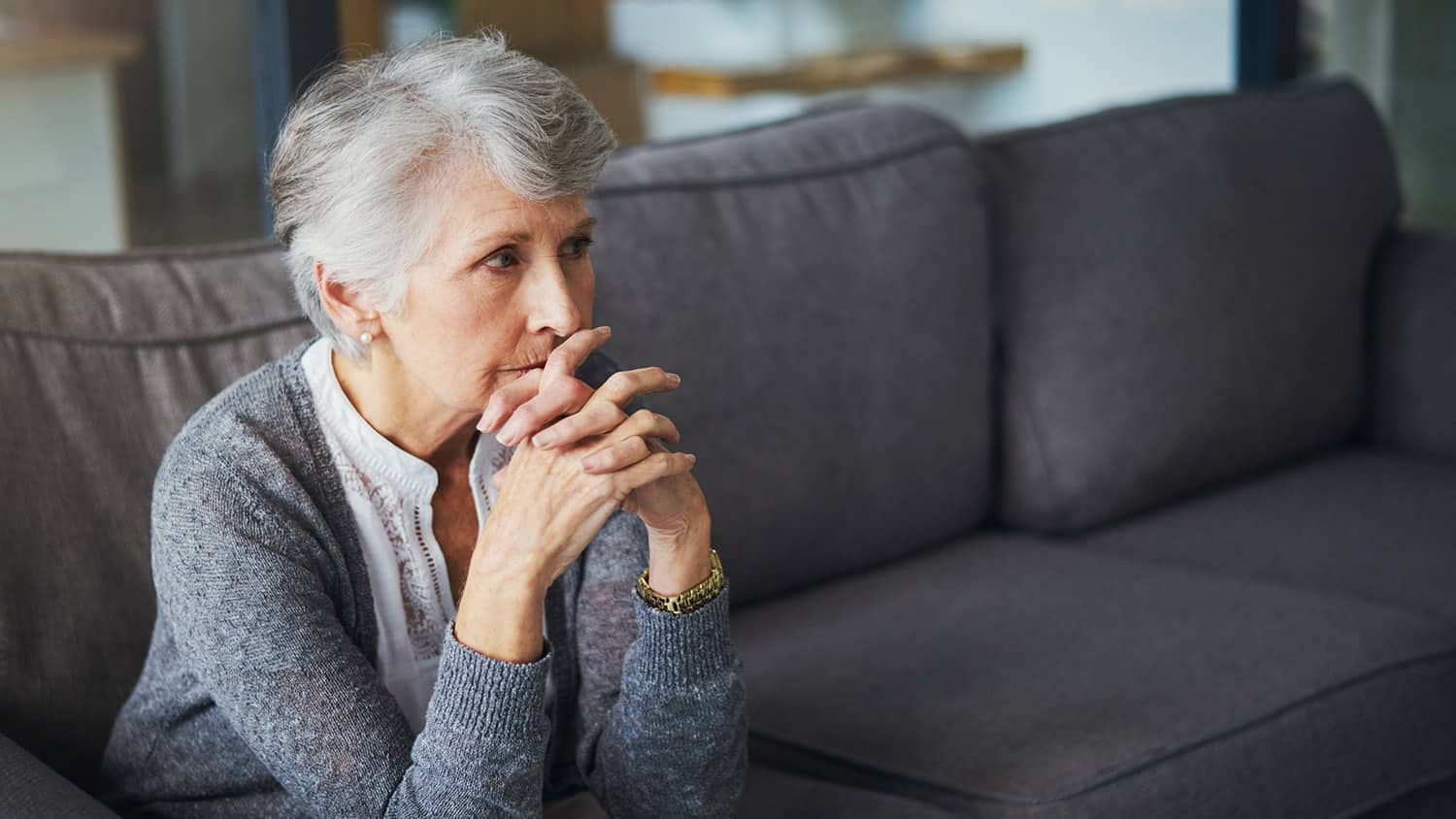
16 Danger Signs for Seniors to Be Aware of This National Suicide Prevention Month
Chances are that during the course of your lifetime, or maybe more so in your 50s and 60s, you’ve known people who’ve said that they wanted to end their lives. Perhaps they were victims of trauma or were dealing with physical and/or psychological challenges. Maybe they were simply crying for help.
Regardless, it’s important to take any discussion about suicide seriously. There’s also a school of thought which says that those contemplating suicide do not always give warnings.
When speaking with colleagues who are psychotherapists, that they’re often surprised to hear about a patient’s passing. Some have even claimed that they thought another one of their patients was more likely to take his or her life than the one who actually did.
The Nature and Incidence of Suicide Among Seniors
Suicide is a permanent solution to what might be a temporary problem. September is National Suicide Prevention Month and a good time to brush up on the facts about suicide and how to help those who might be considering it.
According to the American Foundation for Marriage and Family Therapy, while older adults account for 12 percent of the population in the United States, they also account for 18 percent of suicides. And, men are more likely than women to consider taking their lives.
In seniors, or those battling life-threatening illnesses, there’s something called “silent suicides” where death occurs as a result of self-starvation, overdosing, or accidents. According to a study published in the Journal for Family Issues, relationship issues are the most common reasons for suicide.
In the elderly, in particular, loneliness, living in isolation, and grieving the loss of loved ones are often causes of suicide. Another reason in the case of seniors relates to aging, life-threatening diseases, and the limitations placed on their lives due to reduced financial and health situations.
Most often there’s a sense of hopelessness and loss of interest in life. According to many sources, including the U.S. Department of Health and Human Services, having major depression can increase the chance of suicide, so recognizing and treating this condition is very important. Those who are depressed tend to isolate themselves and focus on negativity more than the rest of the population.
Suicide Attempts by Seniors
Most suicide attempts are rehearsed or planned. Seniors are more likely to be successful when trying to take their lives. In fact, one in four seniors usually succeeds which is higher than those trying to take their lives during their youth.
If you hear of or notice an attempt, it’s important to intervene immediately. Some warning signs include insomnia, nightmares, restlessness, and agitation.
If you observe that your loved one is becoming more withdrawn, then it might be a good time to find out what’s going on. They might withdraw because they do not want help but simply want to detach from loved ones. That is, they just want to die.
The American Foundation of Marriage and Family Therapy claims that at least 40 percent of suicides in the elderly are due to what is known as “secret despair” where they might feel trapped by negative experiences and have a profound sense of hopelessness.
These types of suicides are related to self-neglect, self-starvation, self-dehydration, and accidents.
After someone dies by means of a suicide, and the person’s loved ones are questioned afterward, most say that they had no idea of the person’s intentions. They’re often in shock and riddled with deep feelings of guilt.
They might find themselves asking if there was a sign they missed or if there was something they could have done to prevent this irreversible act.
Impending Suicide: Signs to Watch Out for
While there are not always clues to an impending suicide, these are behaviors to be cognizant of:
- References to, or jokes about, suicide
- Displaying a sense of despair
- Indicating that there’s no reason to live
- Feeling that he or she is a burden to others
- Being in unbearable physical or psychological pain
- Withdrawal/isolation
- Sleeping too much or too little
- Profound depression
- Anxiety
- Loss of interest in daily activities
- Irritability
- Engaging in risky behaviors
- Giving away or selling personal items
- Reaching out to people to say they love them
- Self-neglect.
What to Do
My grandmother committed suicide when I was 10, and nobody spoke about it until many decades later. While years ago, suicide had been a taboo subject, rarely discussed, today the lines of communication are much more open, and there are many more resources available for those in need.
Here are some immediate things you can do if you’re worried about those in your life:
- Be straightforward – ask if they’re thinking about taking their lives.
- Remain in contact via phone, text, and/or email.
- Visit when possible.
- Seek professional help.
If you or someone you know has talked about suicide, please call:
- The American Foundation of Suicide Prevention hotline at 800 –273-TALK.
- Talk Suicide Canada hotline at 1.833.456.4566.
- Suicide Prevention UK at 0800 689 5652.
- Suicide Prevention Australia at 1300 659 467
If you live in any other country, google “suicide prevention [your country]” for the current number.
Let’s Have a Conversation:
What do you know about senior suicide in the United States? Has a relative or close friend taken their life? Did they show any signs that you only recognized in the aftermath of the event? Please share with our community and let’s have a conversation.
Tags Medical Conditions

An important & serious subject and glad its being discussed.
Most of us have known someone in the family or a friend who has suicided or attempted it.
My brother attempted it many years ago & my daughter did also when they were in a time of deep despair. My daughter survived but she still struggles today with both mental & physical health issues. She has hardly any support network & i believe that is one of the main causes for despair; being alone, fearful & frightened with absolutely nothing to look forward to. I try to give her as much support as I can, however im drained emotionally myself after many years of this, however ill keep on keeping on as im her mother & always will be.. Fortunately now she finally has a case worker to assist her in some areas.
We all need community & some sort of social support network & unfortunately some of that dont have that for various reasons. We never know what someone is going through in their lives.
Today I volunteer in a very busy opportunity shop. Ive had a bad night & dont feel like I’ve got the energy..But ill go because there could be someone who walks into the shop & I could be the only person they see or speak to that day.
I will be using the MAID program in the event I am diagnosed with a terminal condition. I intend to live a happy and fruitful life as I age. I have watched love ones struggle with incurable illness and diseases. I do not want that for myself or my family. I don’t know why people think withering away is an acceptable life. While I understand that suicide is taboo and is hardest on the ones left behind. I have had those hard conversations with my family. I’m outta here if a when my life is no longer serving me. Sorry not sorry
I’m afraid my father talked about suicide so often that when he took overdoses, I, as an adolescent, just called my mother and quite honestly,.my only way to cope at age 14 was to accept this as normal behaviour. Suicide or suicide threats rarely upset me for this reason and I don’t take them seriously.
This is such an important topic. With the huge rise in the cost of living and reduction of help that is easy to access, I know several people over sixty that are struggling hard with “why live much longer, it is only going to get worse” thoughts. I myself struggle with painful chronic illness and a pretty traumatic upbringing. I work hard with a therapist and support groups to stay focused on the “whys” to live a terrific life as possible. I found out after forty, a beloved great-grandfather did not die of a heart attack but shot himself with his service revolver. He was such a warm and caring man, everyone came to him
for understanding and genuinely helpful support. Two generations later, a handsome sweet and kind cousin died by a terrible accident on his sixty fifth birthday and we won’t know if it was a true accident or talking his life. He is still missed and that was twenty years ago. I sometimes talk with myself to say hurting myself is the last thing I want to do to me and my body! Trying to stay firmly in my court as a person who looks after herself with attention and care keeps me focused on others that do the same things to me and activities that make me glad to still be here! Thank you for this article.