



Historical Books on the Menu
There are at least four kinds of historical books: novels, creative non-fiction, non-fiction, and academic. They progress in density. Historical novels are usually fun to read because you learn while you are entertained. Creative non-fiction, where the author fills in the blanks of some dialogue, motive, and emotion is usually fun. Non-fiction sticks to the facts with no elaboration. Academics stick to the facts and expostulate other theses, accompanied by dense notes, bibliographies, and often tedious detail. Below we have the first three types.
The Constant Princess by Philippa Gregory (Atria Books, 2006)
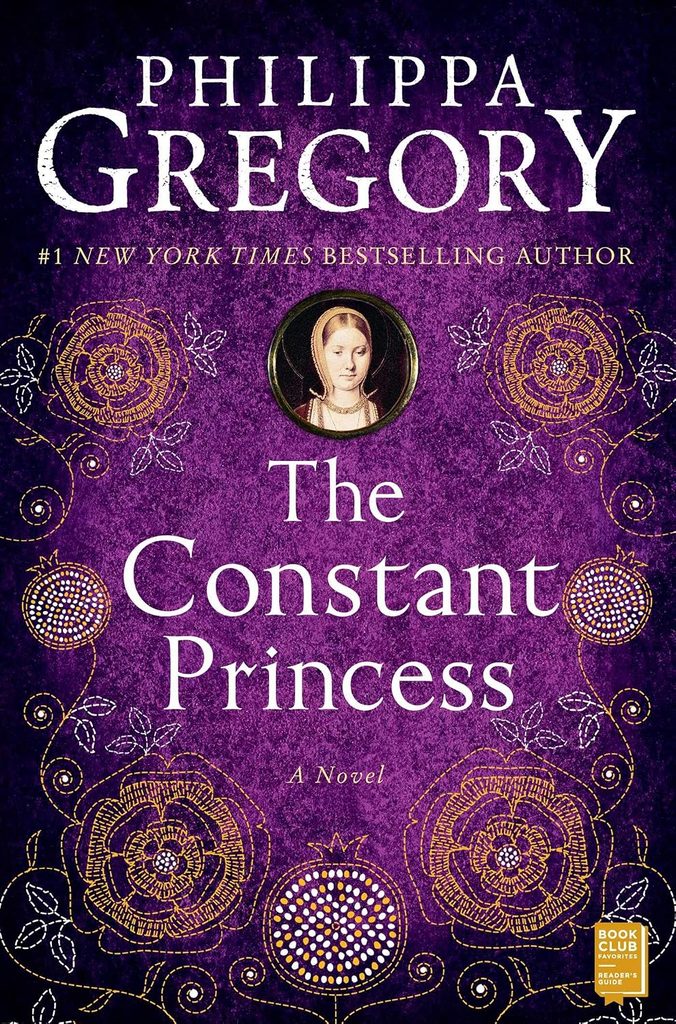
You always learn historical nuggets from a Gregory book. Here, our princess is Katherine of Aragon, the first wife of Henry VIII. I always read of her as an adult, peripheral to Anne Boelyn and later Elizabeth I.
We are introduced to her childhood, daughter of Ferdinand and Isabella, and promised to Arthur, son of Henry VII of England when she was just a child. She was raised to be the Queen of England, and she acts and thinks like the highest royalty. What a shock it must have been for her to come from the luxurious palaces and warmth of Spain to the primitive, cold, damp of England. Following Arthur’s untimely death, Katherine bides her time as Henry matures into a lout who craves his brother’s widow. It’s a marriage that could have saved Henry from himself but is destroyed by the lack of a male heir.
It’s hard to tell where the historical and the romance novel combine, but the titillation in this book speeds the plot along. That is until Katherine does not conceive a son and is left in the dust by Henry VIII’s parade of wives. An okay, quick read.
The Sun Walks Down by Fiona McFarlane (Farrar, Straus, Giroux, 2022)
Reviewer Zachary Houle describes this book as a minor masterpiece and an acquired taste. I loved it, at the same time finding it long and focused on too many characters. But such is the nature of books about the frontier. Here, it is the Australian frontier in the late 19th century. You find books set on the U.S. frontier have the same cacophony of characters because that’s the way it was.
I found it useful to locate the story on the map of Australia. It’s easy to do from the descriptions. This isn’t the heart of the country. It’s relatively near more civilized areas, yet far enough away to be threatening and oppressing. The sun plays a real part – unrelenting, torrid, punishing. The ending is startling and satisfying. The descriptions of the land and climate are so vivid that they still live in my mind.
Blood and Treasure: The Economics of Conflict from the Vikings to the Modern Era by Duncan Weldon (Pegasus Books, 2026)
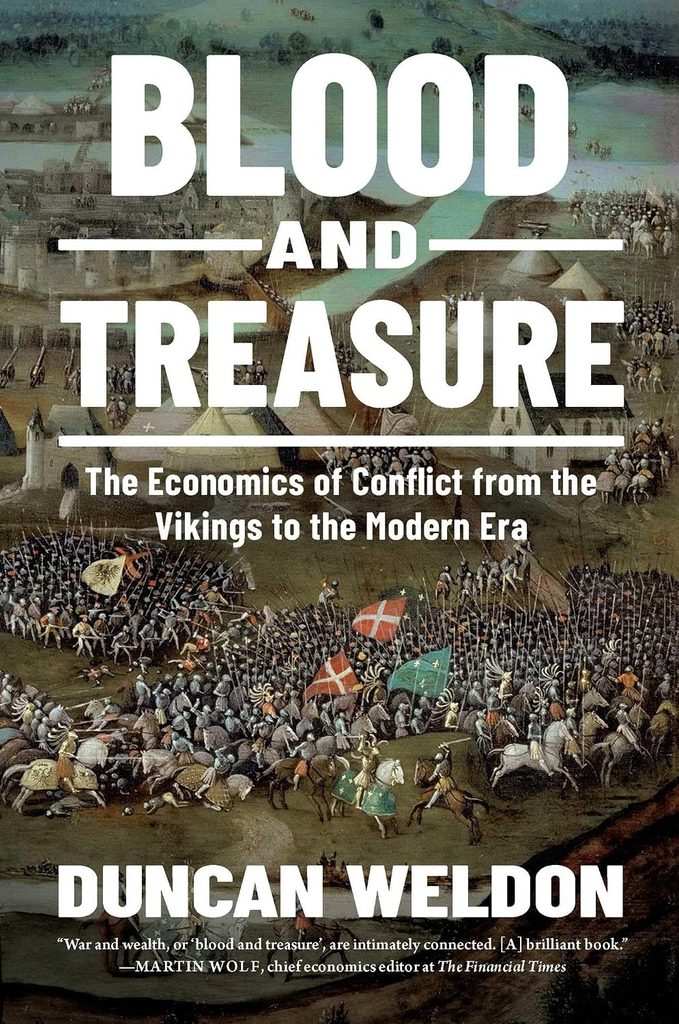
If you enjoy macroeconomics, this is a book for you. Weldon takes a jet plane view of world history as told through conflict. His premise is that war is foundational to the institutional nature of nations. At first, that seemed hard to swallow, but taking you through history, he illustrates his premise by showing that nations victorious in war are those that prosper. That’s obvious, but why nations are victorious is the key: higher per capita income of citizens, abundant raw materials, more developed economies, better organization.
Weldon is not so categorical when he assesses the impact of modern total warfare. Here, the deterrent power of national armament plays a larger role in keeping peace than it does in creating warfare. Because this book is so recent, he analyzes the Russia-Ukraine conflict as an example of contained warfare under the umbrella threat of total annihilation.
The Captain’s Wife: A True Story of Mutiny, Love, and Adventure at the Bottom of the World by Tilar J. Mazzeo (St. Martin’s Press, 2025)
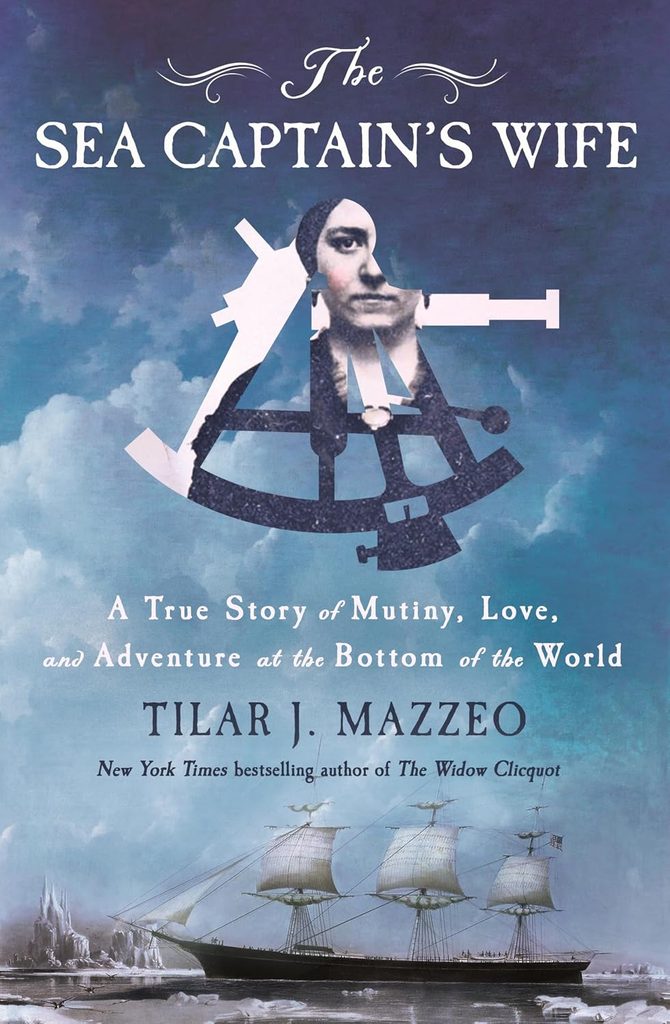
Such an engrossing biography of Mary Ann Patton, wife of Nantucket sea captain Joshua Patton. Mary Ann came from a seafaring family and knew her way around a ship, as much as any young girl could in the 1850s. She married Joshua at age 19 and joined him on his first voyage as clipper ship captain from the East Coast around South America to the Far East.
Bored with her insignificant life on board, Mary Ann befriended the crew with small acts of kindness and mastered navigation using the stars and the sextant. When her husband begins his long death spiral from tuberculous and the First Mate is put in chains for mutinous behavior, Mary Ann, with the support of the sailors, assumes the role of captain. She safely gets the ship through Drake Passage into the Pacific Ocean.
This is a wonderful story. But there is limited information about Mary Ann Patton. Mazzeo stretches the biography a bit too long. So, just skim the last 25% and enjoy the rest.
The Typewriter and the Guillotine: An American Journalist, a German Serial Killer, and Paris on the Eve of WWII by Mark Braude (GCP Grand Central, 2026)
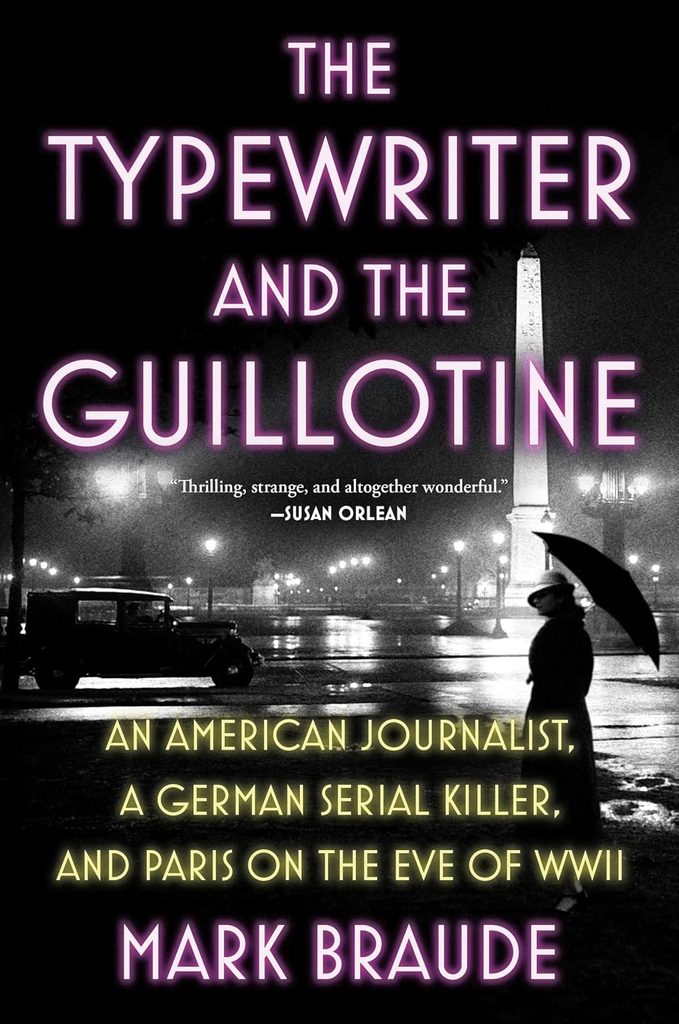
A biography of Janet Flanner in Paris during the 1920s and 30s. She was the endlessly fascinating correspondent for the New Yorker Magazine – her column was called “Letters from Paris.” The reader gets a deep view into the expat community in Paris during this time and the fear and loathing in Europe during the ascent of fascism and communism.
Of interest to me is that she was a mid-westerner born in Indiana, the daughter of a funeral director. She began her journalism career in Indianapolis, reviewing movies for the local newspaper. Perhaps her lesbian life led her to more cosmopolitan venues. I enjoyed reading about Flanner’s colorful European life, but the story of her investigation into the serial killer interfered with the good bits.
Let’s Talk Books:
Which type of history books do you like reading? Are you a non-fiction or fiction buff? What is your favorite history book title?
Tags Books


