


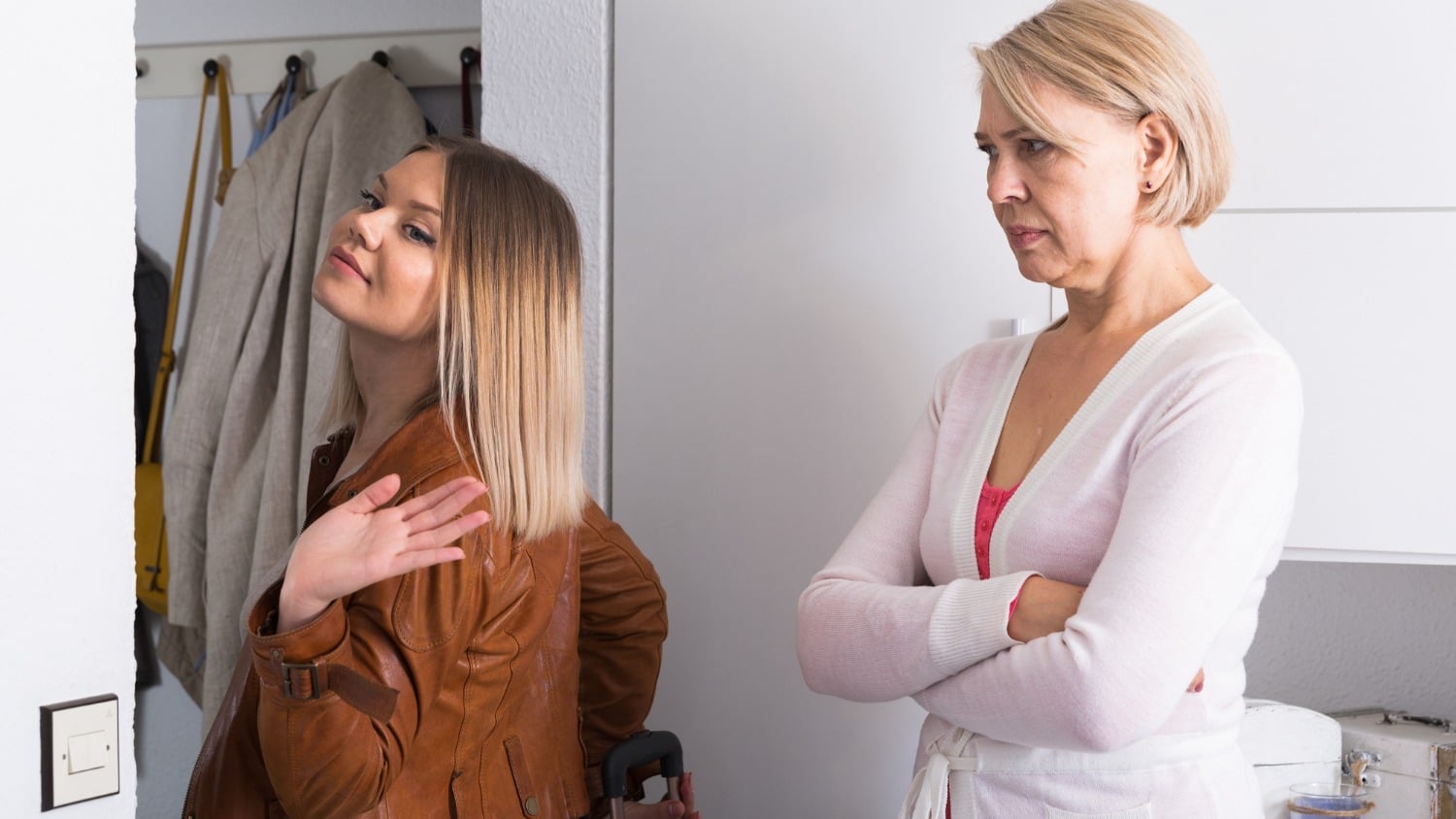
Over 60 and Rejected by Your Kid? Navigating the Estrangement Struggle
By the time we reach our 60s, we reflect on what we once hoped for with our family. I hear from women that they would grow older harmoniously with their families. It is encouraging and a blessing when this is the case. But many struggle under the shroud of secrecy.
Few will admit they have enough family conflict to sink a ship or are estranged. Some women have no clue why an adult child rejects them. Self-blame and shame are difficult to overcome. All parties suffer when the rift causes physical and emotional distancing. So, how did we get here? Why are adult children cut off from one or more parents?
Read more: What Makes Adult Children Pick the Road of Estrangement?
Societal Change
We have come along in the last 50 years relationally. The many positive changes undoubtedly have given way to more equality, opportunity, and freedoms. Our society is far from ideal but more accepting of differences than our younger days.
Intact families are closer than before, texting or messaging frequently. Also, there is much more freedom to leave relationships with discontent or abuse. Children from divorced marriages are insulated from caustic interactions. Indeed, the changes have brought more significant advantages to our society.
How has this transformation affected how our adult kids see their world? In Dr. Joshua Coleman’s book, Rules of Estrangement, he explains the rise of individualistic thinking. Notably, a shift from loyalty to individual fulfillment.
Indeed, having agency and doing what pleases you rather than doing what others want is a good thing. But have we thrown the baby out with the bathwater? I’m not particularly eager to go to funerals, but I do it to respect my loved ones. Individualistic fulfillment can, at times, teeter on the extreme. It is devastating when your adult child is unhappy with you and cuts ties.
Unmet Expectations
Expectations are a natural part of relationships. Codependency recovery teaches that having expectations sets us up for disappointments. The balance comes in recognizing expectations exist in social norms. We have standards about how much time and support we receive from our family and adult children.
The commonality and exchange within families are part of social norms and expectations. If you need me, I am there for you, and when I need you, you will be there for me. When they break the standard, it can feel like a violation and cause friction and resentment.
Parenting Is to Blame
Welcome to the imperfect parenting club. Estrangement stories and parenting vary greatly.
Yes, abusive, narcissistic, negligent, absent, uninvolved, and unloving parents. When the children of these parents go to therapy, they are encouraged to separate with good reason. However, recently, abuse seems to include inconsistent parenting, fighting, yelling, and on occasion, nasty behaviors towards children.
None of this is acceptable; however, it happens. Less than the best parenting hurts kids. From my research, it appears that the focus of blaming parents anywhere on the spectrum is fashionable.
Identifying what parental behaviors hurt and how they affected them is helpful to process pain. The process helps them to see and have greater insight. Some adult kids get stuck here for a long time. They detach to protect themselves.
Hopefully, if they continue to get help, they will gain insight that their parents were mere humans. It is the cycle of awareness and growth. However, the trend of seeing others as responsible for one’s present mental state is problematic.
Divorce
Divorce can affect adult children by causing them to take sides, finding a victim and perpetrator in their narrative. Parental alienation, where one parent maligns the other and influences the child negatively, affects everyone. When a child experiences parental alienation, they may hold their learned grudge even when they are adults.
Adult children can also be overly worried about one parent. Divorce can also alter the family by adding new boyfriends, girlfriends, spouses, stepchildren. The new “members” may not get along or be unappealing to the child or adult child. Interestingly, when kids are young, divorce increases the likelihood of later estrangement.
Read more: How to Stop Feeling Guilty About Your Divorce After 50.
The In-laws
The adult child may have married someone who is emotionally troubled. They may pressure your child to keep distant. The spouse or partner may be threatened by you and insist on less involvement. They may also encourage isolation from you. Your adult child, consequentially, may succumb to their wishes.
Read more: Want to Avoid Daughter-in-Law Problems? Let Go to Hold on!
Your Money
Many estrangement stories are rooted in the who, what, where, when, and how of your money and/or property. Sibling rivalries, expectations of unending support, unpaid loans, and their perception of unfair inheritances can aggravate the conflict. Often, deep-rooted conflict can result in estrangement when no resolution occurs.
Addiction and Mental Illness
The behaviors and attitudes of those who struggle with addictions and mental illness can be challenging. They can be highly dysregulated, angry, nasty, and abusive. Often, they are highly likely to misunderstand or misinterpret your communication due to their mental state.
Adult children in this state can be nearly impossible to relate to reasonably. Parents are likely to return nasty comments, be equally dysregulated, and fight back. Parents in this situation would benefit from learning communication skills and setting clear boundaries.
It is challenging to unravel this alone. Many parents in this situation intentionally distance their adult child out of self-preservation. Adult children with addiction and mental illness can estrange from not knowing how to cope with their condition. They may likely blame their parent for their misfortune.
More Reasons Why Adult Children Cut Ties
There are more reasons why adult kids cut ties with their parents, including a history of estrangement in the family, perceived negative childhood experiences, the guidance of their therapist, and a trend towards victimization.
Also, there may have been too close of a parental relationship where leaving is the only way to individuate. The presence of differing values, lifestyles, and choices is also a common reason for detaching from parents.
Estrangement is a complex topic with varying stories. I hear most of my clients’ deep sadness that their adult child ignores them. I listen to their heartbreak over not seeing their grandchildren. They tell me they never expected their child to do such a thing. They expected their adult kids would reciprocate love and affection. They also feel a deep sense of loss and grief more complicated than losing a child. They never expected to be “kicked to the curb.”
Not one parent expects to be alienated and rejected from their adult child. After all, we grew up in an era where loyalty, respect that did not need to be earned, obligations, and responsibility were the norm. We want our adult children to live their own lives, but we want to be a part of it.
Read more: Navigating the Emotional Terrain of Estrangement: A Mother’s Journey.
Handling the Grief of Grandparent Estrangement
For many of you, not seeing your grandchildren is the hardest part of estrangement. The missed birthdays, holidays, and everyday moments can feel like a deep, ongoing loss – with no closure and little acknowledgment from others.
This kind of grief is real and complicated. You may wonder what your grandchildren are told about you – or whether they’ll remember you at all.
Finding Meaning Outside the Grandparent Role
While the absence is painful, there are ways to channel your love:
- Volunteer with kids in schools or libraries
- Join community groups that bring together multiple generations
- Pursue creative projects like writing or art that help you process emotions
These steps won’t replace what’s lost, but they can restore a sense of connection and purpose.
Legacy Letters and Memory Boxes
If reconciliation happens in the future, consider creating something meaningful to leave behind.
- Write a letter to each grandchild – share family stories, kind memories, or what you wish you could tell them.
- Fill a memory box with photos, keepsakes, and birthday notes. Store it safely in case you one day reconnect – or simply as a quiet expression of your ongoing love.
Where Do We Go from Here?
The expectation is reasonable; after all, we were the generation of Little House on the Prairie, Happy Days, The Jefferson’s, and Family Ties. We got our dose of The Golden Girls, Roseanne, and Married with Children. Television programming was full of relationship stories.
We watched conflicts get resolved; women worked outside the home, families gathered and talked. We had some realism but more idealism. The culture was changing before our eyes, tempered with understanding, respect, and levelheaded conversations.
Is it any wonder that parents are shocked and heartbroken when their relationship with their kids falls apart? Aside from programs, many grew up in families with similar yet less idyllic homes, but they acted like families. They talked, cared enough to check-in, and were loyal and interested.
Of course, for some, their family life was difficult and painful. Children of alcoholic parents, possibly abused, admit they worked even harder to nurture a long-lasting family bond. They wanted to provide the loving atmosphere they never had.
So, then, what has happened to our society’s family unit? And why is at least one out of four people in the United States now estranged from one or more family members? As a therapist and wellness coach, I listen and guide others to healing. Primarily I help people get out of stuck.
When your kid chooses to estrange, of course, you grieve and cry. I will encourage you not to go down with the ship. If you are doing well, I applaud you. Many have done well by accepting and moving on as best they can. They make time to gather with their other kids and welcome friends. They resist isolation and start socializing. They embark on a daily routine to climb out of the messy place and continue without the estranged child.
They keep informed, find support, do daily self-care, process their grief through journaling, find gratitude and keep living. My clients also learn from my eBook, videos, and blogs on estrangement. Information brings insight to prepare for reconciliation if this is your goal.
Not every parent wants to reunite. When the rift is too broad, you may wish to remain estranged. My clients preparing for reconciliation are grieving, learning communication skills, doing emotional visits, and gaining support. They are learning to understand their adult child and understand themselves. We are on the road together to rediscover who they are despite their condition. Remember, you are not alone.
Books and Podcasts for Understanding Estrangement
When you’re navigating the pain of estrangement, it can be hard to find others who truly understand. Reading the words of experts and listening to the stories of those who’ve walked a similar path can be a lifeline. These resources offer insight, strategies for coping, and – just as importantly – a sense that you are not alone.
Recommended Books
Rules of Estrangement by Dr. Joshua Coleman
This book is often considered a go-to for parents experiencing estrangement. Dr. Coleman explores the cultural shift toward individualism, the impact of therapy culture, and how adult children come to their decisions. He also outlines practical steps for parents who hope to reconcile.
Done With the Crying by Sheri McGregor
Written by a mother who experienced estrangement herself, this book speaks directly to parents feeling rejected and confused. McGregor offers coping strategies, tools for building resilience, and honest, compassionate guidance for moving forward – even if reconciliation isn’t possible.
Fault Lines: Fractured Families and How to Mend Them by Karl Pillemer, Ph.D.
Based on in-depth research, this book explores why family rifts happen and how some families find their way back to each other. It includes real stories from families who have reconciled and offers insights for those seeking a path to healing.
Reconnecting With Your Estranged Adult Child by Tina Gilbertson
A practical, step-by-step guide written by a licensed therapist, this book focuses on communication techniques that can reduce defensiveness and increase the chances of re-opening a conversation with your child. Ideal for parents who want to try re-establishing contact in a non-threatening, respectful way.
Helpful Podcasts
The Estrangement Podcast by Dr. Joshua Coleman
Short episodes featuring listener questions and Dr. Coleman’s professional insights. He covers common issues like guilt, boundaries, and the emotional toll of estrangement. Thoughtful and research-based.
Reconnection Club Podcast by Tina Gilbertson
This podcast offers weekly guidance for parents who want to improve their relationship with an estranged adult child. Topics include what to say (and not say), how to handle rejection, and why adult children may stay distant longer than expected.
Why These Resources Matter
Sometimes, just hearing someone else describe your experience can be a form of validation. These books and podcasts won’t offer a one-size-fits-all solution – but they can help you:
- Understand the broader context of estrangement
- Identify patterns in your own story
- Gain new tools to process grief or rebuild connection
- Begin to separate your worth from your adult child’s choices
Whether you’re hoping for reconciliation or working to heal on your own, these resources offer steady, thoughtful guidance for the road ahead.
Editor’s Note: Article updated by Sixty and Me.
Let’s Have a Conversation:
Where are you in your estrangement story? Do you find that parts of this article resonate with your own journey? What steps have you taken to care for yourself during this time?


I have mental illness, and I became an alcoholic in my thirties. I quit drinking in 1995, and have been sober since then. From the Steps of Alcoholics Anonymous, I gained knowledge, wisdom, and hope, and made good use of those attributes. For decades, my daughter and I had a decent relationship. In the last few years, she began to behave disparagingly and belittling toward me. Prior to my getting sober, her father took custody of her because I asked him to, and because I didn’t want her sharing my steady decline. All throughout my sobriety, I’ve maintained honesty in my dealings with her, and I have always admitted to my failures, as a mother, a human. Now, at age 69, I’ve had to adjust to estrangement from her and my grandchildren. We haven’t communicated with each other since mid-January of this year. I stopped trying to communicate in mid-January, after repeated instances of my daughter being rude, disrespectful, and disinterested. I had no choice. Either I kept trying to keep the lines open and got silence, derision, and criticism in response, or I became silent myself. The silence speaks volumes to me. I realize that there isn’t anything I can do or say to change how she thinks of me and feels about me. Her continued silence tells me that she got what she wanted: I’m no longer in her life. It’s been heart-breaking at best. I went through these past few months battling suicidal ideation, hospitalizations, and the worst depression in my life. Thanks to a couple of people who love me, I managed to stay alive and learn. I’ve been on a spiritual path in the last two months that’s given me strength and compassion. I don’t know what the future holds, but I’m no longer seeking reconciliation. Frankly, I don’t trust my daughter anymore. I feel stronger than I’ve ever felt, and I’m coping with keeping negative thoughts out of my head.
I think your daughter and mine share the same brain. I too find my daughter, unyielding, uncharitable and overly demanding. Our backgrounds are different but the outcome is the same. What I want to know is why am I set at such a high perfect standard when she knows I am only human with limitations. She’s not perfect yet I love her. My daughter is in late twenties & married but she still seems immature. The culture does not help. I pray for a healing. My prayers are heard. She needs time. Hang in there!
After my daughters dad left us when they were teens with only $300 and never looked back, I raised them and the babies they started having (one of my daughters had 3 babies before she was twenty) and somehow managed all the trouble that came with it. One baby was raped by a boyfriends son, one baby is special needs. They had numerous relationships. I always took them back in. I’ve pulled a gun on some crazy boyfriends and had guns pulled on me. It was a nightmare! Now they they are 42 and 39 and their lives are just now straightening out. And their daddy has shown back up!!!! I have been diagnosed with breast cancer with metastasis to sentinel nodes and liver. I live 2 miles from both daughters. They never check on me. And as of late 2024 they both had some lame excuse as to why they didn’t want anything else to do with me. One being, I made everything about me !!!! Lol I literally laughed! I’m not too upset, I’m enjoying the peace, but I love my grandkids so much and it’s killing me. My oldest granddaughter is getting married. I raised her. My heart is breaking.
Dear Anita, I am so sorry this happened to you. I know there is no substitute for our grandchildren, we can move into a more peaceful state in our grief. My heart goes out to you.
im so sorry to have to go to all of that,my yongers dauther is only 28 but she move out with the girfriend at 16, she is doing good going to school to become at RN, and im so proud of her, but when i try to call her or text her she ignor me she blame me for everithing and anything and she feels like she is better with out me in her life, im a single mom and i can understand you pain, but now you need to focus in your self, and get better,
Hi Jet, this is the person to whom I am responding although no doubt I will read what Anita and Tish say. I just realised in my Ludditish ways that there are heaps or as the yankies would say a bunch of other missives. Im starting again b4 i i pressed enter and away it went ill have to remember shift. I was glad to see that you wrote this over a year ago which im hoping means that you are no longer suffering from that fucking black dog. I found it helpful to try to observe your (my)thoughts as if they werent yours(mine), the two brain approach ive said to myself ‘its a thought just a thought.” I would have to be a psychopath to not feel deeply for you. I wont bore you with my stuff but dont worry Im 546% better now than I was for the period 1997 to 2014 and still better than I was 2014 to 2025. I never blamed my parents the way this son does. I wont bore you with my little story although its probably not that boring, tragic nonetheless. and funny. I wont go on before I know Im actually speaking to someone. I feel like the grand master guru of self help some days and on others I just want to do what I have spent an inordinate amount of time doing hiding away from the world. I would like to hear from you Jet but Id like to hear from anyone who doesn’t like yoga and likes making love at midnight.
Do any of you feel you are so broken that writing it all down is too much to bare ? That you are hopeless and exhausted ? The pain within you is so deep ? I have had two strokes because of this . I will listen for a bit before I can share .
Yes, I too had a stroke, the stress was more than I could bear.
It is impossible to understand how a person you loved with every cell of you being, trusted and prioritized, would come to a point where they don’t care if you live or die. It is beyond comprehension.
The guilt that you raised a human with such a lack of empathy, is crushing.
Was she always this hateful and I blindly glossed over it for 30+ years? Who am I to raise a person like this, what should I have done differently, how did this happen?
Spin-spin-spin how do I get off this merry-go-round? It’s done, it’s gone beyond repair and all that is left is me in my own head knowing full well to live and breathe you need to keep people like this at bay but the pain is immense.
I am a daughter who has more or less estranged her mother. I tried tirelessly to make it work, but to no avail. I am a twin, she excersised the most extreme favouritism towards my twin that I have ever seen. My sister in her 31 years has never once been told off or criticised by her. In contrast I am the butt of every off hand comment, I have been called stupid and flat chested and all manor of insults. I have never received an authentic apology. I think there are a lot of adult children like me who also want nothing more than a happy family but can’t take the pain of a nasty and controlling parent. I really hope some of the grannies and grandads read this, you can fix it with your child, you just have to be listening.
You mention we can fix it with our child. I’m listening, waiting. Shall I accept no contact and hold out hope that someday he will call me?
There are absolutely toxic parents. No parent should ever criticize the breast size or intelligence of their child.
Parents are however only people, with their own burdens to bear, their own history, their own shortcomings.
children do not come with instructions and some are easier to figure out than others.
Im one of 4. My mother was always an enigma to me. It wasn’t until I realized I was an enigma to her and especially my youngest sibling more similar to her and thus much easier to comprehend and more loved.
I think this works the other way around as well. A parent sees qualities in a child they don’t like in themselves.
you are right it should be the parent’s responsibility to have the insight into their own motivations but not everyone is capable.
You might not be able to change your mother. You can change your perspective, you can adjust your expectations, what defines “making it work”, you can grow by understanding what is behind your mother behavior and you can change your own response. Don’t compare yourself to your twin, you are 2 separate people, each with their own strengths and weaknesses. You and your life will be richer for it.
I am estranged from my son and two grandchildren. The decision was not the grandchildren but it is sad that they have to pay the painful price of my son’s decision. It was a terrible struggle for me but I decided early that I could still help the grandchildren’s school by donating supplies and treats for the teacher’s lounge. My son was very angry that I was helping their school but it was important to let him know that he could not control my actions. I heped other schools, teacher’s and their students, as well, through DonorsChoose. Exercising control over the parent is part of estrangement. I have other grandchildren through my second husband and they give me all the hug and love I need. I text my son photos of my other grandchildren and the things we do together. I tell my son, if he thinks that he is denying me the grandmother experience-to think again. My son has said he wants nothing from me and nothing for his children. So, I informed him that these other grandchildren are the beneficiaries of my estate. Since, my husband’s son has provided us their social security numbers, unlike my own son, my estate has my non-biogical grand children listed. I will honor his request for nothing. I stopped feeling sad about this. I stopped crying over this. It’s his choice not mind. He will have to deal with the estrangement on his own. I am an adult and still his mother and he doesn’t get to tell me how to feel or what to do. For me, that relationship is over.
.
Your share made me feel even stronger. Thank you so much.
You are a very brave lady,
Congratulatons, I have never read a more emotionally violent rationale. You clearly hold him financially hostage so he is liberating himself yet giving you the chance to be a normal decent person but you can’t even do that. You dangle your other grandchildren to leverage control because that is what you must have been indoctrinated to believe parenting was about – master/slave relationship. Your child is not an object and you can control your actions if you cared about making him feel respected. You don’t respect him because it’s all about you right? I feel so bad for your son and the debilitating emotional pain he has suffered his whole life. I bet you have always deferred to other men you brought into your life, clearly there is a step dad in the mix and his child gets preferential attention because he is not enmeshed enough with you to be hurt by you so you convince yourself this relationship “just works” instead of the emotional saga your bio-son has endured being your son.
Right?? This woman’s comment was dripping with admitted toxic behavior. She’s *bragging* about it! She knows her son wants her out of his life yet sends the son photos of her other grandkids to say “ha ha… you lose, I win” (these types of toxic parents always have to be right, have the last word, have to be “in control” as she said — see all of the above). That she donates to her son’s kids’ school and rubs that in his face despite the estrangement seems like borderline stalking. Extremely creepy behavior!
No wonder the son wants nothing to do with her. She told on herself hoping for a pity party, as most of these estranged parents do! Are they really that clueless and lack that much self-awareness that they don’t get it? Too caught up in having to be right, have the last word, ignore boundaries to be “in control.”
Parenting isn’t about being “in control” and the poster’s endless need to encroach her son’s boundaries and have the final say mirrors exactly my toxic estranged parent’s behavior. There’s never any respect for the child from day one.
I truly hope her estranged son wasn’t constantly criticized, verbally abused, and cut down like I was by my narcissistic father, who shared all of this poster’s traits.
People often say it’s not the toxic parent’s fault because that’s what their parents did to them and that’s all they know. No way! When I had kids in my life, I never missed a chance to say “good job!”, boost them up, congratulate them on their successes, … because I never had that.
It’s a choice to abuse your children. And a sick one that causes irreparable harm that follows the abused child in future relationships all throughout their life. That is why her son cut her off! He realized this.
Ever notice how these toxic parents act one way in public (charming) and another in private (abusive)? That PROVES they know the private abuse is wrong and they can control their toxicity when they need to appear like a good person to everyone else.
Let me un on part 2. Check in when you are 64 ehen you are old and your kids discard you bevause of the example you set. I relish the thought.
I thought the same thing.
This is dreadful to attack a woman who moved forward with her life with insightful ways to continue on unfettered from a dreadful son who meant to kick her to the curb. She is not holding him financially hostage. She honored his wishes and supports her community. Only a spoiled, foildd afult child would criticize her method so fouly. Grow up. Love ends when love is taken away. Period. And life goes on. There is no turning back.
Are you kidding me right now? Love doesn’t end when love is taken away, not for a majority of people. Honoring his wishes? I’m sure there was a time in his infancy or toddler stage of life that he may have loved her and maybe not to this day, he probably always wished he had a more loving mother but I clearly don’t see what you see. She indeed Is a manipulative narcissist who thought that even in adulthood she would be able to control him. She is a very sad and sick person, as those who believe she has merit. Tabakis and Wow hit the nail on the head. Judith Turner was trying to hold him hostage financially and did dangle her crap in his face. “Do as I say or you will pay because even when you grow up and leave, I will still control you”, what a mindset. I give him a very profound high 5 for seeing her for what she really is and standing by his convictions. Thank God he wasn’t so messed up by her and he can think and make very logical decisions as he matured in spite of the damage she tried to instill in him. I apologize if this sounded a bit confusing, I am going through the estrangement now with my daughter and it is a rollercoaster ride for me. I have to survive this and I will. Much love to all
You’re a horrible person and a colossal brat. No one is interested in your dime store psychology. God help your parents.
I’m 65 and my son has decided he and his family will no longer have anything to do with me. He says he can love me from a distance. He has three children ages 13, 10 and 7. They want to spend the night and come over for visits. I ask and am told he and his wife will talk about it but I never get an answer. Recently he and my middle daughter decided to have me committed. I was committed but for only about 5 days because the doctors said I didn’t need to be there as I was fine but perhaps a little depressed given the circumstances. My children didn’t understand how I go out so quickly. My husband was furious and I’m afraid they’ll try this again. I feel as if I need protection from them because my husband isn’t always here. Do I need to get an attorney on board? What other steps can I take for my protection.?
So sorry your kids suck. Yes. Get an attorney. Make sure they hold zero rights against you. Dont let them near you again. Maybe you should change your name and move.
OMG! Your children are VILE! Get a restraining order immediately and yes, seek advice from an attorney immediately. It simply stuns me to hear a story like this. Who does that to their own mother? I’m so sorry, Shanda. God will punish them. Protect yourself from them and NEVER, EVER regret breaking ties with these evil humans! Unfortunately, we mothers are wired for unconditional love for our children; however, adult children are not. When this kind of ABUSE occurs, you must protect yourself.
Get a lawyer.
Im not sure the relationship is really over if you are sending photos your step grandchildren, and information about your estate. Your communications sound retaliatory, but not over.
That is true. She is retaliating, but who can blame her? To abandon elderly parents and keep them from seeing their grandchildren is the ultimate cruel form of elder ABUSE. She should do whatever she needs to do to feel better, imho. In other cultures, people who abandon their elderly parents are shunned and shamed. Too bad these sub-humans find support on the internet. Any accountability/consequences is a good thing. People don’t understand the depth of damage done by these narcissistic adult children.
To April, what about HER accountability and the consequences of HER actions? Anyone who has empathy knows if they are hurting someone else, especially their own child, of course unless you are like Judith Turner, whom it sounds like you have similar ideals. You didn’t read her statement and really comprehend what she was saying, because if you had, you would see the jabs she was shooting to someone who chooses not to be HURT by HER anymore. You are blind, I hope you don’t have any children so as to not inherit your mindset like Turners.